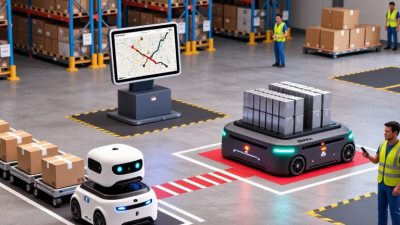
Taking Custom Design to New Levels
PROUD TO BE PART OF THE BRIN FAMILY OF COMPANIES

OTHER BRIN LOCATIONS
Brin Glass Company | Minneapolis, MN
St. Germain’s Glass | Duluth, MN
Heartland Glass | Waite Park, MN

“ I can’t define a robot, but I know one when I see one.” Joseph Engelberger, widely regarded as a pioneer of industrial robotics, captured a challenge that still matters: robot labels are easy to apply, but real performance takes closer inspection. For an amr robot, the key test is practical. Can it navigate a busy aisle, pause safely for a worker, and deliver a loaded cart without constant intervention?
China’s AMR market includes manufacturers with different strengths. Some focus on warehouse transport, while others serve factories, hospitals, or retail operations. Their products may look similar in a catalog. On the floor, details matter: payload capacity, turning space, battery life, fleet software, and service response can shape the outcome. A polished demo is useful, but it is not the whole story.
This guide examines leading Chinese manufacturers through those operational questions. It considers product range, deployment experience, system integration, and support—not just headline specifications. There is no single best supplier for every site. A compact robot may suit narrow aisles, while a larger fleet may demand stronger dispatch software and local technical support. Rankings also deserve caution. Public information varies, and marketing claims do not always reveal long-term performance. That uncertainty is worth admitting. Buyers should verify references, test real routes, and compare total operating needs before choosing a vendor.
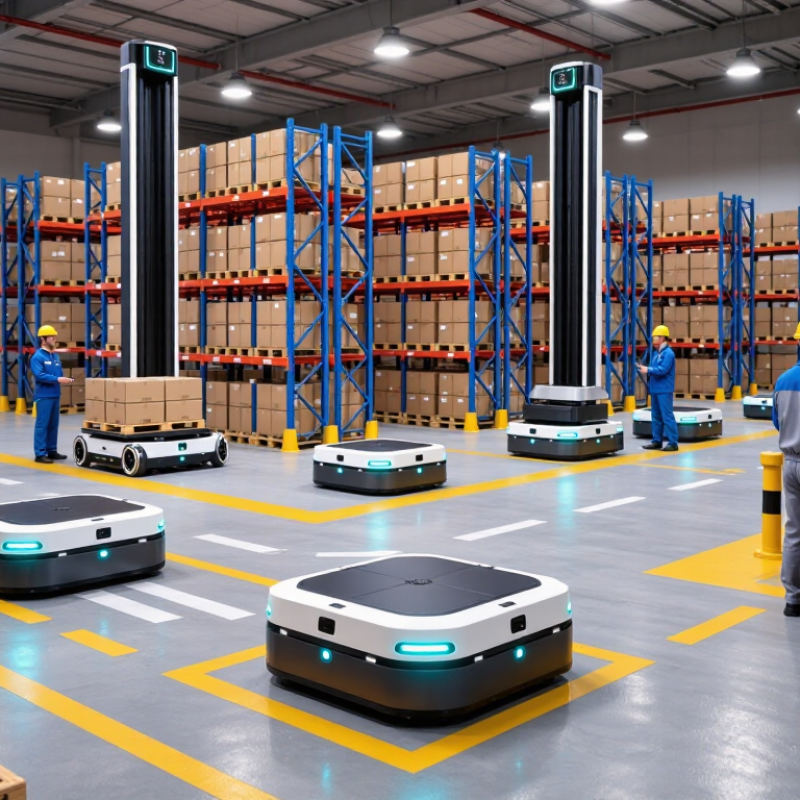
Autonomous mobile robots (AMRs) move materials through factories, warehouses, and other indoor workplaces. Unlike vehicles that follow fixed floor tracks, many AMRs use onboard sensors and digital maps to choose and adjust their routes. A camera, lidar sensor, or safety scanner can detect shelves, people, and unexpected obstacles. Small details matter. A misplaced pallet can change the route.
During setup, technicians map the work area and define destinations, restricted zones, and traffic rules. The robot estimates its position by comparing sensor readings with its map. It then plans a path to a task, such as carrying a tote from a picking station to a packing line. If a person crosses its path, the AMR can slow down, stop, or navigate around them, depending on its design and safety settings. Fleet software may assign jobs to several robots and help prevent congestion. Real spaces are messy.
Performance depends on more than navigation. Payload, floor conditions, Wi-Fi coverage, battery capacity, and door access can all affect daily operation. A robot may handle a clear aisle well but struggle with reflective surfaces or frequent layout changes. When evaluating manufacturers in China, buyers should ask how the system behaves in their actual facility, not just in a demonstration. That test is often revealing.
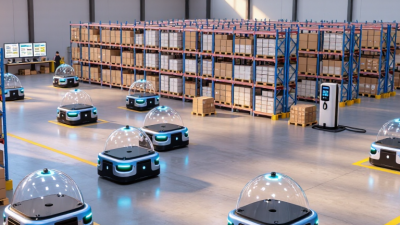
How Are AMR Manufacturers Evaluated in China?
A credible evaluation starts with the actual worksite, not a polished demonstration. Map aisle widths, floor transitions, peak traffic, and pickup points. Then test whether the robot completes repeated routes with realistic loads. Record travel time, stopping accuracy, and recovery after a blocked path. A brief trial is useful, but it can miss problems that emerge during busy shifts.
Navigation and safety deserve close inspection. Ask how the system responds when a worker crosses its route or a pallet sits slightly out of position. Review operating logs and incident procedures, not just feature lists. Check whether the fleet software connects with existing warehouse systems and whether handoffs between robots and equipment remain dependable. Small delays add up.
Service capability matters across China’s varied industrial regions. Confirm spare-part availability, response times, software update procedures, and training for local operators. Request references from sites with similar floors, loads, and shift patterns. Compare total operating costs, including integration and maintenance, rather than purchase price alone. No scorecard is perfect. I would also question unusually smooth test results; real facilities are messier, and that is exactly where a manufacturer’s support is tested.
| Evaluation Dimension | Suggested Weight | What to Evaluate | Evidence to Request or Verify |
|---|---|---|---|
| Safety and standards | 20% | Risk assessment, protective functions, emergency stopping, speed and separation monitoring, and suitability for the intended operating environment. | Product-specific risk assessment, safety-function documentation, test records, and applicable conformity documentation. Check relevance of standards such as ISO 3691-4 for driverless industrial trucks. |
| Navigation and operating performance | 15% | Localization stability, route repeatability, obstacle handling, performance at intersections, and behavior in changing layouts or traffic conditions. | On-site acceptance-test results using the buyer’s routes, loads, floor conditions, and representative traffic scenarios. |
| Payload and application fit | 12% | Rated payload, load-handling interface, travel speed under load, turning requirements, and compatibility with the specific material-flow task. | Technical specifications and a witnessed trial using the actual load, transfer points, and operating cycle. |
| Fleet management and interoperability | 13% | Multi-robot task allocation, traffic coordination, elevator and door interfaces, and integration with warehouse or manufacturing systems. | Interface documentation, integration references, and a demonstration of the required workflows. Confirm supported protocols and system responsibilities in writing. |
| Reliability and maintainability | 12% | Availability under comparable operating conditions, fault recovery, spare-parts access, diagnostics, and maintenance requirements. | Clearly defined uptime and service-level records, maintenance schedules, fault logs, and parts availability commitments. |
| Deployment and service capability | 10% | Site-survey quality, commissioning process, operator training, local technical support, and response procedures for service incidents. | Deployment plan, training materials, support coverage details, escalation process, and references from comparable installations. |
| Cybersecurity and data governance | 8% | Access control, software updates, network security, event logging, data handling, and remote-support controls. | Security documentation, update policy, data-flow description, access-management details, and any relevant independent assessment. |
| Total cost of ownership | 10% | Purchase and integration costs, charging infrastructure, software fees, maintenance, training, and expected lifecycle costs. | Itemized quotation and a lifecycle-cost model based on the same operating assumptions for every supplier under review. |
| Suggested total weighting | 100% | Use the same criteria, test conditions, and evidence requirements when comparing manufacturers. Adjust weights to match the application’s risk and operational priorities. | |
Scoring guide: Rate each dimension from 1 to 5, where 1 means insufficient evidence or a poor fit and 5 means strong, independently verifiable evidence and a proven fit for the intended application. This is an evaluation framework, not a ranked list of manufacturers.
China’s AMR leaders are best judged by deployments, fleet software, and service coverage, not product announcements. The strongest companies typically move materials through busy factories and warehouses, where narrow aisles, changing routes, and mixed pedestrian traffic test reliability. The ranking is messy. Public market data rarely separates AMRs cleanly from other mobile robots.
The International Federation of Robotics reported about 113,000 transport and logistics service robots sold worldwide in 2023, up 35% year over year, in World Robotics 2024. That figure is global, not China-specific. IFR also recorded 276,288 industrial robot installations in China in 2023, 51% of the global total; this broader category does not measure AMRs alone. That distinction matters. China’s leading AMR makers are therefore most credibly identified through verified site deployments, navigation performance, integration with warehouse systems, and support after installation. Buyers should check uptime and recovery records, too. A polished demonstration can hide rough edges in real operations.
China’s AMR market is shaped by smarter navigation and the pressure to move goods reliably across crowded sites. LiDAR, cameras, and simultaneous localization and mapping help robots navigate aisles, avoid people, and reroute around pallets. Fleet software coordinates traffic and assigns jobs; wireless connectivity supports updates and live monitoring. It is not magic. Poor maps, blocked sensors, and weak integration can still slow a shift.
Manufacturing demand is a major backdrop. The International Federation of Robotics reported 276,288 industrial robot installations in China in 2023, equal to 51% of global installations, in World Robotics 2024. Its World Robotics 2023 report recorded 392 robots per 10,000 manufacturing employees in China in 2022. These figures cover industrial robots broadly, not AMRs specifically, but they signal a highly automated production base. Electronics and automotive plants use mobile robots to feed lines; warehouses use them to move totes and pallets. Food and pharmaceutical sites value traceable handling and cleaner workflows. Each site differs. A common weakness is assuming software alone will fix poorly designed routes.
Choosing a Chinese AMR manufacturer begins with the workflow, not the robot brochure.
Walk the proposed routes and mark narrow aisles, floor joints, lift doors, and busy crossings. Ask for a site survey and a simulation using your actual payloads, shift length, and traffic peaks. A cart carrying 300 kilograms may behave differently on polished concrete than on a ramp. Request a live demonstration with similar loads. Test it live. Numbers on paper are not enough.
Check engineering depth and delivery discipline. Can the supplier explain localization, obstacle handling, charging plans, and recovery when a route is blocked? Ask what happens after a sensor fault at 2 a.m. Review component traceability, software updates, spare-part availability, and response times in writing.
Request references from comparable sites, then speak directly with their maintenance teams. Keep records. Compare the full cost of ownership, including integration, batteries, service, and downtime.
A pilot can track missions per hour and manual interventions. It is easy to overvalue a polished demo; even experienced teams can miss a poor Wi-Fi corner or a floor transition. Document limitations and retest after changes.
Taking Custom Design to New Levels

Brin Glass Company | Minneapolis, MN
St. Germain’s Glass | Duluth, MN
Heartland Glass | Waite Park, MN

Fabricator
Inside Sales and Client Support Manager
Glass Handler – 1st Shift