Taking Custom Design to New Levels
PROUD TO BE PART OF THE BRIN FAMILY OF COMPANIES

OTHER BRIN LOCATIONS
Brin Glass Company | Minneapolis, MN
St. Germain’s Glass | Duluth, MN
Heartland Glass | Waite Park, MN

The future of robotics is already visible on factory floors, in warehouses, and beside hospital beds. It is not only about humanoid machines. For global buyers, the practical shifts include collaborative robots, mobile systems, machine vision, and software that connects equipment with production data. The International Federation of Robotics’ World Robotics 2024 report recorded 541,302 industrial robot installations in 2023. The global operational stock reached about 4.28 million units. Those figures show substantial deployment, but they do not guarantee that every purchase will deliver value.
AI will shape how robots perceive changing environments and handle less predictable tasks. AI pioneer Andrew Ng’s observation, “AI is the new electricity,” offers a useful lens on this shift. In robotics, intelligence matters only when sensors, software, safety systems, and people work together. A robot sorting parcels at a busy loading dock needs more than a clever model. It must also manage interruptions, varying package sizes, and human traffic.
Buyers should watch for flexible automation, easier integration, stronger simulation tools, and clearer measures of productivity and uptime. Small details matter: floor space, maintenance access, operator training, and the time needed to connect a robot to existing systems. Forecasts are not guarantees. Adoption can be uneven, and implementation plans sometimes overlook everyday workflow problems. That deserves reflection. The trends ahead may be exciting, but sound decisions still begin with a specific operational need, credible supplier evidence, and a realistic view of total cost.
Robots are becoming more capable as artificial intelligence, machine vision, and tactile sensing improve. Together, these technologies help machines recognize objects, adjust their grip, and respond to changing workspaces.
The International Federation of Robotics reported 541,302 industrial robot installations worldwide in 2023, with 4,281,585 units operating in factories. That installed base makes upgrades to software, sensors, and connectivity increasingly important for buyers evaluating long-term needs.
Edge computing can process camera and sensor data close to the machine, reducing delays in tasks such as sorting parcels or inspecting parts. Cloud systems support fleet monitoring and software updates, while digital twins help teams test layouts before moving equipment.
Useful, but not effortless. These tools still depend on clean data, reliable networks, and skilled integration teams. A robot may detect a small component accurately under steady lighting, then struggle when reflections or clutter change.
The bottleneck is integration.
Buyers should assess how systems handle exceptions, share data with existing equipment, and recover safely after interruptions. IFR’s World Robotics 2024 report provides a useful measure of deployment, but installation figures alone cannot show whether a system fits a particular site. Real production trials matter.
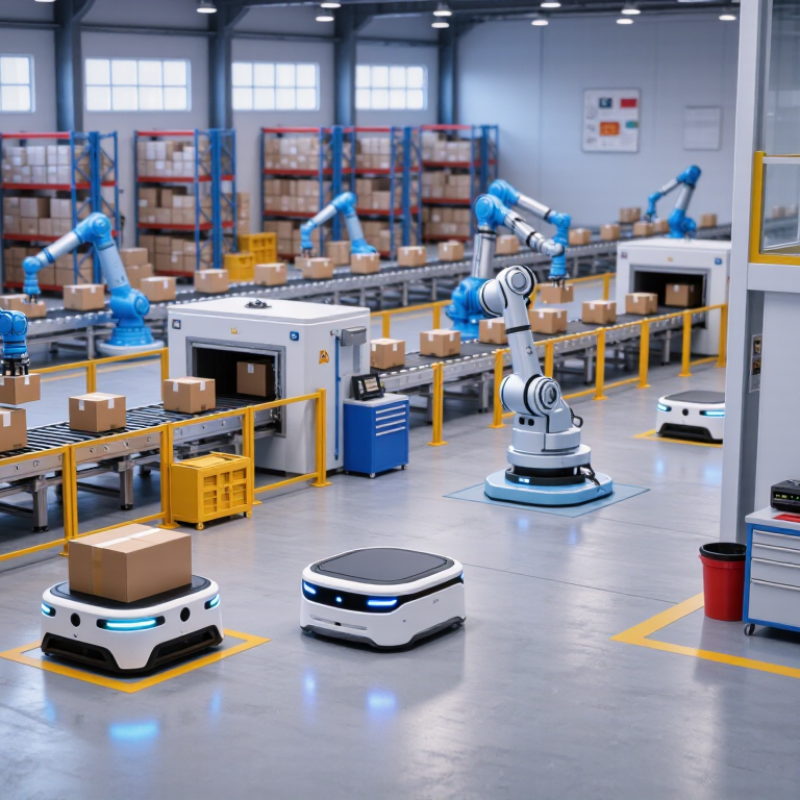
Robotics trends are shaped by local needs, not one universal blueprint. In manufacturing, collaborative robots are taking on repetitive assembly and machine tending, while vision systems help detect small defects on moving lines. Warehouses are adopting mobile robots to carry bins between picking stations, reducing long walking routes. The practical test is whether these systems fit existing layouts, staffing, and maintenance skills.
In agriculture, robots are being developed for targeted weeding and crop inspection, where muddy ground and changing light can challenge sensors. Hospitals use robotic systems for logistics and selected procedures, but staff training and reliable cleaning routines remain essential. Different constraints matter. For global buyers, regional service coverage, spare-part availability, and integration with older equipment deserve as much attention as speed or payload. Ask vendors for measured performance in conditions resembling your site, including downtime and recovery after faults. Pilot projects can reveal hidden costs, though results from one facility may not transfer neatly to another. Connectivity and data handling also need review before deployment. A robot can look impressive in a demonstration and still struggle with a narrow aisle, uneven floor, or shift pattern.
Automation and AI are giving robots more than speed. They help machines interpret changing surroundings and adjust actions in real time. A camera can identify a tilted carton, while a force sensor helps a gripper hold it without crushing the edges. These capabilities matter in warehouses, factories, and other workplaces where objects rarely stay perfectly aligned.
The improvement is practical, but not magic. A robot trained on clear images may struggle with glare, dust, or an unfamiliar package. That gap matters. In a food-packing line, for example, a system may need to sort items of different sizes while keeping a steady pace. Staff still need clear procedures for checking errors and stepping in when conditions change. Small failures count.
AI is also making robots easier to adapt. Instead of programming every movement by hand, teams can sometimes teach a task through examples or adjust settings through a simpler interface. A technician may change a picking route after observing where delays occur. Even so, setup and maintenance take time, and results depend on good data and careful testing. Buyers should ask how a system performs with their actual parts, lighting, and shift patterns. A short pilot can reveal whether the promised flexibility holds up on a busy day, when a sensor is blocked or a new worker loads the station differently. That is a less polished test, but often the more useful one.
Global buyers should assess robots against real tasks, not impressive specifications alone. The International Federation of Robotics’ World Robotics 2024 report recorded 541,302 industrial robot installations in 2023. That scale makes careful selection important. Match payload and reach to the actual workpiece, including tools and cables. Check cycle time under normal operating conditions, not just a best-case demonstration. Small details matter.
Also examine accuracy, uptime, maintenance access, and compatibility with existing controls. A robot that fits the cell but requires frequent specialist service may raise operating costs. Ask suppliers for documented test conditions, service intervals, spare-part availability, and integration support. Assess safety features alongside the planned layout and operator workflow. A site visit can reveal obstacles that a specification sheet misses. Still, no checklist captures every shift change or awkward cable route; leave room for practical trials.
Tips: Run a representative task using your own part, gripper, and cycle targets. Record repeatability, changeover time, and recovery after a stoppage. Compare total cost over the expected service life, not purchase price alone. If results vary, investigate before committing.
| Trend or Technology | Where It Is Used | What Buyers Should Assess | Useful Evaluation Measures | Key Considerations and Risks |
|---|---|---|---|---|
| Collaborative robots (cobots) | Assembly, machine tending, packaging, inspection, and other tasks where people and robots work in nearby areas. | Whether the robot, end effector, tooling, and intended application can be safely integrated into the actual work cell. | Task cycle time; payload and reach requirements; changeover time; documented risk assessment; required safeguarding. | Collaborative design does not automatically make every application safe without additional risk assessment or protective measures. |
| Autonomous mobile robots (AMRs) | Material movement in warehouses, factories, hospitals, and other indoor facilities. | Navigation performance in the site's real layout, traffic conditions, floor surfaces, and wireless environment. | Successful missions; delivery time; fleet availability; obstacle-response behavior; charging and recovery time. | Check route changes, pedestrian interaction, network coverage, fleet-management integration, and procedures for blocked or failed missions. |
| AI-enabled perception and vision | Object identification, inspection, picking, sorting, and navigation in settings with variable items or surroundings. | Performance on representative production data, including difficult lighting, unusual orientations, and acceptable defect cases. | Detection accuracy; false-accept and false-reject rates; performance across product variants; time needed to validate updates. | Results depend on data quality and operating conditions. Buyers should define how models are tested, updated, monitored, and rolled back. |
| Digital twins and simulation | Work-cell design, robot reach and cycle studies, layout planning, commissioning, and operator training. | How closely the simulation represents the robot, tooling, process, and site constraints, and whether findings are checked against real operation. | Predicted versus measured cycle time; collision checks; layout changes identified before installation; commissioning issues. | A simulation is an aid to planning, not a guarantee of real-world performance. Validate assumptions and model accuracy on site. |
| Robotics-as-a-Service and flexible financing | Projects where buyers prefer a subscription or service arrangement over purchasing all equipment upfront. | Total cost over the contract term, service scope, uptime commitments, upgrade terms, data ownership, and exit arrangements. | Monthly and variable fees; included support hours; response and repair targets; contract duration; end-of-term costs. | Compare the full contract cost with ownership costs. Clarify responsibilities for integration, consumables, software, and site changes. |
| Interoperability and open interfaces | Multi-vendor production lines, warehouse systems, enterprise software, sensors, and fleet-management platforms. | Compatibility with existing equipment and software, supported communication interfaces, and access to integration documentation. | Integration test results; supported protocols; data fields available; interface stability; time and cost of system integration. | Confirm interface versions and licensing terms. A stated protocol alone does not ensure that systems will work together without integration work. |
| Energy-efficient and battery-electric systems | Mobile robots and automated equipment operating across shifts or in facilities with energy and emissions objectives. | Energy use under the planned duty cycle, battery life, charging strategy, and effects of temperature and payload. | Energy consumed per operating hour or completed task; charging time; runtime per charge; battery replacement interval. | Request test conditions for quoted figures and estimate energy use using the buyer's actual routes, workload, and operating schedule. |
| Remote monitoring and predictive maintenance | Robot fleets and production equipment where unplanned downtime affects throughput or service levels. | Which operating data are collected, who can access them, how alerts are generated, and how maintenance recommendations are validated. | Unplanned downtime; mean time to repair; alert accuracy; spare-parts availability; maintenance completion time. | Review cybersecurity controls, remote-access permissions, data retention, and procedures for operating when cloud services are unavailable. |
| Humanoid and general-purpose robots | Emerging applications involving varied, human-oriented spaces and tasks that may not be suited to fixed automation. | Evidence of reliable performance for the specific task, safe operation, supervision needs, and the cost of deployment at production scale. | Task completion rate; intervention frequency; repeatability; operating time between service events; cost per completed task. | Capabilities vary by system and application. Use a controlled pilot and compare results with simpler, task-specific automation. |
| Functional safety and cybersecurity | All industrial and service robotics deployments, particularly connected systems and applications near people. | Applicable safety requirements, integration responsibilities, security update process, access control, and incident-response arrangements. | Documented risk assessment; safety validation records; patching timelines; authentication controls; backup and recovery tests. | Requirements depend on the robot type, application, and country. Confirm applicable local regulations and standards with qualified specialists. |
| Workforce skills and human-centered deployment | Robotics projects that change job tasks, maintenance workflows, or day-to-day operator responsibilities. | Training needs, accessibility of controls, availability of local technical support, and the impact on existing work processes. | Training hours; time to independent operation; operator error rate; support response time; adoption and feedback measures. | Plan for training, worker consultation, maintenance skills, and clear escalation procedures before full deployment. |
| Global serviceability and lifecycle support | Buyers operating across multiple countries or in locations with different service coverage and import requirements. | Local service capacity, spare-parts lead times, language support, documentation, warranty coverage, and end-of-life commitments. | Parts availability; repair turnaround time; warranty exclusions; service coverage by location; software-support period. | Check regional electrical and compliance requirements, import duties, replacement-part logistics, and continuity of support over the planned asset life. |
Buyer note: Compare robots using the same task definition, operating conditions, safety requirements, and total-cost assumptions. Validate performance through a representative pilot before scaling.
Regional differences are changing not only where robots are installed, but what buyers should prioritize. The International Federation of Robotics’ World Robotics 2024 report recorded 541,302 industrial robot installations worldwide in 2023. Asia accounted for 70% of new installations, Europe 17%, and the Americas 10%. China alone installed 276,288 units, just over half the global total. Scale matters. Dense supplier networks and high-volume manufacturing can support faster rollouts in some Asian markets. Elsewhere, buyers may encounter fewer local integrators, longer service waits, or different labor-cost calculations. These are market conditions, not guarantees.
Investment decisions also depend on site-level infrastructure. A buyer comparing an East Asian assembly line with a mixed-product European factory should check technician coverage, spare-part lead times, and operator training needs. The comparison is imperfect. IFR’s figures count installations, not productivity gains or successful integration, so they cannot prove one region is more advanced. No simple answer. National totals can hide gaps between export hubs and smaller plants, while energy prices and currency shifts can quickly change project payback. Treat regional rankings as a starting map, not a purchasing verdict. A harder question is whether a site can maintain its system after the integrator leaves.
Taking Custom Design to New Levels

Brin Glass Company | Minneapolis, MN
St. Germain’s Glass | Duluth, MN
Heartland Glass | Waite Park, MN

Fabricator
Inside Sales and Client Support Manager
Glass Handler – 1st Shift