Taking Custom Design to New Levels
PROUD TO BE PART OF THE BRIN FAMILY OF COMPANIES

OTHER BRIN LOCATIONS
Brin Glass Company | Minneapolis, MN
St. Germain’s Glass | Duluth, MN
Heartland Glass | Waite Park, MN

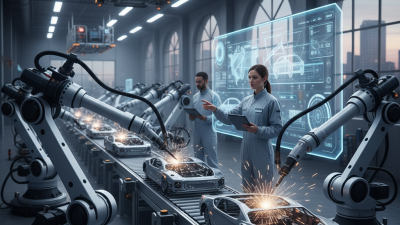
Why Robotics and Artificial Intelligence Matter to Buyers begins with a practical question: what problem will the technology solve? A warehouse robot may reduce picking time, while an AI system can detect faulty products before shipment. These benefits become visible on the factory floor, beside conveyors, scanners, and human workers.
Andrew Ng, a leading artificial intelligence researcher and co-founder of Google Brain, said, “Artificial intelligence is the new electricity.” His comparison explains the technology’s broad influence. Like electricity, robotics and artificial intelligence can support many industries. Yet buyers should examine the details, not follow impressive demonstrations. A reliable system needs accurate data, clear safety controls, trained operators, and measurable performance.
Cost matters. So do maintenance, integration, cybersecurity, and employee training. A robot that works perfectly in a showroom may struggle with dust, glare, or irregular objects. Real conditions are less polite. Buyers should request trial results, supplier references, and honest information about failure rates. They should also ask whether the system can scale without creating new operational burdens.
The business case may still be uncertain. That is worth admitting. Some companies may purchase advanced tools before defining the right problem. Careful buyers take a smaller step, test one workflow, and measure results over time. This approach supports informed decisions and keeps human judgment involved. Technology can amplify expertise, but it cannot replace responsible leadership.
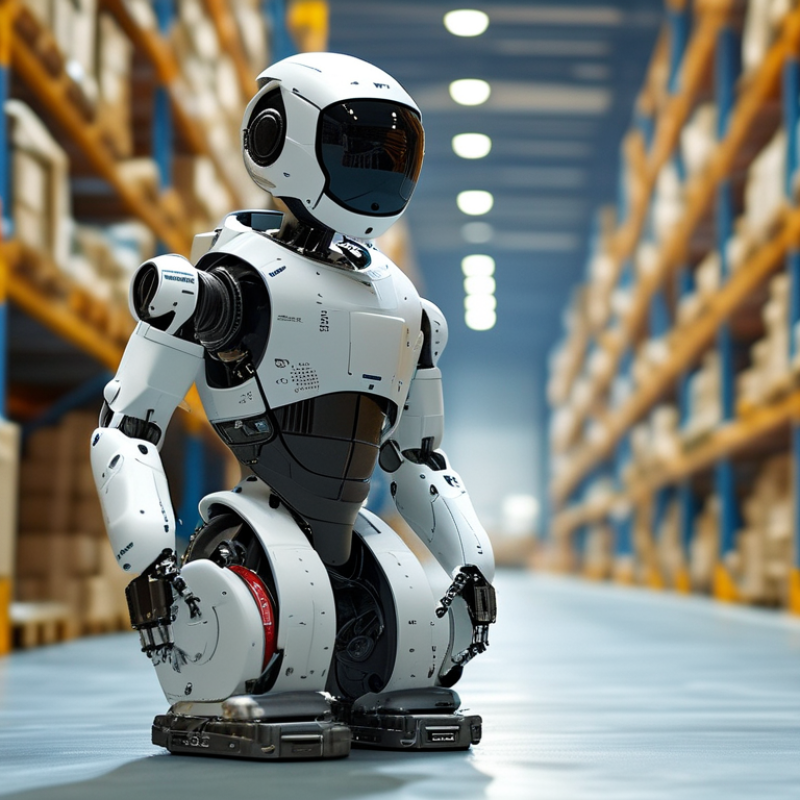
Modern buyers are no longer purchasing robotics or artificial intelligence as distant innovations. They are buying faster decisions, safer workflows, and measurable productivity. The International Federation of Robotics reported 541,302 industrial robots were installed worldwide in 2023. That figure shows how automation is becoming a purchasing reality, not a laboratory experiment.
AI changes the buying process, too. The Stanford AI Index 2025 found that 78% of surveyed organizations used AI in 2024, rising from 55% in 2023. Buyers now expect systems to interpret demand, detect errors, and support service teams. Yet impressive demonstrations can hide weak integration. A robot may move accurately but still fail beside outdated software, unclear maintenance duties, or poor employee training. I have seen technology perform well in testing and disappoint on a busy production floor. That gap deserves more attention.
Tips: Define one measurable problem before comparing solutions. Ask for uptime data, training requirements, repair response times, and cybersecurity controls. Test the system with real products, uneven lighting, and ordinary user mistakes. Review the total cost, including installation, software updates, energy, and staff development. Do not trust flawless projections. Require independent evidence, transparent limitations, and a small pilot with agreed success measures. For AI tools, check how data is stored, who can access it, and whether human approval remains available when recommendations look uncertain.

Why Robotics and Artificial Intelligence Matter to Buyers?
Why 541,302 Industrial Robots Were Installed Worldwide in 2023 (IFR)
In 2023, factories installed 541,302 industrial robots worldwide. The figure comes from the International Federation of Robotics’ World Robotics 2024 report. It represents the second-highest annual installation level ever recorded. IFR also reported approximately 4.28 million robots operating in factories globally. These numbers reflect more than technology enthusiasm. They show growing pressure to improve output, maintain consistent quality, and manage labor shortages.
For buyers, the installation figure is a market signal, not a complete purchasing argument. A robot may repeat a movement precisely, yet poor tooling can reduce real productivity. Artificial intelligence can detect defects, but weak production data may produce unreliable decisions. A practical assessment should examine cycle time, changeover frequency, worker training, maintenance access, and integration with existing equipment. The International Labour Organization has also emphasized that automation outcomes depend on workplace design and human involvement. The technology is capable. The business case still needs proof.
Tips: Ask suppliers for measured cycle-time results, not optimistic estimates. Test difficult parts, not only perfect samples. Review three years of maintenance costs and operator training needs. Also check whether your workforce can safely supervise the system. A smaller installation may create more value than a larger one, although that is easy to underestimate. Keep reviewing the assumptions.
McKinsey’s 2024 global survey found that 72% of organizations used artificial intelligence in at least one business function. This signals a shift in buying behavior. AI is no longer only an innovation project. It now affects purchasing, service, quality control, and planning. However, adoption does not mean success. The figure measures usage, not proven returns. Some companies may still be testing tools without changing daily work.
Robotics adds physical value. A robotic arm can repeat a precise movement for eight hours. A vision system can flag a damaged package before shipment. The International Federation of Robotics reported 541,302 industrial robots were installed worldwide in 2023. Its report also recorded more than 4.2 million operational industrial robots. These figures show stronger demand for reliable automation. Buyers should still examine maintenance time, worker training, data security, and integration costs. A fast machine can create expensive problems when connected to poor processes. That detail is easy to miss.
Tips: Ask suppliers for measured results, not impressive demonstrations. Request a small pilot with clear targets, such as lower inspection errors or shorter processing time. Check performance during busy periods, not only in perfect conditions. The Stanford AI Index 2024 reported rapid growth in AI capability and investment, but capability is not the same as reliability. Keep human review for important decisions. Automation should support judgment, not quietly replace it.
For buyers, robotics and artificial intelligence are practical operating tools, not futuristic decorations. In a packaging line, a robot can lift identical cartons for eight hours, while AI checks labels, seals, and product placement. This consistency reduces rework and protects output quality. It also gives operators fewer repetitive tasks and more time for maintenance, supervision, and problem-solving. Productivity is not only speed. It is dependable work with fewer interruptions.
Operating costs can fall when automation reduces scrap, unplanned downtime, and overtime. AI systems can study temperature, vibration, and cycle data to identify equipment problems before a stoppage occurs. However, savings are not automatic. Integration, training, cybersecurity, and sensor replacement require careful budgeting.
A poorly chosen system may increase complexity instead of efficiency. Field assessments often show stronger results when buyers measure baseline costs before installation. Compare them with verified monthly results. Early assumptions can be wrong.
Tips: Start with one measurable bottleneck. Record labor hours, defect rates, downtime, and energy use. Test the solution in a limited area, then review results with operators. Ask for transparent performance data, service terms, and practical training. Keep a manual fallback for critical processes. Technology should support judgment, not quietly replace it.
Buyers should compare return on investment beyond the purchase price. Measure labor hours saved, throughput, error reduction, maintenance, training, and energy use. A small pilot can reveal payback more honestly than a polished sales forecast. Track results for several weeks under normal production pressure. Real work is messier.
Safety deserves equal attention. Review risk assessments, emergency stops, speed limits, guarding, and human handoff procedures. Ask how the system behaves after a sensor failure or unexpected obstacle. Operators should receive practical training, not only digital instructions. A safe machine must remain understandable during stressful moments. That detail is often missed.
Data and integration can determine long-term value. Compare data ownership, access controls, retention periods, audit logs, and cybersecurity updates. The system should connect with existing scheduling, inventory, and maintenance tools through documented interfaces. Request a clear plan for software updates and downtime. Integration is rarely painless.
In my experience, hidden configuration work can weaken an attractive ROI. Buyers should also test data quality before deployment, because inaccurate records can teach an intelligent system the wrong pattern.
Keep a written acceptance checklist, including performance limits, safety responses, support times, and measurable business outcomes. Revisit it after deployment. Some assumptions will fail. That is useful evidence, not embarrassment.
Taking Custom Design to New Levels

Brin Glass Company | Minneapolis, MN
St. Germain’s Glass | Duluth, MN
Heartland Glass | Waite Park, MN

Fabricator
Inside Sales and Client Support Manager
Glass Handler – 1st Shift