Taking Custom Design to New Levels
PROUD TO BE PART OF THE BRIN FAMILY OF COMPANIES

OTHER BRIN LOCATIONS
Brin Glass Company | Minneapolis, MN
St. Germain’s Glass | Duluth, MN
Heartland Glass | Waite Park, MN

Choosing the right robot platform is now a strategic business decision, not merely an engineering purchase. The International Federation of Robotics reported 541,302 industrial robots installed worldwide in 2023. Its World Robotics 2024 report also recorded more than 4.2 million industrial robots operating globally. These figures show a mature market, but they do not identify the best solution for every company.
A suitable robot platform must match the work, environment, workforce, and growth plan. A packaging line may require fast repeatability, while a warehouse needs safe navigation around people. Picture a production cell with narrow aisles, changing product sizes, and operators wearing protective gloves. Small details can determine whether deployment succeeds. Payload, reach, battery life, safety functions, software integration, and maintenance support deserve equal attention. Compatibility with existing PLCs and warehouse systems can prevent expensive redesigns.
Industry experience suggests that pilot testing is essential. A short trial can reveal unstable gripping, poor lighting performance, or unexpected cleaning requirements. These issues rarely appear in a polished sales demonstration. The NIST AI Risk Management Framework also emphasizes reliable, transparent, and risk-aware technology management. That principle applies to automation decisions as well. No checklist is flawless. A spreadsheet may hide the real cost of downtime, training, and integration.
This guide examines how to compare robot platforms using measurable business and operational criteria. It considers total ownership cost, scalability, safety, vendor credibility, and technical support. The strongest choice is not always the most advanced machine. Sometimes, a simpler platform delivers better results because employees can understand, operate, and maintain it confidently.
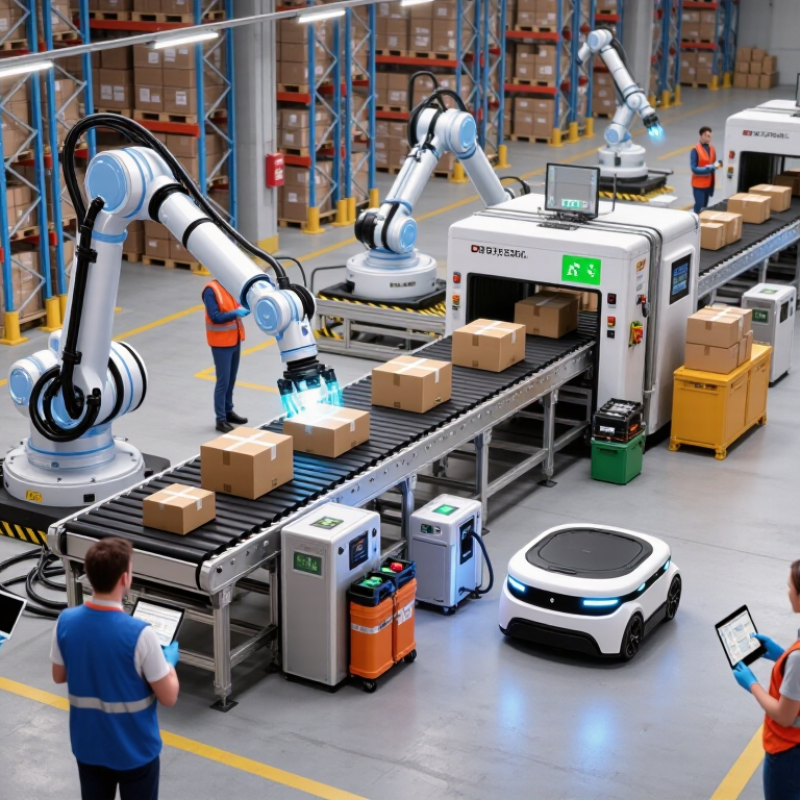
Choosing a robot platform starts with business goals, not impressive demonstrations. Define the problem in operational terms. Is the aim faster picking, safer inspection, lower labor strain, or fewer delivery delays? Speak with operators, supervisors, and maintenance staff. Their observations often reveal hidden constraints, such as narrow aisles, reflective floors, or changing shift patterns. Write one primary goal and two supporting goals. Keep them measurable. “Reduce inspection time by 20 percent” guides decisions better than “improve efficiency.”
Then map the robot’s actual tasks. Describe each action, location, frequency, payload, and required accuracy. A platform moving bins needs different capabilities from one carrying cameras through crowded areas. Record handoff points with people and existing equipment. Check charging access, network coverage, floor thresholds, and emergency procedures. These details determine mobility, sensors, software integration, and operator training. A small pilot can expose problems early. It may also challenge your original assumptions. That is useful. A task that looks simple on paper may require constant human intervention. Do not hide that result.
Tips: Ask for a normal day, not an ideal one. Measure waiting time, failed attempts, and recovery steps. Test during busy and quiet periods. Set acceptance criteria before the trial begins. Include ownership costs, maintenance time, and staff feedback. Revisit the goals after real observations. Perfect plans are rare.
| Business Goal | Typical Robot Task | Recommended Robot Platform | Relevant Operating Conditions | Typical Payload or Capacity | Key Selection Criteria | Useful Success Metrics |
|---|---|---|---|---|---|---|
| Improve internal material flow | Move containers, components, tools, or finished goods between fixed workstations. | Autonomous Mobile Robot (AMR) | Indoor facilities with mapped routes, changing traffic, and pedestrian interaction. | Approximately 50–1,500 kg, depending on the vehicle configuration. | Obstacle detection, safe human interaction, fleet coordination, docking accuracy, and integration with warehouse or manufacturing systems. | Transport cycle timeMeasure completed deliveries per hour and average waiting time at pickup and drop-off points. |
| Reduce repetitive pallet handling | Move pallets between storage, staging, production, and shipping areas. | Automated Guided Vehicle (AGV) | Stable, repeatable routes with predictable traffic and clearly defined loading locations. | Common industrial designs support about 500–2,000 kg. | Navigation method, floor quality, route flexibility, load interface, safety scanners, and compatibility with pallet dimensions. | Pallet moves per shiftTrack throughput, route availability, loading accuracy, and unplanned stops. |
| Automate machine tending | Load and unload CNC machines, presses, inspection equipment, or other repeatable work cells. | Six-Axis Industrial Robot | Controlled work cells with fixed equipment, defined reach zones, and established safety guarding. | Roughly 3–250 kg at the wrist, depending on robot class and reach. | Reach, repeatability, cycle time, gripper compatibility, enclosure requirements, and resistance to heat, dust, or coolant. | Machine utilizationCompare equipment uptime, loading consistency, cycle time, and operator intervention frequency. |
| Increase flexibility for low-volume production | Perform assembly, screwdriving, packaging, inspection, or material handling beside employees. | Collaborative Robot | Mixed human-robot work areas where tasks change frequently and floor space is limited. | Common payload classes range from about 3–20 kg. | Ease of programming, force and speed limits, tool changes, reach, safety assessment, and redeployment time. | Changeover timeMeasure time to move, reprogram, validate, and restart the robot for a new task. |
| Improve picking productivity | Present shelves or totes to workers, transport picked items, or support order consolidation. | Goods-to-Person Mobile System | Warehouses with repeatable storage locations, digital inventory records, and defined picking zones. | Usually supports totes or shelves from about 10–500 kg, depending on system design. | Inventory accuracy, storage density, software integration, traffic management, workstation ergonomics, and peak-order capacity. | Lines picked per labor hourAlso monitor order accuracy, walking distance, replenishment delays, and system availability. |
| Automate inspection and quality control | Capture images, measure dimensions, identify defects, or verify product presence and orientation. | Vision-Guided Robot Cell | Lighting, camera position, product presentation, and inspection criteria must be controlled. | Payload is commonly 1–50 kg for inspection fixtures and parts. | Camera resolution, repeatability, lighting stability, inspection cycle time, data traceability, and false-positive rate. | First-pass yieldTrack defect detection accuracy, false rejects, inspection coverage, and traceability completeness. |
| Operate in difficult or hazardous areas | Conduct monitoring, sampling, remote observation, or routine transport where exposure is undesirable. | Special-Purpose or Remote-Operated Robot | Outdoor, high-temperature, contaminated, restricted-access, or uneven environments. | Capacity varies widely; define the required tool, sensor, and reserve capacity before selection. | Ingress protection, temperature range, communications reliability, remote control latency, terrain capability, and emergency recovery. | Exposure reductionMeasure fewer personnel entries, mission completion rate, inspection coverage, and recovery time. |
| Support cleaning and facility services | Clean floors, transport waste, inspect aisles, or perform scheduled facility rounds. | Service Mobile Robot | Large indoor areas with changing obstacles, public or employee traffic, and scheduled operating windows. | Often designed for equipment, water, waste, or consumables rather than heavy industrial loads. | Battery endurance, docking, navigation in crowded spaces, noise level, maintenance access, and route scheduling. | Area covered per shiftTrack coverage, cleaning consistency, intervention frequency, battery availability, and labor hours saved. |



Fabricator
Inside Sales and Client Support Manager
Glass Handler – 1st Shift