Taking Custom Design to New Levels
PROUD TO BE PART OF THE BRIN FAMILY OF COMPANIES

OTHER BRIN LOCATIONS
Brin Glass Company | Minneapolis, MN
St. Germain’s Glass | Duluth, MN
Heartland Glass | Waite Park, MN

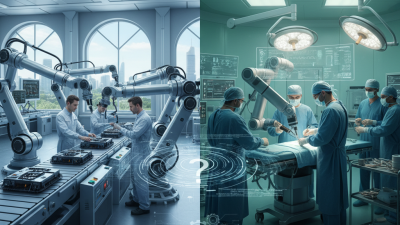
AI robots are no longer confined to factory floors. They sort packages, assist clinicians, clean public spaces, and explore places too hazardous for people. Yet “AI robot” covers a wide range of machines, not one standard design. Their abilities depend on sensors, software, physical form, and the setting where they work.
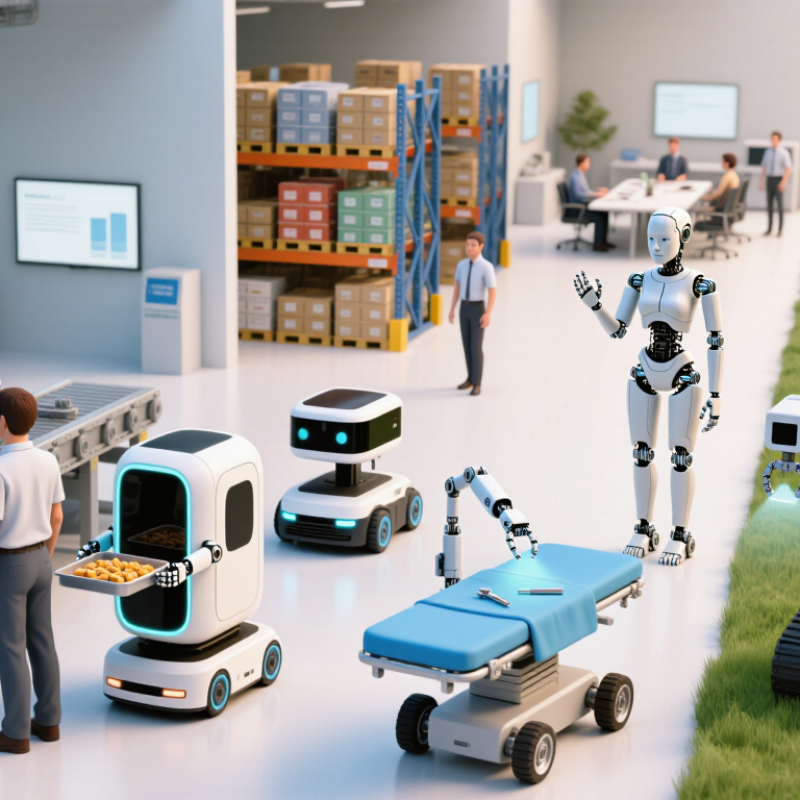
Industrial robots perform repetitive tasks such as welding or placing components on an assembly line. Collaborative robots share work areas with people, while service robots deliver supplies or guide visitors. Mobile robots navigate warehouses and streets; humanoid robots use human-like bodies to interact with spaces built for people. Medical and agricultural robots support tasks from precise surgical assistance to crop monitoring. These categories can overlap, and a robot’s label does not prove that it can think or act independently. The differences matter.
AI researcher Fei-Fei Li has said, “There’s nothing artificial about AI. It’s inspired by people, it’s created by people, and—most importantly—it impacts people.” Her observation is a useful reminder: evaluating ai robots means looking beyond impressive demonstrations. A machine that moves smoothly in a staged video may struggle with glare, clutter, or an unexpected object on the floor. This guide examines the leading types, what they do well, and where their limits remain. The boundaries are not always neat. That deserves a closer look.
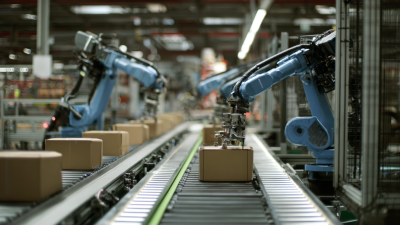
Industrial robots remain the largest visible category of AI-enabled machines on factory floors, but not every industrial robot uses AI. The International Federation of Robotics (IFR) reported 541,302 new industrial robot installations worldwide in 2023, a 2% decline from 2022. The figure still represents substantial deployment: robots can weld vehicle frames, move heavy components, and assemble small parts with consistent timing. That distinction matters. A programmed robotic arm can repeat a fixed path without learning; AI may add vision, adaptive handling, or defect detection when tasks vary.
IFR’s World Robotics 2024 report also recorded about 4.28 million industrial robots operating globally at the end of 2023. Asia accounted for 70% of new installations, Europe 17%, and the Americas 10%. These figures describe industrial robots overall, not AI-equipped units alone, so they should not be read as an AI adoption count. On a production line, the difference can be practical: a camera-guided system may adjust its grip when a part shifts, while a conventional system may need tighter positioning. Useful, but not magic. IFR data gives a reliable measure of robot deployment; companies still need task-level evidence to judge how much AI improves quality, uptime, or worker safety.

Industrial robots are widely used for tasks such as assembly, handling, and welding. Worldwide installations reached 541,302 units in 2023, down from 553,052 in 2022. These figures describe industrial robot installations and do not indicate how many robots use AI.
Source: International Federation of Robotics (IFR), World Robotics 2024.
Collaborative robots accounted for 10.5% of new industrial robot installations in 2023, according to the International Federation of Robotics’ World Robotics 2024 report. That share rose from 2.8% in 2017. It signals a meaningful shift in factory automation, though it does not mean cobots make up 10.5% of every robot already operating. The distinction matters. IFR also recorded 541,302 industrial robot installations worldwide in 2023, showing the scale of the market behind that percentage.
Cobots are designed to work near people, often handling repetitive tasks such as tending a machine, moving parts, or assisting with assembly. Picture a worker placing components while a robot arm performs the same short movement beside them. That setup can save space and reduce awkward repetition. But “collaborative” does not mean risk-free. Each application still needs a task-specific risk assessment, suitable safeguards, and careful setup. A cobot moving a light part slowly is not the same as one handling a heavy tool at speed.
The 10.5% figure is encouraging, not conclusive. Adoption depends on whether a system fits the workflow, can be integrated safely, and delivers value after installation. Smaller manufacturers may still face costs, training needs, and downtime during setup. And a neat demonstration can hide a messy production floor. The IFR data measures installations, not productivity gains or worker experience, so those outcomes deserve separate evaluation.
| Robot Type | Typical Environment | Common Tasks | How AI May Be Used | Relevant Data |
|---|---|---|---|---|
| Collaborative industrial robots (cobots) | Factories and production work cells, often near human workers | Assembly, machine tending, packaging, inspection, and material handling | Vision systems and machine-learning models can help identify objects, guide motion, or adapt to changes in a task. Safety also depends on the robot’s design and risk assessment. | 10.5% of new industrial robot installations in 2023 were collaborative robots, according to the International Federation of Robotics (IFR). |
| Articulated industrial robots | Manufacturing plants and automated production lines | Welding, painting, assembly, packaging, and machine loading | AI-based vision or inspection can support part recognition and quality checks; the robot’s programmed motion performs the physical task. | Typically used for industrial automation; the number of joints and payload vary by application. |
| Autonomous mobile robots (AMRs) | Warehouses, factories, hospitals, and other indoor facilities | Transporting materials, moving supplies, and navigating between work areas | Onboard sensors and navigation software help map surroundings, plan routes, and respond to obstacles. | Unlike fixed conveyor routes, AMRs can navigate using information about their changing environment. |
| Automated guided vehicles (AGVs) | Factories and warehouses | Moving materials along planned routes | Sensors can support obstacle detection, while route guidance commonly relies on predefined paths or infrastructure. | AGVs and AMRs are both mobile robots, but their navigation approaches are generally different. |
| Medical and surgical robots | Hospitals, clinics, and laboratories | Assisting with surgical procedures, rehabilitation, or laboratory workflows | Image-processing and decision-support software may assist clinicians; medical use requires appropriate oversight and regulatory controls. | These systems support healthcare tasks; they do not replace clinical judgment. |
| Agricultural robots | Farms, greenhouses, and orchards | Crop monitoring, targeted weeding, harvesting, and field operations | Computer vision can help identify crops, weeds, or produce, while sensors provide information about field conditions. | Capabilities depend on the crop, operating conditions, and task being automated. |
| Service robots | Commercial and public settings, including hotels, offices, and retail spaces | Cleaning, delivery, information assistance, and routine support tasks | Speech recognition, perception, and navigation can help a robot interact with people or operate in shared spaces. | “Service robot” describes a broad application category, not a single robot design. |
Note: AI is a set of capabilities that may be incorporated into different robot types; not every robot in these categories uses AI. The IFR figure refers specifically to collaborative robots as a share of new industrial robot installations in 2023.
Professional service robots are moving from controlled demonstrations into everyday workplaces. The International Federation of Robotics (IFR), in its World Robotics 2024 report, recorded nearly 205,000 professional service robots sold worldwide in 2023. That was a 30% increase from 2022. The figure covers robots used by businesses and institutions, not household devices.
Transport and logistics led the market, with about 113,000 units sold, according to IFR. Picture a warehouse robot carrying bins between shelving aisles, or moving supplies through a hospital corridor. These systems can take on repetitive routes and help staff manage heavy workloads. That matters. Yet “professional service robot” does not automatically mean “AI robot.” IFR’s sales category includes many kinds of systems; the label alone does not prove that a robot uses advanced AI.
The growth is significant, but the number needs context. Sales show adoption, not whether each installation saves money, works safely, or fits a busy workplace. Buyers still need to assess navigation, reliability, maintenance, and how workers interact with machines. Small details count: a crowded doorway can disrupt a delivery route. Progress is real. So are the practical limits.
Logistics robots are becoming a practical part of busy warehouses. IFR reported about 113,000 professional logistics robot units sold in 2023. That figure signals strong demand, but it does not mean every unit uses advanced AI. Many systems follow mapped routes, while others adapt to changing obstacles or task priorities. Their work can include moving loaded carts, carrying totes, or sorting parcels between stations.
In a warehouse aisle, a mobile robot may carry a bin from receiving to packing. This can reduce repetitive walking and keep materials moving during peak shifts. Results still depend on clear floor markings, reliable sensors, and well-planned handoffs with staff. A blocked route or poorly placed pallet can slow the whole process. Automation is useful, not magic. Teams should measure delivery times, interruption rates, and worker feedback before expanding a fleet. The sales number alone cannot show how well robots perform at a specific site.
Tips: Start with one repetitive route. Track delays and near-misses, then adjust traffic rules and charging locations. Even a small pilot can reveal awkward bottlenecks.
Medical robots recorded 6,100 units sold in 2023, a 36% increase, according to the International Federation of Robotics (IFR). That growth points to rising demand for robotic systems in healthcare, but it does not mean every hospital is ready to use them. A sales figure tracks purchases, not improved patient outcomes.
These machines can support tasks such as surgical assistance, rehabilitation, and moving supplies through clinical buildings. In a rehabilitation room, for example, a robot may help a patient repeat carefully guided movements while staff monitor progress. The machine can assist. It cannot replace clinical judgment or human reassurance.
Adoption takes more than buying equipment. Hospitals need trained staff, clear maintenance plans, and workflows that protect patient safety. Space matters, too: a crowded treatment room can make even a capable system awkward to use. The 36% rise is notable, yet its meaning depends on how well these tools fit real care settings. More robots do not automatically mean better care. The gap between promise and practice deserves attention.
Taking Custom Design to New Levels

Brin Glass Company | Minneapolis, MN
St. Germain’s Glass | Duluth, MN
Heartland Glass | Waite Park, MN

Fabricator
Inside Sales and Client Support Manager
Glass Handler – 1st Shift