What Is AI and Robotics in Manufacturing?
A factory can look calm while hundreds of decisions happen each minute. A camera checks a metal edge for tiny defects. A robotic arm lifts a part, turns it, and places it on a moving line. Behind these actions, software may sort images, estimate timing, or flag unusual machine behavior. This is where ai and robotics meet: artificial intelligence helps systems interpret information, while robots carry out physical tasks. The result is not a science-fiction factory. It is often a familiar workplace with sensors, screens, conveyors, and people making judgments.
The combination can support visual inspection, material handling, predictive maintenance, and flexible assembly. For example, an AI model may identify a surface flaw that is difficult to spot at conveyor speed. A robot can then separate the affected item for review. AI researcher and Landing AI founder Andrew Ng has said, “AI is the new electricity.” His comparison captures AI’s broad potential, though it does not mean every factory needs the same tools. Manufacturing leaders still need to test systems against real production conditions, worker needs, and measurable quality goals.
The technology has limits. Dust can obscure a camera. A product change can confuse a model trained on older images. Integration may also take longer than expected. That part is less glamorous. This article explains what AI and robotics mean in manufacturing, how they work together, where they deliver value, and what companies should examine before adopting them. Some improvements are real; others remain promises until the line proves them.
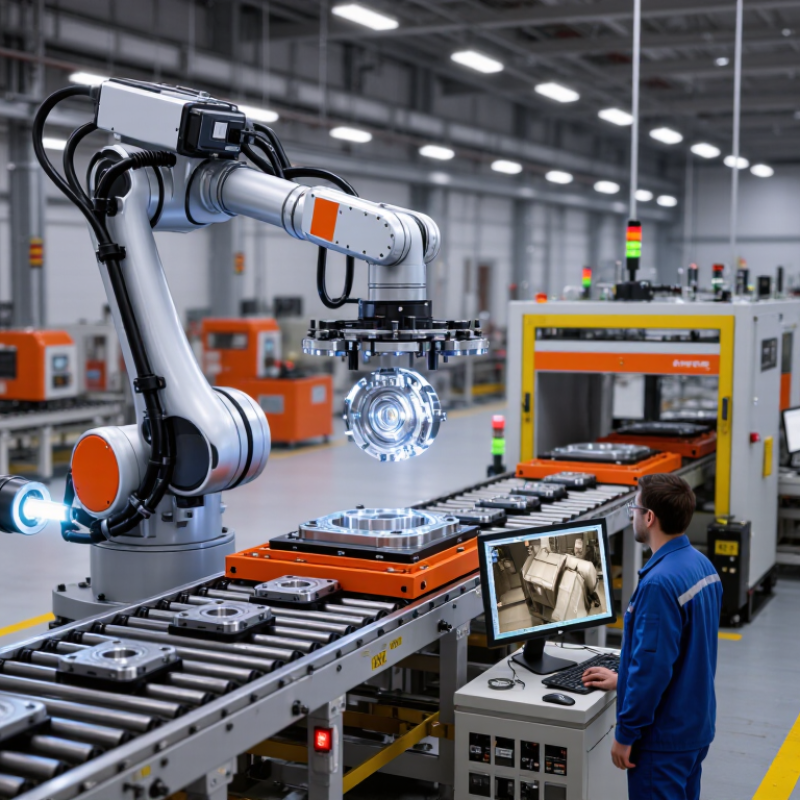
Defining AI and Robotics in Manufacturing
In manufacturing, artificial intelligence (AI) refers to software that uses data to identify patterns, make predictions, or recommend actions. A camera system, for example, may flag a scratch on a metal panel by comparing its image with examples of acceptable surfaces. Robotics refers to machines that perform physical tasks, such as moving parts, tightening fasteners, or placing components on a conveyor. Some robots follow fixed instructions; others adjust their movements using sensor readings.
The distinction matters. AI processes information, while a robot acts on the physical world. They can work together, but neither needs the other: software can estimate machine wear without controlling a robot, and a robot can repeat a programmed motion without learning. At a workcell, a camera might detect a misaligned part, then send a signal for a robotic arm to reposition it. That takes careful setup. Lighting changes, dusty sensors, or unusual parts can reduce accuracy, so people still need to check results and handle exceptions. Not magic. A useful definition should include these limits, because calling every automated machine “AI” can obscure what it actually does. Teams also need clear records of system performance, especially when a missed defect could affect product quality.
Key Technologies Behind Intelligent Manufacturing
What Is AI and Robotics in Manufacturing?
Key Technologies Behind Intelligent Manufacturing
AI and robotics make factory work more responsive, precise, and easier to monitor. Machine-learning systems can examine camera images, vibration readings, and production records to spot patterns. A vision system might flag a scratched metal panel before it reaches packaging. Predictive maintenance tools can also detect unusual motor heat, giving technicians time to inspect a machine before it stops. These tools depend on reliable data. In practice, sensors get dirty, lighting changes, and older equipment may provide incomplete readings.
Tips: Start with one measurable task, such as checking label placement or tracking motor temperature. Compare automated results with human inspections, then adjust the system when they disagree. Small tests reveal more than grand promises.
Robots handle repetitive lifting, precise assembly, and movement between workstations. Collaborative models can share space with trained workers, while automated guided vehicles carry bins along marked routes. AI helps coordinate these systems by adjusting schedules when a station slows down. Yet automation is not effortless. A robot may repeat a poor setup with perfect consistency, and an algorithm can miss defects absent from its training examples. Human oversight remains essential for safety, quality checks, and unusual production problems. Keep clear maintenance records and review false alerts; otherwise, useful warnings may become easy to ignore.
How AI and Robots Work Together on the Factory Floor
On a factory floor, AI and robots contribute different strengths. A robot can lift a heavy component along a repeatable path. AI can help interpret camera images, sensor readings, and production data. Together, they can adjust tasks when parts arrive slightly out of position or a station falls behind. Small details matter.
For example, a camera may detect a seam that looks uneven. AI software can flag the location, while a robotic arm changes its tool path or pauses for inspection. Sensors can confirm whether the part is secured before movement begins. If readings fall outside set limits, the system can stop and request a human check. That takes practice. Poor lighting, dust, or a new part shape may confuse vision systems, so workers need ways to review and correct errors.
People remain essential. Operators set priorities, maintain equipment, and handle exceptions that machines may not understand. A useful setup gives workers clear alerts, safe access, and control over when automated tasks pause. AI predictions can also be wrong, especially when production conditions change. Teams should compare system suggestions with actual results and update procedures carefully. The partnership is practical, but not automatic. On a busy line, even a small delay can expose a flaw in the handoff between software, sensors, and motion.
Common Applications Across Manufacturing Processes
In manufacturing, AI and robotics appear at many points, not just on assembly lines. At inspection stations, cameras can detect scratches, uneven seams, or missing components as products pass beneath them. The lighting must stay consistent. A dusty lens can turn reliable inspection into a stream of false alarms, so workers still need clear review procedures.
Robots move heavy parts between presses, machine tools, and storage areas, reducing repetitive lifting. AI systems can combine vibration, temperature, and operating data to flag a machine that may need attention. A rising vibration reading near a spindle, for example, may prompt a technician to inspect its bearings before a scheduled shift. It is a warning, not proof. Sensor data can be noisy, and maintenance teams should verify the cause.
Production planning also uses AI to adjust schedules when orders, material availability, or machine capacity change. On packaging lines, robotic arms can sort items and place them into cartons at steady speeds. Changeovers are harder. Different product shapes may require new grippers, camera settings, and safety checks, which can slow the line more than expected. Operators often notice awkward handoffs that system logs miss. Their feedback belongs in the improvement process, even when it complicates the data.
AI and Robotics in Manufacturing: Common Applications
Industrial robot installations by application, worldwide, 2023 (approximate share).
Material handling—including machine tending—is the most common application, followed by welding and assembly. AI can support these processes through machine vision, adaptive robot paths, predictive maintenance, and automated quality inspection.
Source: International Federation of Robotics (IFR), World Robotics 2024; shares are rounded.
Benefits, Limitations, and Safety Considerations
AI and robotics can take on repetitive, precise, or physically demanding manufacturing tasks. The International Federation of Robotics’ World Robotics 2024 report counted 4,281,585 industrial robots operating worldwide in 2023, up 10% from 2022. That scale matters. Robots can weld seams, move hot components, or inspect parts at consistent speeds, while AI can flag visual defects for human review. Deloitte’s 2025 smart manufacturing survey found that 92% of surveyed manufacturers expect smart manufacturing to drive competitiveness within three years. These figures show strong adoption and expectations, not guaranteed returns for every factory.
Benefits depend on good data, stable processes, and careful integration. A camera may miss a defect when glare changes, or an AI system may perform poorly on a new material. That happens. Installation, maintenance, staff training, and system updates also add costs; smaller plants may struggle to justify them. Safety needs equal attention. Robot arms can crush or strike workers, especially during setup, repair, or unexpected restarts. Risk assessments, physical guarding, emergency stops, and clear lockout procedures help reduce exposure. Collaborative robots are not automatically safe. Workers need practical training, and supervisors should review near misses instead of treating them as mere paperwork. An efficient cell is still a poor investment if people cannot operate it safely or challenge its decisions.


Fabricator
Inside Sales and Client Support Manager
Glass Handler – 1st Shift