Taking Custom Design to New Levels
PROUD TO BE PART OF THE BRIN FAMILY OF COMPANIES

OTHER BRIN LOCATIONS
Brin Glass Company | Minneapolis, MN
St. Germain’s Glass | Duluth, MN
Heartland Glass | Waite Park, MN

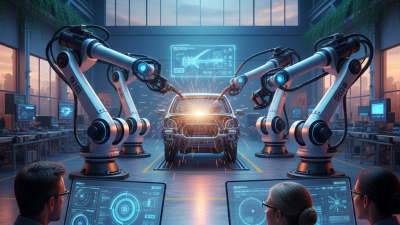
Manufacturing robots are programmable machines that perform physical tasks in factories. They weld car frames, move heavy parts, assemble electronics, and inspect finished products. Unlike simple automated tools, these systems can repeat precise movements with consistent speed and force. They are built for production environments where accuracy, safety, and reliable output matter every day.
A typical robot includes a mechanical arm, motors, sensors, a controller, and a specialized tool. The controller follows programmed instructions, while sensors help the machine detect position, pressure, distance, or unexpected movement. For example, a robotic arm may grip a metal component, rotate it to a fixed angle, and place it within millimeter-level tolerances. Cameras can guide inspection tasks. Safety scanners can stop motion when a person enters a restricted area. The process sounds simple. It is not.
This article explains what manufacturing robots are, how they work, and why factories use different robot types for different jobs. It will examine articulated arms, collaborative robots, autonomous mobile robots, and robotic inspection systems. It will also connect robot performance with programming, maintenance, worker training, and carefully designed safety procedures. Manufacturing robots can improve productivity, but they do not remove every production problem. Poor calibration, worn tools, unclear instructions, or weak risk assessments can create costly failures. That limitation deserves attention. A robot may repeat an incorrect action perfectly. Understanding the technology requires more than admiring its speed; it requires examining its decisions, boundaries, and real working conditions.
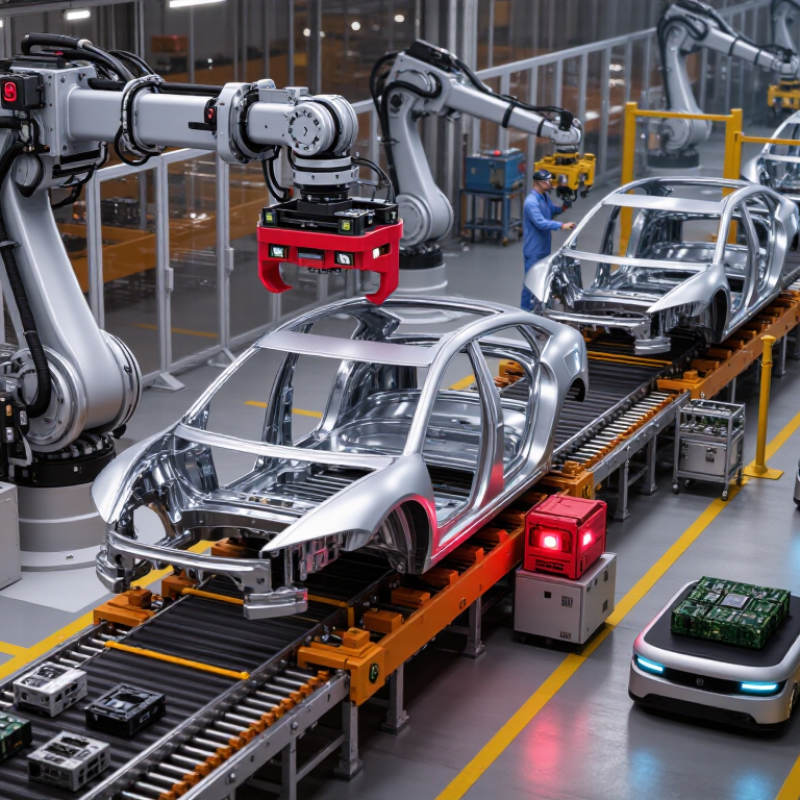
Manufacturing robots are programmable machines built to perform production tasks with speed, consistency, and controlled movement. They can weld metal joints, pick components, assemble products, inspect surfaces, and move heavy pallets. Their design is practical, not magical. A robot usually combines mechanical arms, motors, sensors, safety systems, and software.
In a typical cell, sensors detect a part’s position and condition. The control system then guides the robot through a programmed path. Grippers, welding tools, or inspection cameras change the robot’s function. A worker may load materials, adjust settings, and verify quality. The machine handles repeated motion. People still manage judgment.
541,302 The International Federation of Robotics reported 541,302 industrial robots installed worldwide in 2023. Its World Robotics 2024 report also recorded about 4.28 million robots operating in factories. These figures show strong adoption, but definitions and reporting methods are not perfectly identical across regions. That limitation matters.
Manufacturers design robots around measurable needs: cycle time, payload, reach, accuracy, and workplace risk. A packaging robot may lift cartons every few seconds. An inspection robot may scan a small surface under fixed lighting. Yet automation can disappoint when parts vary too much or maintenance is neglected. More robots do not automatically mean better production. The system, training, and process design must work together.
Manufacturing robots are programmable machines that move materials, tools, or products through controlled workspaces. Their design depends on the task, required accuracy, and available floor space. Articulated robots use several rotating joints, much like a human arm. They handle welding, painting, assembly, and palletizing. A six-axis model can reach around fixtures from different angles, but it needs careful path planning. Speed matters. So does reach.
SCARA robots use horizontal arm movements and suit fast assembly, screwdriving, and electronic component placement. They are accurate on flat production lines, though their vertical range is limited. Delta robots have lightweight arms suspended above a conveyor. They can sort small food or packaged parts at high speed. Cartesian robots move along straight X, Y, and Z axes. Their structure is easier to measure and maintain, making them useful for machining, dispensing, and large-format handling.
Collaborative robots are designed to work near people under controlled conditions. Their force limits and sensing systems can reduce some risks, but they do not remove the need for guarding, training, and risk assessment. In practice, choosing a robot is rarely simple. A fast arm may struggle with changing product shapes. A flexible system may require more programming and maintenance. Engineers often test gripping force, cycle time, cable movement, and emergency stops before installation. Small overlooked details matter. A poorly positioned sensor can interrupt production repeatedly. Even experienced teams revise the layout after watching the robot perform real movements.
Manufacturing robots are programmable machines that sense their surroundings, move through controlled paths, and complete repeatable tasks. Their work starts with input from cameras, proximity sensors, force sensors, and joint encoders. Encoders report each joint’s position. The controller compares this information with programmed instructions. It then adjusts speed, direction, or grip pressure. A robot does not truly understand an object. It reacts to measured signals and defined rules. Reflective metal, dust, or poor lighting can still confuse sensors.
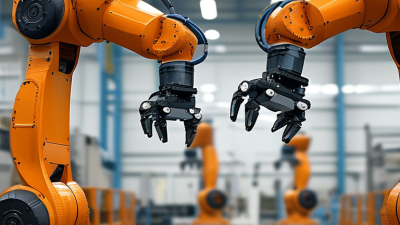
Movement depends on motors, gears, and carefully calculated coordinates. A robotic arm may pick a component, rotate its wrist, and place the part within a fraction of a millimeter. Its end tool determines the task, such as welding, fastening, sorting, or packaging. Technicians calibrate the tool and check the work area before production begins. They also review emergency stops and protective barriers. In real facilities, small alignment errors often appear after maintenance. The process is reliable, but never completely careless.
Tips: Keep sensor lenses clean and inspect cables regularly. Test unusual materials before full production. Record calibration results and unexpected stops. Operators should question repeated errors instead of simply resetting the system. A short manual check can prevent a longer production problem.
What Are Manufacturing Robots and How Do They Work?
A manufacturing robot converts a digital instruction into controlled physical movement. The workflow begins with task definition, such as welding, picking, or machine tending. Engineers map the work area and identify hazards, payload limits, and required accuracy. The robot then receives a programmed path through a controller. Sensors check position, speed, force, and nearby objects. A vision camera may locate a part that arrived slightly off-center. Small errors matter.
During operation, the controller compares sensor feedback with the planned motion. If the gripper detects weak contact, the system can pause or adjust its force. The robot repeats this cycle, often for thousands of parts. The International Federation of Robotics reported 541,302 industrial robot installations worldwide in 2023. Its World Robotics 2024 report also recorded more than 4.28 million robots operating globally. These figures show scale, but they do not guarantee good production.
Technicians still calibrate joints, test emergency stops, and inspect tooling before release. They review cycle time, rejected parts, energy use, and maintenance records. A safe workflow includes controlled access and documented validation. In practice, the sequence is not perfectly linear. A shiny surface can confuse vision software. A worn gripper can create inconsistent placement. Human review remains necessary, especially when conditions change. The machine may repeat a bad instruction perfectly.
| Workflow Step | What the Robot Does | Main Inputs | Typical Output | Relevant Technical Data |
|---|---|---|---|---|
| 1. Workcell Planning | Defines the robot’s tasks, movement limits, tooling, safety zones, and interaction with surrounding equipment. | Part dimensions, process requirements, production volume, cycle-time target, and layout drawings. | A workcell design and task sequence. | Common industrial robot configurations include articulated, SCARA, delta, and Cartesian systems. |
| 2. Part Presentation | Receives parts from a conveyor, pallet, feeder, tray, or machine and moves into the programmed pickup area. | Raw parts, fixtures, pallets, conveyors, and presence sensors. | A part positioned for identification or pickup. | Part orientation and presentation must be repeatable enough for the gripper or vision system to locate the part. |
| 3. Sensing and Identification | Detects part presence, position, orientation, dimensions, or surface features before handling or processing. | Proximity sensors, photoelectric sensors, force sensors, cameras, barcode readers, or measurement devices. | Position data, pass/fail information, or a corrected robot target. | Sensors provide feedback; the robot controller uses this information to confirm conditions or adjust motion. |
| 4. Pickup and Gripping | Moves the end-of-arm tool to the part, closes or activates the tool, and verifies that the part is securely held. | Robot coordinates, gripper commands, air or electrical supply, and grip confirmation signals. | A secured workpiece ready for transport or processing. | Tool selection depends on part geometry, mass, material, surface condition, and required gripping force. |
| 5. Programmed Motion | Follows a sequence of joint or linear movements between programmed points while avoiding obstacles and respecting limits. | Motion program, coordinate frames, speed settings, acceleration limits, and safety signals. | The workpiece reaches the next operation accurately and repeatably. | Industrial robots commonly use six-axis articulated designs when multiple orientations and complex reach paths are required. |
| 6. Manufacturing Operation | Performs or supports tasks such as welding, assembly, machine tending, painting, dispensing, palletizing, or material handling. | Process parameters, tooling, fixtures, machine signals, and the workpiece. | A processed, assembled, coated, welded, or relocated part. | The robot provides repeatable positioning; process quality also depends on tooling, materials, equipment settings, and maintenance. |
| 7. In-Process Verification | Checks whether the operation was completed and whether the part meets defined conditions before release. | Cameras, force or torque readings, weld monitors, dimensional sensors, and machine feedback. | Accepted part, rejected part, or an inspection alert. | Inspection can be integrated into the cycle or performed at a separate station, depending on the required quality checks. |
| 8. Placement or Handover | Places the finished part into a fixture, container, pallet, inspection area, or downstream machine. | Destination coordinates, release command, container status, and downstream equipment signals. | Correctly positioned finished part or segregated rejected part. | Placement accuracy depends on robot repeatability, fixture design, calibration, payload, and environmental conditions. |
| 9. Cycle Reset | Returns to a safe or ready position, confirms the cycle status, and waits for the next part or command. | Cycle-complete signal, production counters, sensor status, and interlock conditions. | A ready-to-repeat automated cycle. | Cycle time includes robot motion, gripping, processing, inspection, communication, and any required dwell time. |
| 10. Safety and Monitoring | Monitors protective devices, operating conditions, faults, and access restrictions; stops or limits motion when necessary. | Guard doors, emergency stops, light curtains, area scanners, safety-rated controls, and diagnostic data. | Safe stop, reduced-speed operation, fault message, or permission to continue. | A complete robot cell requires a documented risk assessment, safeguarding measures, and procedures for setup, operation, and maintenance. |
Manufacturing robots are programmable machines that repeat physical tasks with controlled speed and accuracy. Their sensors detect position, force, and distance. A controller then converts production instructions into coordinated movement. End effectors, such as grippers or welding tools, perform the actual work. The process looks precise, but it is not effortless.
Safety improves when robots handle hot parts, sharp edges, heavy loads, or repetitive lifting. Workers can remain outside guarded cells while robots complete hazardous movements. The International Federation of Robotics reported 541,302 industrial robot installations worldwide in 2023, with more than 4.28 million robots operating globally in factories. This scale makes risk assessment, guarding, emergency stops, and lockout procedures increasingly important. Automation is not automatically safe. Poor maintenance or unclear human-robot boundaries can create serious hazards.
Robots also support consistent quality and production efficiency. A vision sensor can check a small surface defect that tired eyes might miss. A programmed arm can apply the same force across thousands of assemblies. The International Federation of Robotics links higher robot adoption with manufacturers seeking productivity and resilience, especially during labor shortages. Yet consistency can repeat mistakes. A misaligned tool may create identical defects all day. Practical experience still matters: technicians must review inspection data, adjust programs, and question unusual results. Output rises only when equipment, workers, materials, and software work together.
Taking Custom Design to New Levels

Brin Glass Company | Minneapolis, MN
St. Germain’s Glass | Duluth, MN
Heartland Glass | Waite Park, MN

Fabricator
Inside Sales and Client Support Manager
Glass Handler – 1st Shift