Taking Custom Design to New Levels
PROUD TO BE PART OF THE BRIN FAMILY OF COMPANIES

OTHER BRIN LOCATIONS
Brin Glass Company | Minneapolis, MN
St. Germain’s Glass | Duluth, MN
Heartland Glass | Waite Park, MN

Why Should You Buy a Bed Fan? The answer may begin with an ordinary moment: warm sheets, a restless turn, and a room that already feels cool. A Bed Fan directs air beneath the covers, helping sleepers adjust their personal bed climate without cooling the entire room. It is a practical option, not a cure for every cause of poor sleep.
BedJet founder Mark Aramli’s product guidance, paraphrased, centers on adjustable airflow as a way to personalize sleep comfort. That idea is useful, but it should not be mistaken for a guarantee. Results depend on the bedding, room conditions, airflow settings, and each person’s preferences. Some people may enjoy a gentle stream of air; others may find it distracting or too cool. Small details matter.
A closer look can help you decide whether the device fits your habits. Consider setup, noise, controls, cleaning, energy use, and compatibility with your bed. Check the manufacturer’s instructions before use, especially if you share a bed or have specific health concerns. Comfort is personal. And a little trial and adjustment may be needed. A Bed Fan can make bedtime feel less stuffy, but it will not fix every restless night. That is worth saying plainly.
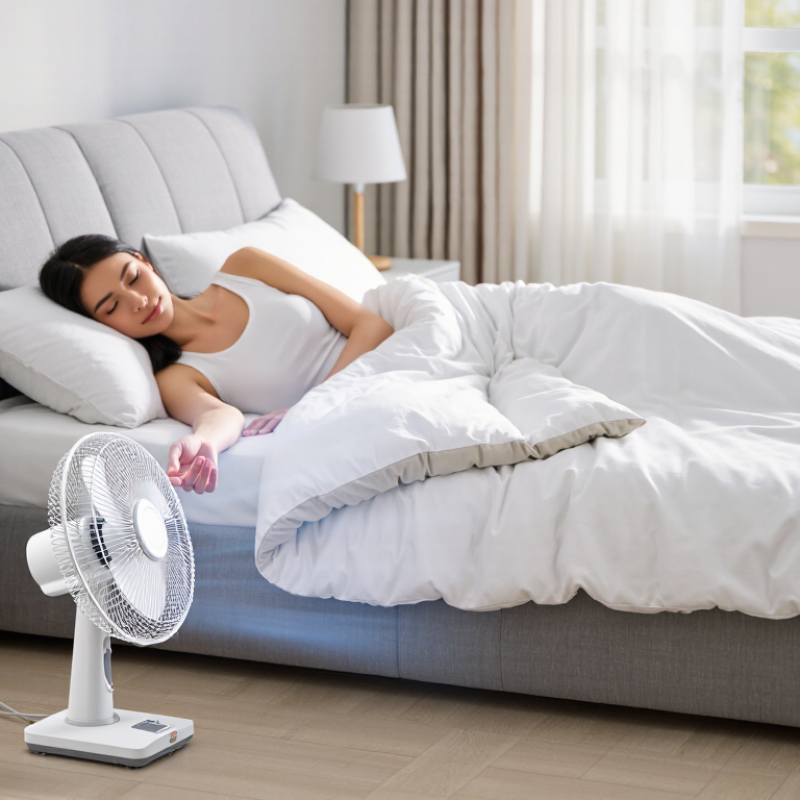
A bed fan is a small air-moving device that directs airflow beneath the top sheet, usually through a hose positioned near the foot of the bed. A blower sits beside or under the bed and pushes air into the space between the sheets. The moving air helps carry away warmth and moisture near the sleeper’s skin. It does not refrigerate the air or lower the room’s temperature.
No magic involved. The distinction is easy to miss.
This targeted airflow matters because comfort depends on more than room temperature. ASHRAE Standard 55-2023 identifies air temperature, radiant temperature, humidity, air speed, clothing, and activity as factors in thermal comfort. A bed fan changes air speed close to the body, rather than cooling the whole room.
The U.S. Department of Energy’s Energy Saver guidance says ceiling fans may let people raise thermostat settings by about 4°F without reducing comfort; that figure concerns ceiling fans, not bed-fan testing. Still, it illustrates how air movement can affect perceived comfort.
A bed fan’s results depend on sheet weight, room conditions, and airflow settings. Thick bedding can blunt the effect. It may take a few nights to find a comfortable setting.
Warm air can collect beneath a duvet, leaving your back or legs uncomfortably hot. A bed fan moves air through the space between the mattress and top sheet, helping heat escape without cooling the whole room. The gentle airflow can make a noticeable difference on humid nights. It is a comfort aid, not a treatment for insomnia or other sleep conditions.
The American Academy of Sleep Medicine recommends that adults regularly get at least seven hours of sleep. Yet a CDC analysis of 2014 survey data found that 35.2% of U.S. adults usually slept less than seven hours. Temperature is only one factor, but reducing nighttime overheating may help some people stay comfortable. Small change. Results vary, and airflow that feels soothing to one sleeper may bother another.
Tips: Start with the lowest fan setting and aim airflow beneath the sheet, not directly at your face. Keep the intake clear of bedding, and try a timer if you wake feeling chilly. Notice whether the room is humid, too; a fan moves air but does not remove moisture. If heat discomfort persists, consider other causes and seek professional advice when appropriate.
A bed fan moves air beneath or across the sheets, helping reduce the warm, trapped feeling that can interrupt sleep. Unlike a room fan, many models use a narrow hose or low-profile unit to direct airflow toward the bed. Some sit beside the mattress; others attach near the foot of the bed. Look for adjustable speed settings, a stable base, and controls you can reach without getting up. A timer can help prevent chilly airflow late at night. It is a small detail, but it matters.
Available types include under-sheet fans, bedside air hoses, and compact fans aimed across the mattress. Under-sheet designs spread air through a flat channel, while hose models send it toward a chosen area. Check the noise level, hose placement, cleaning instructions, and whether the unit fits your bed frame.
Airflow may feel uneven if blankets block the outlet. A bed fan can improve comfort, but it cannot fix a hot room or replace medical advice for persistent sleep problems. I would check return terms, too; comfort is personal, and product descriptions cannot predict every bedroom.
Tips: Start on the lowest setting and adjust after a few minutes. Keep the intake clear of bedding and dust. If the airflow dries your skin or feels distracting, reposition the outlet or lower the speed.
A bed fan cools the sleeper, not the whole room. It sends air beneath the covers, helping reduce trapped warmth around your legs and torso. Room air conditioning works differently: it lowers the temperature of the entire space and can also manage humidity. That wider coverage may suit hot, humid nights, but it can use more energy. The International Energy Agency reported that space cooling used about 10% of global electricity in 2018. That figure covers cooling broadly, not bed fans specifically.
A bed fan may be a more focused option when the room already feels comfortable but the bedding gets stuffy. The U.S. Department of Energy says ceiling fans can let people raise thermostat settings by about 4°F while maintaining comfort. This is guidance for ceiling fans, not a tested performance claim for bed fans. Cooling mattress pads offer another targeted approach, but they may involve water circulation, extra setup, or a different feel against the skin. Small trade-offs matter.
Tips: Start with low airflow and adjust after a few minutes. Check that the air path stays clear beneath the covers. If the room itself is warm, a bed fan may not be enough. That distinction is easy to miss.
| Comparison | Bed Fan | Room Fan | Air Conditioning | Cooling Mattress Pad | Lightweight Bedding |
|---|---|---|---|---|---|
| Where it acts | Directs air into or beneath the bedding to affect the space around the sleeper. | Moves air around the room and across exposed skin. | Changes the temperature of the room by cooling and circulating indoor air. | Targets the sleeping surface; some designs circulate water or use other temperature-control methods. | Reduces insulation around the body by using lighter sheets or blankets. |
| Best suited to | People who feel warm under the covers but do not necessarily want to cool the whole room. | People who want general air movement, especially when they are not fully covered. | Hot rooms or situations where lowering the overall indoor temperature is important. | People seeking temperature adjustment at the mattress surface, depending on the pad design. | People who feel too warm because their bedding retains more heat than they prefer. |
| Room temperature effect | Usually limited; it mainly moves air near the bed rather than cooling the whole room. | Does not lower room temperature; moving air can make people feel cooler. | Can lower room temperature when properly sized and operating effectively. | Usually limited; it mainly affects the bed or sleep surface. | Does not lower room temperature. |
| Airflow or contact | Airflow is directed toward the bed and may be adjustable on some models. | Airflow is usually more exposed and directed across the room or toward the sleeper. | Provides room-level air circulation; airflow depends on the system and vent placement. | Cooling is delivered through contact with the sleep surface rather than room airflow. | No active airflow or temperature control. |
| Typical energy use | Generally uses less electricity than whole-room air conditioning, but actual use depends on the device and settings. | Generally uses less electricity than whole-room air conditioning; consumption varies by fan size and speed. | Typically uses more electricity than a small fan because it actively cools the room. | Varies considerably by design; powered models require electricity, while passive pads do not. | Uses no electricity by itself. |
| Main advantages | Focused airflow at the bed; may let some sleepers stay comfortable without cooling the entire room. | Simple way to improve air movement; can be repositioned for different uses. | Cools the whole room and can be useful when ambient heat is the main problem. | Provides a bed-focused option without relying solely on room airflow. | Simple, quiet, and easy to try before buying powered equipment. |
| Things to consider | Requires space and setup near the bed; airflow, noise, and comfort vary by design and personal preference. | May not help much if the room itself is very hot; some people dislike airflow blowing directly on them. | Installation, purchase, and running costs can be higher; performance depends on the room and system. | Comfort, maintenance, and running costs depend on the specific design; check care and compatibility requirements. | May be insufficient when the room is hot or the bedding is not the main source of discomfort. |
| A practical choice when… | You want targeted airflow around the bed and prefer not to cool unused parts of the room. | You want broad, straightforward air movement and the room is not excessively hot. | You need the room itself to be cooler, not just the area around the bed. | You want a sleep-surface-focused approach and are comfortable with the pad’s specific setup. | You want to start with a low-cost, non-powered change to your sleep setup. |
Actual comfort, noise, energy use, and effectiveness vary with room conditions, device design, bedding, and personal preference. A bed fan moves air; it does not replace air conditioning when the room itself needs to be cooled.
Who May Benefit Most From Using a Bed Fan?
People who wake sweaty or throw off the covers during the night may appreciate focused airflow. This can include people experiencing menopause-related hot flashes. The U.S. Department of Health and Human Services’ Office on Women’s Health reports that about three in four women experience hot flashes during menopause. A bed fan may offer a practical way to cool the sleeping area without lowering the temperature of the whole room. It is not a treatment for hot flashes, though, and results will vary.
Warm sleepers may also find one useful when a partner prefers a warmer room. The Centers for Disease Control and Prevention recommends at least seven hours of sleep for most adults, yet its sleep data show that roughly one in three U.S. adults report getting too little. A fan cannot solve every cause of poor sleep. Still, gentle airflow across the sheets may make a stuffy bedroom feel more comfortable. Small change. Sometimes that helps.
Consider a bed fan if heat repeatedly wakes you, if night sweats leave your sheets damp, or if you want airflow without pointing a large fan at your face. Check that the air does not dry your eyes or skin, and keep the setting comfortable rather than chilly. Personal comfort is not perfectly predictable; a fan that feels soothing one night may feel distracting the next. Persistent or severe night sweats deserve discussion with a healthcare professional, since heat is not always the only cause.
Taking Custom Design to New Levels

Brin Glass Company | Minneapolis, MN
St. Germain’s Glass | Duluth, MN
Heartland Glass | Waite Park, MN

Fabricator
Inside Sales and Client Support Manager
Glass Handler – 1st Shift