Taking Custom Design to New Levels
PROUD TO BE PART OF THE BRIN FAMILY OF COMPANIES

OTHER BRIN LOCATIONS
Brin Glass Company | Minneapolis, MN
St. Germain’s Glass | Duluth, MN
Heartland Glass | Waite Park, MN

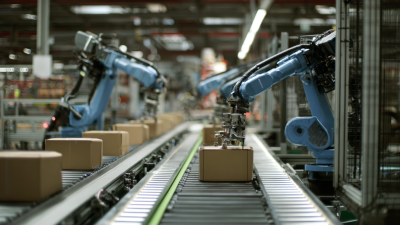
Global buyers are no longer choosing robotic automation based only on speed or futuristic appeal. They are assessing practical value across factories, warehouses, laboratories, and service operations. A robotic arm beside a conveyor may reduce repetitive handling, but its real performance depends on integration, operator training, maintenance, and reliable data.
Joseph Engelberger, widely regarded as the father of industrial robotics, once said, “I can’t define a robot, but I know one when I see one.” His observation still matters. Today’s solutions vary greatly. Some handle welding and palletizing. Others support machine tending, inspection, picking, or collaborative assembly. The best option depends on production volume, floor space, material flow, workforce skills, and regional safety requirements.
This Top 10 guide examines robotic automation solutions from a global buyer’s perspective. It considers deployment experience, system flexibility, total ownership costs, cybersecurity, supplier support, and integration with existing equipment. It also looks at less visible details, such as spare-part availability and response times after installation. These details can decide whether a system becomes useful or frustrating.
No ranking is perfect. Vendor claims can sound impressive. Real factories are messier. A solution that succeeds in Germany may need adjustment in Brazil, India, or Canada. Buyers should validate performance through demonstrations, reference sites, and carefully defined pilot projects. Human oversight remains essential. Automation should improve work, not simply move problems elsewhere.
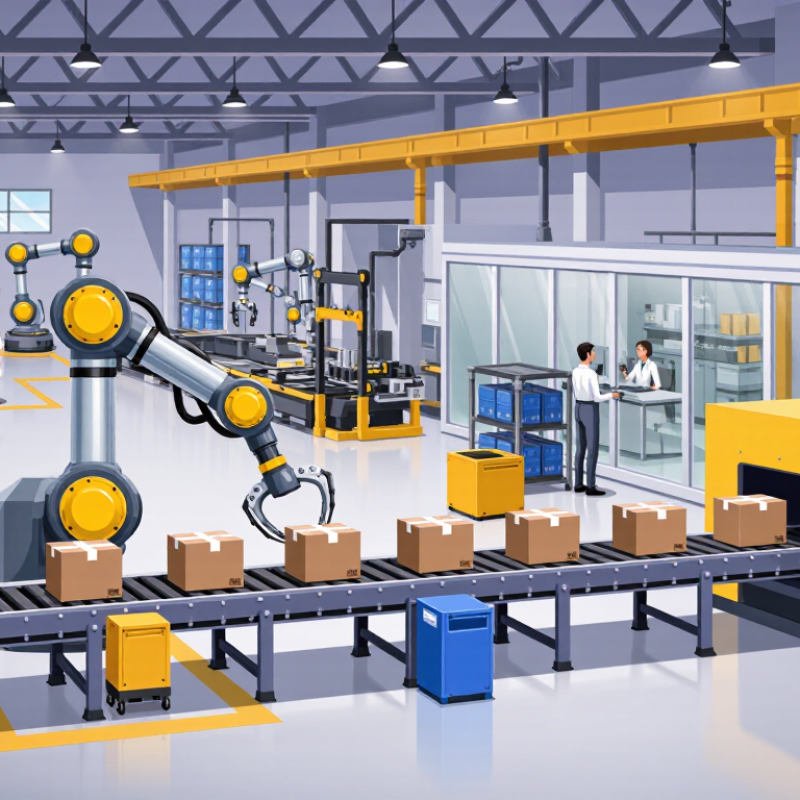
Robotic automation combines programmable machines, sensors, software, and control systems. It performs physical or digital tasks with limited human intervention. The definition matters. It includes robotic arms, mobile platforms, vision systems, and automated inspection tools.
In global factories, these systems handle welding, palletizing, picking, assembly, and quality checks. They can repeat movements precisely beside human operators. According to the International Federation of Robotics’ World Robotics 2024 report, 541,302 industrial robots were installed worldwide in 2023. The global operational stock reached approximately 4.28 million units. This growth reflects labor shortages, production reshoring, and demand for consistent output. The World Economic Forum’s Future of Jobs Report 2025 states that 86% of surveyed employers expect artificial intelligence and information-processing technologies to transform their businesses by 2030. Robotic automation is part of that shift.
However, automation is not magic. A poorly designed workflow can produce expensive speed. Global buyers should examine cycle time, maintenance access, worker training, data security, and local safety requirements. Integration also matters. A machine may perform perfectly but fail to communicate with existing systems. That is a common weakness. Pilot testing under real production conditions is wiser than trusting a polished demonstration. Sustainable value comes from measurable uptime, safer workstations, adaptable programming, and transparent performance records. Human judgment remains essential when materials, demand, or regulations change.
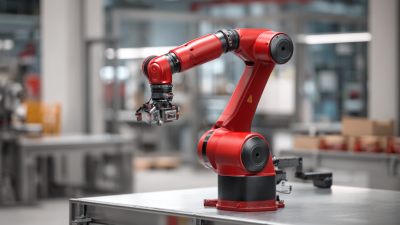
Classifying the Top 10 Robotic Automation Solutions requires more than ranking machines by sales. Global buyers should compare task, movement, payload, safety, software, and integration effort. The ten practical classes are articulated robots, SCARA robots, delta robots, collaborative robots, autonomous mobile robots, automated guided vehicles, robotic welding cells, vision-guided picking systems, palletizing systems, and robotic process automation. Each class solves a different operational constraint.
The International Federation of Robotics reported 541,302 industrial robot installations worldwide in 2023. Its World Robotics 2024 report also recorded more than 4.2 million industrial robots operating globally. These figures support a broad classification, not a single “best” solution. Articulated robots suit complex welding and handling. SCARA systems deliver speed in compact assembly areas. Mobile robots reduce walking distances, while palletizing systems stabilize repetitive end-of-line work. Vision systems add flexibility when product positions change.
The classification is useful, but not flawless. A collaborative robot may improve access, yet it can move slower than a fenced industrial cell. An autonomous vehicle may reduce manual transport, but poor warehouse mapping can create delays. IFR also reported over 113,000 professional transport and logistics robots sold in 2023, showing strong demand for mobile automation. Buyers should test cycle time, maintenance response, worker training, and total integration cost before choosing. Attractive demonstrations can hide difficult edge cases.
Classification by representative payload capacity. Values show the midpoint of common industrial deployment ranges; actual capacity varies by robot configuration, tooling, and workflow.
Higher payload requirements are typically associated with palletizing and internal material transport, while inspection and assembly applications generally use lighter robotic systems.
Comparing Key Technologies, Capabilities, and Industry Applications
Global buyers usually compare ten practical solutions: industrial arms, collaborative robots, autonomous mobile robots, automated guided vehicles, vision systems, palletizing cells, picking robots, welding robots, packaging robots, and inspection systems. Industrial arms suit high-speed assembly, welding, and machining. Collaborative robots support lighter tasks near trained workers. Mobile robots move totes across warehouses, while guided vehicles follow fixed routes. Vision technology adds barcode reading, defect detection, and dimensional checks. It is powerful, but poor lighting can reduce accuracy.
Capability depends on more than payload and cycle time. Buyers should test reach, repeatability, software compatibility, safety controls, and maintenance access. A palletizing cell may handle heavy cartons efficiently, while a picking robot needs sensitive gripping and reliable object recognition. Packaging systems often deliver speed, but frequent product changes can create expensive downtime. Inspection robots improve consistency in electronics, food processing, and automotive production. They still need calibrated cameras and clear acceptance standards.
In factory assessments, I examine a real production shift, not only a polished demonstration. Operators may need simple controls and quick recovery after a jam. Training matters. So does local technical support. A pilot can succeed on one product and fail on another. That weakness deserves attention. Buyers should compare total operating cost, integration time, energy use, and expected service life before choosing a solution. No ranking stays perfect across every industry or facility.
Choosing robotic automation for global operations requires more than comparing purchase prices. Buyers should calculate the total cost of ownership, including installation, programming, training, spare parts, energy use, and planned downtime. A low-cost system may become expensive when local technicians cannot service it quickly. Ask for documented performance data from similar production environments.
Integration deserves equal attention. Check communication protocols, floor-space requirements, cycle-time limits, and compatibility with existing equipment. Safety should be tested before production begins, not after an incident. Review guarding, emergency stops, access controls, risk assessments, and operator training. Requirements can differ across countries, so request current conformity documents and consult qualified local compliance professionals. Paperwork alone is not enough.
Tips: Run a small pilot with real materials, lighting, and operators. Measure rejects, recovery time, noise, and maintenance effort. Keep written records. Do not trust perfect demonstrations; factory conditions are rarely perfect. Include cybersecurity controls for connected equipment and restrict remote access. A useful contract should define acceptance tests, software updates, service response times, and responsibility for compliance changes. Some buyers overlook worker feedback, yet operators often identify awkward loading positions or unsafe shortcuts first. That feedback may reveal weaknesses that laboratory testing misses.
| Rank | Robotic Automation Solution | Typical Applications | Typical Installed Cost (USD) |
Deployment Time | Payload / Reach Profile | Integration Complexity | Typical Safety Framework | Global Compliance Considerations | Estimated Payback Range | Buyer Suitability |
|---|---|---|---|---|---|---|---|---|---|---|
| 1 | Robotic Palletizing Cell | End-of-line palletizing, layer forming, case stacking, slip-sheet handling | US$100,000–250,000 | 10–24 weeks | 80–700 kg payload; 2.0–3.2 m reach | Medium Requires conveyors, pallet dispensers, grippers, and production-line signals |
Risk assessment, perimeter guarding, interlocked access gates, emergency stops, ISO 10218 and ISO 13849 principles | Machine-safety assessment, electrical conformity, local workplace-safety rules, and applicable palletizing-cell standards | 12–30 months | High-volume manufacturing, food, beverage, consumer goods, and logistics operations |
| 2 | Robotic Case Packing and Cartoning Cell | Product loading, carton erection, case packing, closing, and changeover | US$120,000–300,000 | 12–28 weeks | 5–50 kg payload; 0.8–2.6 m reach | Medium to High Packaging-machine synchronization and recipe management are usually required |
Guarding or validated collaborative limits, presence sensing, safety-rated controls, ISO 10218, ISO 13849, and ISO 12100 principles | Packaging regulations, electrical safety, food-contact requirements where relevant, and regional machinery conformity procedures | 18–36 months | Manufacturers with multiple carton formats and frequent product changeovers |
| 3 | Collaborative Assembly Workstation | Screwdriving, insertion, inspection assistance, kitting, and light assembly | US$45,000–150,000 | 6–16 weeks | 3–20 kg payload; 0.5–1.3 m reach | Low to Medium Often integrates with hand tools, fixtures, vision, and operator-guidance software |
Application-specific risk assessment is essential; ISO/TS 15066 guidance may apply to collaborative operation, together with ISO 10218 and ISO 13849 principles | Worker exposure limits, local occupational-safety requirements, electrical conformity, and documented validation of collaborative modes | 12–24 months | High-mix, low-to-medium-volume production requiring flexible human–robot cooperation |
| 4 | Autonomous Mobile Robot (AMR) Fleet | Material transport, line replenishment, tote movement, warehouse transfer, and route-based delivery | US$60,000–250,000 per initial fleet cell | 8–20 weeks | 100–2,000 kg payload; facility-dependent travel range | Medium to High Requires map creation, fleet management, traffic rules, ERP/WMS/MES interfaces, and charging strategy |
Navigation risk assessment, speed and separation monitoring, emergency-stop functions, ISO 3691-4 principles, and ISO 13849 principles | Industrial-truck or mobile-robot safety rules, radio and battery requirements, site traffic controls, and regional machinery conformity | 18–36 months | Large facilities with repetitive internal logistics and measurable forklift or tugger traffic |
| 5 | Automated Storage and Retrieval System | High-density storage, tote handling, order buffering, inventory retrieval, and goods-to-person workflows | US$500,000–5,000,000+ | 9–24 months | Container or pallet loads; height and capacity are site-specific | High Requires warehouse-control software, structural coordination, fire protection, conveyors, and data integration |
Machine guarding, access control, emergency procedures, structural safety, fire protection, ISO 12100 and ISO 13849 principles | Building permits, fire codes, seismic or structural requirements, electrical conformity, and local occupational-safety regulations | 24–60 months | Distribution centers with high storage density, predictable inventory flow, and long-term volume commitments |
| 6 | Robotic Machine-Tending Cell | CNC loading and unloading, press tending, die-casting transfer, part washing, and pallet exchange | US$90,000–280,000 | 10–24 weeks | 5–250 kg payload; 1.0–3.0 m reach | Medium Integrates with machine I/O, door controls, part-present sensors, tooling, and inspection devices |
Interlocked guarding, safety-rated monitored stops, lockout/tagout procedures, ISO 10218, ISO 13849, and ISO 12100 principles | Machine-tool safety, electrical conformity, guarding requirements, operator training, and country-specific workplace rules | 12–30 months | Metalworking, automotive components, electronics, and other repetitive machine operations |
| 7 | Robotic Welding Cell | Arc welding, seam tracking, fixture loading, tack welding, and repeatable fabrication | US$120,000–350,000 | 12–30 weeks | 6–250 kg payload; 1.2–3.0 m reach | Medium to High Requires fixtures, welding power integration, fume extraction, process parameters, and quality controls |
Fully guarded cell, welding-fume control, fire prevention, arc-flash protection, ISO 10218, ISO 13849, and applicable welding-safety rules | Electrical safety, electromagnetic compatibility, ventilation, occupational exposure limits, and local fire and machinery requirements | 18–36 months | Fabrication environments seeking consistent weld quality and reduced exposure to heat, fumes, or awkward postures |
| 8 | Vision-Guided Picking and Sorting Cell | Random-bin picking, defect sorting, component orientation, quality inspection, and depalletizing | US$100,000–300,000 | 12–28 weeks | 0.1–50 kg payload; 0.6–2.5 m reach | High Vision training, lighting, gripper development, product variation, and database integration affect performance |
Guarding or validated collaborative operation, safe restart, safety-rated monitoring, ISO 10218, ISO 13849, and ISO 12100 principles | Data-processing controls where images are stored, product traceability, electrical conformity, and sector-specific quality regulations | 18–42 months | Operations handling variable parts, high inspection volumes, or labor-intensive sorting tasks |
| 9 | Robotic Dispensing and Sealing System | Adhesive application, gasket dispensing, sealing, potting, coating, and controlled material deposition | US$80,000–250,000 | 10–24 weeks | 2–50 kg payload; 0.8–2.2 m reach | Medium Needs material-temperature control, pumps, nozzles, curing equipment, and process monitoring |
Guarding, chemical exposure controls, pressure-system safeguards, emergency stops, ISO 10218 and ISO 13849 principles | Chemical handling, ventilation, worker exposure, waste disposal, electrical conformity, and product-specific environmental rules | 18–36 months | Automotive, electronics, appliances, medical-device, and general industrial assembly |
| 10 | Robotic Inspection and Metrology Cell | Dimensional inspection, surface inspection, non-contact measurement, barcode verification, and final quality checks | US$100,000–400,000 | 12–32 weeks | 1–100 kg payload; 0.8–3.0 m reach | Medium to High Requires calibrated sensors, measurement software, quality databases, and defined acceptance criteria |
Machine guarding, laser or optical-source controls where applicable, safe access, ISO 10218, ISO 13849, and ISO 12100 principles | Calibration traceability, measurement-system validation, data integrity, sector quality standards, and local electrical conformity | 24–48 months | Industries where inspection consistency, traceability, and reduced manual measurement are strategic priorities |
Cost figures are indicative installed-system ranges in 2026 USD and generally include the robot, end-of-arm tooling, basic controls, safety equipment, integration, and commissioning. Facility construction, taxes, shipping, major utilities, product redesign, and extended service contracts may be additional. Final compliance obligations depend on the destination country, application risk assessment, industry, and local authority requirements.
Selecting robotic automation requires more than comparing prices. Match the system to the work.
Fixed robots suit stable, high-volume production.
Collaborative robots fit smaller cells, frequent changeovers, and close human interaction.
Mobile robots can reduce long walking routes in warehouses, but they need reliable maps and traffic rules.
Vision-guided systems help with variable parts, although poor lighting can quickly weaken accuracy.
The International Federation of Robotics reported 541,302 industrial robots were installed worldwide in 2023.
That growth signals opportunity, not automatic success. Deloitte’s 2023 Global Smart Manufacturing Survey found that 86% of manufacturing leaders expect smart manufacturing to become a major competitiveness driver within five years.
Buyers should examine cycle time, payload, reach, safety functions, integration effort, training, and maintenance access. Test real products, including damaged cartons, reflective surfaces, and rushed handovers. A polished demonstration can hide difficult factory conditions. No scorecard is perfect.
Tips:
Start with one measurable bottleneck. Record baseline labor hours, downtime, defects, and changeover time. Ask suppliers for a live pilot using your materials.
Confirm data ownership, cybersecurity controls, spare-part availability, and local service coverage. Calculate the full cost over five years, not only the purchase price.
Leave room for human judgment. Automation may improve speed while creating overlooked supervision work.
Review the results after thirty, sixty, and ninety days, then adjust the design.
Taking Custom Design to New Levels

Brin Glass Company | Minneapolis, MN
St. Germain’s Glass | Duluth, MN
Heartland Glass | Waite Park, MN

Fabricator
Inside Sales and Client Support Manager
Glass Handler – 1st Shift