Top Enclosure Box Suppliers for Global Buyers?
Choosing an enclosure supplier is not just a search for a metal box or molded shell. Global buyers must match protection, materials, manufacturing capacity, and delivery reliability to the conditions their equipment will face. A cabinet beside a dusty production line has different needs from a compact housing exposed to rain, salt air, or vibration. Small details matter: door seals, cable entries, mounting points, and finish quality can all affect performance.
A useful design lens comes from architect Louis Sullivan’s famous maxim, “form ever follows function.” Sullivan was not an enclosure-industry specialist, so this is a broad design principle, not enclosure-specific advice. Still, it points buyers toward a practical question: does the product suit its actual job? A supplier’s catalog may look impressive. The details deserve a closer look.
This guide explores leading Enclosure Boxes suppliers for global buyers, with attention to product range, customization, quality controls, certifications, lead times, and support across regions. Compare specifications carefully, and confirm that stated ratings match your installation and application. Ask how suppliers manage samples, revisions, and production consistency. Price matters, of course. So does what happens when a drawing changes late—or when a shipment arrives with a fit issue. No shortlist can replace technical review. That may sound less convenient, but it is a useful reality to keep in view.
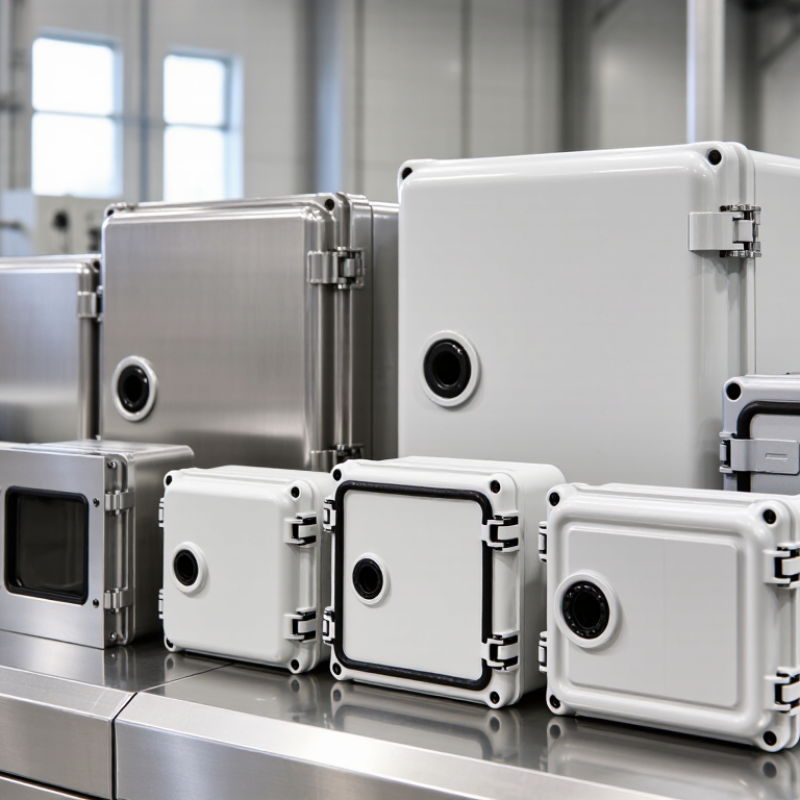
What Enclosure Boxes Are and How Global Industries Use Them
Enclosure boxes are protective housings for electrical, electronic, and control equipment. They help limit contact with live parts, dust, moisture, impact, and other site conditions. Their protection depends on materials, seals, design, and installation. A box beside a food-processing washdown line may need different features from one inside a dry control room. Fit matters.
Tips: Check equipment dimensions, cable-entry points, heat output, and mounting space before selecting a box. Leave room for wiring bends and future maintenance. Confirm ingress and impact ratings against the actual environment; ratings are useful only when the enclosure is installed as specified.
Global industries use enclosure boxes in factory automation, building controls, renewable-energy systems, transport infrastructure, and telecommunications. Technicians may open them to inspect terminals, replace a controller, or trace a cable fault. Corrosion-resistant materials can suit coastal sites, while nonmetallic housings may reduce weight or electrical conductivity concerns. One easy-to-miss planning gap: teams may focus on the box and overlook ventilation or cable glands. Those details can affect reliability just as much.
Types of Enclosure Box Suppliers and Their Manufacturing Models
Electrical enclosure suppliers generally follow three manufacturing models: original equipment manufacturing, contract production, and distribution-led sourcing. OEM suppliers design standard or configurable boxes to their own specifications. Contract manufacturers build from buyer drawings, often providing laser cutting, bending, welding, coating, and assembly. Distributors typically stock common sizes for faster replenishment. Different strengths.
MarketsandMarkets’ Electrical Enclosure Market report estimated the market at USD 7.5 billion in 2023 and forecast USD 10.3 billion by 2028. The figures indicate demand, not any supplier’s actual capacity. Buyers should check what the report includes and compare it with factory evidence. Ask for material-thickness records, coating specifications, and test reports. A polished datasheet can hide inconsistent process control.
For recurring orders, contract production may support custom cutouts and stable revision control. Small runs matter. Stocking distributors can suit urgent replacements, though unusual dimensions may take longer. Integrated manufacturers may handle design changes and assembly in-house, but verify which processes are subcontracted. Request a sample with the intended cable entries, mounting holes, and finish. Inspect edges, door alignment, and gasket compression; these details reveal more than a catalog image. That distinction is useful, but supplier models often overlap.
Key Factors for Evaluating Suppliers Across Global Markets
Global buyers should assess enclosure suppliers against the conditions the box will actually face. A cabinet near a humid coastline needs different corrosion protection from one installed in a clean indoor plant. Ask suppliers to explain material choices, coating thickness, sealing methods, and temperature limits. Request test reports for the enclosure’s stated protection rating, not just a product-page claim. Details matter.
Compare drawings, tolerances, and sample parts before approving a large order. Check whether cable entries, mounting points, and door clearances match your equipment. A small mismatch can mean drilling or rework on site. Ask how design changes are recorded and who checks them before production. Answers should be specific, not simply reassuring.
Global supply also depends on communication and delivery planning. Confirm typical lead times, packaging methods, spare-part availability, and how delays are reported. Review quality records and ask what happens when a batch fails inspection. A spreadsheet helps, but it can hide weak evidence behind neat scores. I would treat an unexplained gap in documentation as a question to resolve, not automatic proof of poor quality. Compare quotations carefully: a low unit price may exclude testing, custom cutouts, or protective packaging. Verify those assumptions in writing before placing an order.
Key Factors for Evaluating Enclosure Box Suppliers
This illustrative assessment model allocates 100% across common sourcing considerations. Quality and certifications receive the highest weight, while the best balance depends on each project’s technical, regulatory, and delivery requirements. These weights are not market-survey results.
How to Compare Materials, Customization, Quality, and Compliance
Top Enclosure Box Suppliers for Global Buyers?
Compare enclosure materials against the installation environment, not just the purchase price. The MarketsandMarkets 2023 electrical enclosure report estimated a USD 7.4 billion market, forecasting USD 10.1 billion by 2028. That growth makes supplier claims easy to find, but evidence matters more. Stainless steel suits many corrosive or washdown settings; powder-coated steel can work indoors, while polycarbonate reduces weight and resists corrosion. Check wall thickness, gasket fit, hinge strength, and cable-entry options on a physical sample. Small details count.
Customization should preserve protection, not weaken it. Ask for drawings, tolerances, material certificates, and test records for the finished configuration. IEC 60529 defines IP ratings for protection against dust and water, but a rating should match the actual door, gland, and mounting arrangement. Quality checks should include coating thickness, weld consistency, and repeatable assembly. Request the inspection plan and defect criteria. A spreadsheet can miss a poor seal. I would still inspect the sample twice; supplier documents do not always reveal awkward field installation. Compare compliance evidence against the destination market’s requirements, and confirm that modifications do not invalidate the cited tests.
Steps for Selecting and Verifying an Enclosure Box Supplier
Choosing an enclosure box supplier starts with a clear specification, not a polished sales page. List the box dimensions, mounting points, cable entries, operating temperature, and expected exposure to dust or moisture. Details matter. A simple sketch with hole locations can prevent costly changes later. Ask what materials and finishes are available, and check that they suit the intended environment. Do not assume a familiar rating covers every installation condition. Confirm how the supplier defines and tests it.
Before placing a large order, request a sample made to your drawing. Measure key dimensions with calipers, inspect the lid fit, and check threaded holes and surface finish. Ask for relevant test records, material information, and written confirmation of tolerances. Evidence helps. If a supplier cannot explain a test clearly, ask follow-up questions rather than relying on a certificate alone. Review how changes, defects, and replacement parts are handled, too. A clean sample does not guarantee every production run will match it. For higher-volume orders, agree on inspection criteria and consider checking early production units. One missed email may be a mistake, not a pattern; repeated vague answers deserve more caution.


Fabricator
Inside Sales and Client Support Manager
Glass Handler – 1st Shift