Taking Custom Design to New Levels
PROUD TO BE PART OF THE BRIN FAMILY OF COMPANIES

OTHER BRIN LOCATIONS
Brin Glass Company | Minneapolis, MN
St. Germain’s Glass | Duluth, MN
Heartland Glass | Waite Park, MN

A robot platform is the shared hardware and software foundation that lets a robot sense its surroundings, make decisions, and perform tasks. It may include a mobile base, motors, sensors, a control computer, batteries, and software tools. The exact mix depends on the job. A warehouse robot, for example, might use wheel encoders and cameras to navigate aisles, while an inspection robot may need a stable chassis and specialized sensors.
The platform connects these parts into a working system. Sensors send data to onboard software, which interprets conditions and plans an action. Controllers then translate that action into motor commands. If a camera detects an obstacle, the robot may slow down, change direction, or stop. Simple to describe. Harder to get right. A delayed sensor reading or weak wireless link can affect performance, so reliable systems need careful testing under realistic conditions.
This article explains the main components of a robot platform, how they work together, and what distinguishes one platform from another. It also considers practical factors such as payload, battery life, computing capacity, and ease of integration. These trade-offs are not always obvious from a product sheet. A platform that works well in a clean laboratory may behave differently on a dusty floor or in a crowded workspace. Understanding those limits helps engineers and buyers choose suitable systems, set realistic expectations, and identify where further testing is needed.
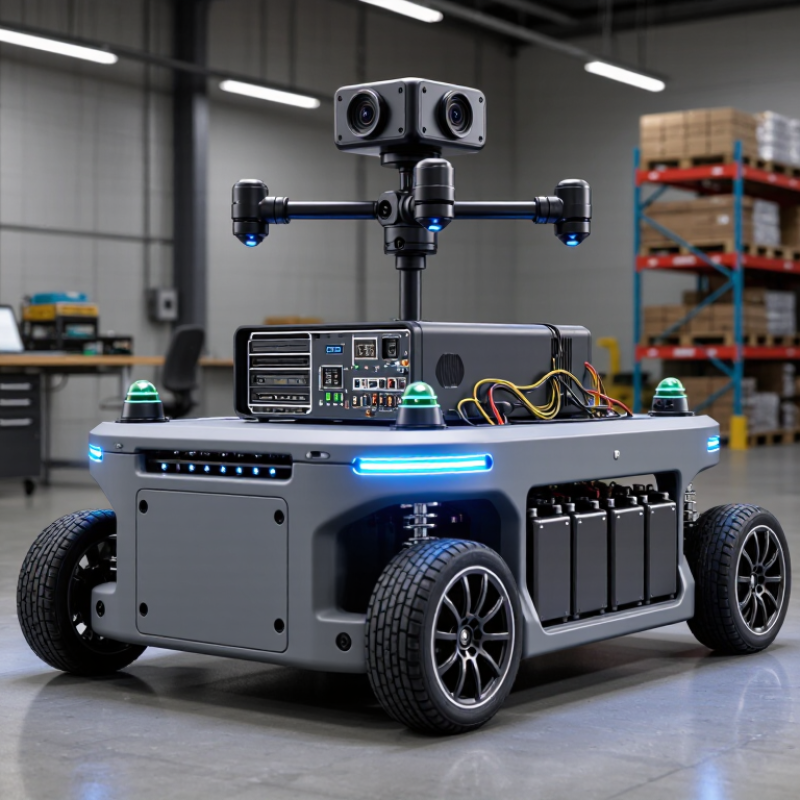
A robot platform is the shared foundation that lets a machine sense, move, and perform tasks. It usually combines a physical structure, motors, sensors, a controller, and software interfaces. Think of a mobile base carrying a camera and a small arm: the platform coordinates movement while application software directs the specific job. The parts must work together, not merely fit together.
A useful platform supports changes without requiring a complete redesign. Its interfaces should let engineers add a gripper, replace a sensor, or adjust navigation software while keeping core controls stable. Payload, reach, battery life, accuracy, and operating environment define its practical limits. Safety and maintenance matter, too. A platform that is difficult to inspect may look capable on paper but become costly in daily use.
Scale makes these design choices consequential. The International Federation of Robotics reported 4,281,585 industrial robots operating worldwide in 2023, in its World Robotics 2024 report. That figure describes deployed robots, not a single platform type, but it shows why dependable integration matters. “Modular” does not always mean simple. A shared architecture can still demand careful calibration, and compatibility claims deserve testing under real workloads. One overlooked cable or sensor blind spot can disrupt the whole system.
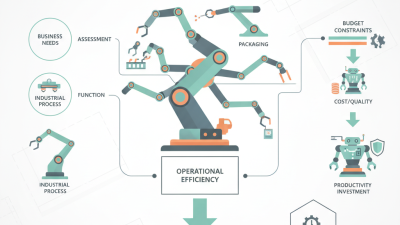
A robot platform combines the parts that let a machine move, sense, and respond. Its frame or chassis supports the load; wheels, tracks, or joints provide movement. Motors and gearboxes convert electrical power into controlled motion. The choice matters: a small wheeled base handles smooth floors differently from a legged system crossing uneven ground.
Sensors measure the surroundings and the robot’s own motion. Cameras, depth sensors, lidar, and encoders can help it locate objects, avoid obstacles, or track wheel rotation. A controller processes sensor data and sends commands to the motors. Power comes from batteries or a fixed supply, while communication links connect the robot to other equipment. End effectors, such as grippers or tool mounts, let it perform specific tasks. The International Federation of Robotics reported 4,281,585 industrial robots operating worldwide in 2023, in World Robotics 2024. That scale highlights how varied these systems are; one component list cannot fit every job. Even a tidy wiring diagram can miss vibration, cable wear, or a sensor’s blind spot.
Tips: Check payload, runtime, floor conditions, and sensor coverage together. Test with the real load. Small details matter.
A robot platform processes a task by turning a goal into small, measurable actions. If asked to move a box, it may first receive a location from an operator or scheduling system. Its sensors then check the route, nearby objects, and the box’s position. Cameras can identify edges, while distance sensors estimate how far obstacles are. The platform combines these readings with its maps and operating rules. Real environments are messy. A map can be slightly outdated.
A task planner breaks the goal into steps, such as approach, align, grip, and travel. The controller converts each step into commands for wheels, motors, or a robotic arm. During movement, sensor feedback tells the controller whether the platform is on course. If a person or cart blocks the path, it can pause, choose another route, or request help. Small adjustments matter. A grip that is a few millimeters off may cause a dropped load. For reliable operation, the platform also checks battery level, speed limits, and task status. Logs can help engineers find repeated delays, though they do not explain every failure. Human review still matters when conditions change unexpectedly.
Illustrative time spent in each stage of a single mobile-robot task cycle.
A robot platform combines sensors, computing, and actuators to perceive its environment, plan an action, and carry it out. Feedback from sensors helps it adjust its movement. The timings shown are an illustrative example; actual task times vary by robot and operating conditions.
Robot platforms come in several forms, each suited to different movement and work conditions. Wheeled mobile platforms travel quickly across smooth floors and often carry cameras, sensors, or small loads.
Tracked platforms offer better grip on loose or uneven ground, but can be slower and harder on delicate surfaces. Legged platforms step over obstacles, though their balance systems require careful setup.
Small details matter.
Fixed platforms stay in one place. A robotic arm mounted on a workbench can repeat precise motions, while a collaborative platform is designed to share a workspace with people when configured and operated appropriately.
Aerial platforms move through open air and can inspect roofs or tall structures. These categories can overlap: a mobile base may carry an arm, for example.
Sensors gather information, a controller interprets it, and motors or other actuators respond. Real-world performance still depends on the floor, payload, lighting, and maintenance.
Tips: Match the platform to the actual route and task, not just a product description. Measure doorways, ramps, and turning space; test with the intended load. Check how it behaves when a sensor is blocked or a surface changes. A careful trial can reveal an awkward limitation early.
Robot platforms appear wherever repetitive movement, steady sensing, or access to difficult spaces can help people. In warehouses, mobile bases carry totes between storage aisles and packing stations. Their sensors detect shelves, workers, and obstacles, while route software guides each trip. On farms, wheeled or tracked platforms can inspect crop rows, record soil conditions, or support targeted watering. Mud, dust, and uneven ground still challenge their reliability.
Hospitals use compact platforms to move supplies along corridors or help staff monitor rooms. They must navigate carefully around carts, doors, and people who may change direction without warning. In factories, robot platforms can carry tools or parts between work areas, reducing repeated lifting. Construction teams may use rugged units to survey sites or transport equipment across rough surfaces. The setting matters: a platform suited to a smooth warehouse floor may struggle on gravel.
Research labs and classrooms use smaller platforms for testing navigation, sensors, and human-robot interaction. They make experiments easier to repeat, though results can look cleaner than real-world conditions. A robot may follow a marked route perfectly, then hesitate when a chair moves. That gap is worth noticing. Good deployment depends not only on the machine, but also on clear routes, maintenance, and trained people nearby.
| Robot platform type | How it works | Where it is used | Typical strengths | Common considerations |
|---|---|---|---|---|
| Automated guided vehicle (AGV) | Follows a defined route using guidance such as floor markers, magnetic tape, wires, or configured navigation references. Sensors help detect obstacles and support safe stopping. | Factories, warehouses, and production areas with repeatable material-transfer routes. | Reliable for regular, predictable journeys and repeated transport tasks. | Route changes may require adjustments to the guidance system or site layout. |
| Autonomous mobile robot (AMR) | Uses sensors, mapping, and onboard software to estimate its position, plan paths, and navigate around obstacles. Many systems can select an alternate route when conditions change. | Warehouses, hospitals, laboratories, and other indoor sites for deliveries or goods movement. | Can adapt to changing routes and share spaces with people when properly designed and managed. | Navigation performance depends on suitable sensors, maps, lighting or surface conditions, and site setup. |
| Tracked robot | Moves on continuous tracks driven by motors. Differential steering—varying the speed or direction of each track—allows it to turn. | Rough terrain, inspection areas, disaster-response sites, and some agricultural or outdoor tasks. | Often provides good traction and can cross some uneven or soft ground that is difficult for small wheeled robots. | Tracks can wear, require maintenance, and may damage delicate floors or vegetation. |
| Legged robot | Coordinates powered joints and foot contacts to walk, balance, and adjust its steps to the ground. Sensors and control software help maintain stability. | Research, inspection, and tasks in locations with stairs or irregular ground that are difficult for wheeled platforms. | Can negotiate some obstacles and terrain changes that prevent continuous wheel contact. | Balancing and walking require complex control; energy use and mechanical complexity can be high. |
| Mobile manipulator | Combines a mobile base with a robotic arm and end effector. The base moves the system; the arm performs actions such as grasping, placing, or inspecting objects. | Manufacturing, warehouses, laboratories, and service settings where tasks involve both travel and object handling. | Can perform more varied tasks than a transport-only base or a fixed robotic arm. | Requires coordination between navigation and arm motion, plus careful management of payload, reach, and stability. |
| Uncrewed aerial robot | Uses motors and rotors or other lift systems to fly. Sensors and control systems stabilize flight; an operator or onboard software directs the mission. | Aerial photography, land surveying, infrastructure inspection, mapping, and some agricultural monitoring. | Can reach elevated or difficult-to-access locations and collect data over broad areas. | Flight time, weather, safe operating procedures, and local aviation rules can limit use. |
| Underwater robot | Uses thrusters and underwater sensors to move and gather data. It may be remotely operated through a tether or operate autonomously according to a planned mission. | Marine research, underwater inspection, surveying, and search tasks. | Can inspect submerged areas that are difficult or hazardous for people to access directly. | Water pressure, limited visibility, communication constraints, and sealing requirements affect design and operation. |
A robot platform is the physical and control foundation of a robot. It typically includes a mobility system, power supply, sensors, computing hardware, and interfaces for tools or payloads. Its software combines sensor input with commands to control movement and task-specific equipment.
Taking Custom Design to New Levels

Brin Glass Company | Minneapolis, MN
St. Germain’s Glass | Duluth, MN
Heartland Glass | Waite Park, MN

Fabricator
Inside Sales and Client Support Manager
Glass Handler – 1st Shift