Taking Custom Design to New Levels
PROUD TO BE PART OF THE BRIN FAMILY OF COMPANIES

OTHER BRIN LOCATIONS
Brin Glass Company | Minneapolis, MN
St. Germain’s Glass | Duluth, MN
Heartland Glass | Waite Park, MN

A Lifted Golf cart can look ready for rough paths in a showroom photo. The right buying decision takes more than appearance. Buyers across different regions must compare terrain, passenger needs, transport limits, and access to maintenance. A cart suited to a private resort may not fit a narrow farm track or a compact shipping container. Small details matter.
These seven buying tips focus on checks that can prevent costly surprises. Compare lift height, tire dimensions, braking components, and stated ground clearance with the manufacturer’s specifications. Ask for battery type, voltage, charger compatibility, and realistic range under load. Request clear photos of the frame, suspension, and tire condition, not just polished exterior shots. Confirm the cart’s dimensions and shipping weight before arranging freight. Also ask which replacement parts are stocked and who can provide service after delivery.
Looks can mislead. A larger tire may appear practical but affect handling or range, depending on the cart’s setup. Requirements for registration, transport, and permitted use can vary by destination, so verify them with relevant local authorities before purchase. Written answers are useful. Keep them. No checklist removes every risk, and supplier descriptions may leave important details unclear. That is a reason to ask better questions, not to assume every lifted model is unsuitable. With careful comparison and documented specifications, global buyers can choose a cart that matches its actual working conditions—not merely its photographs.
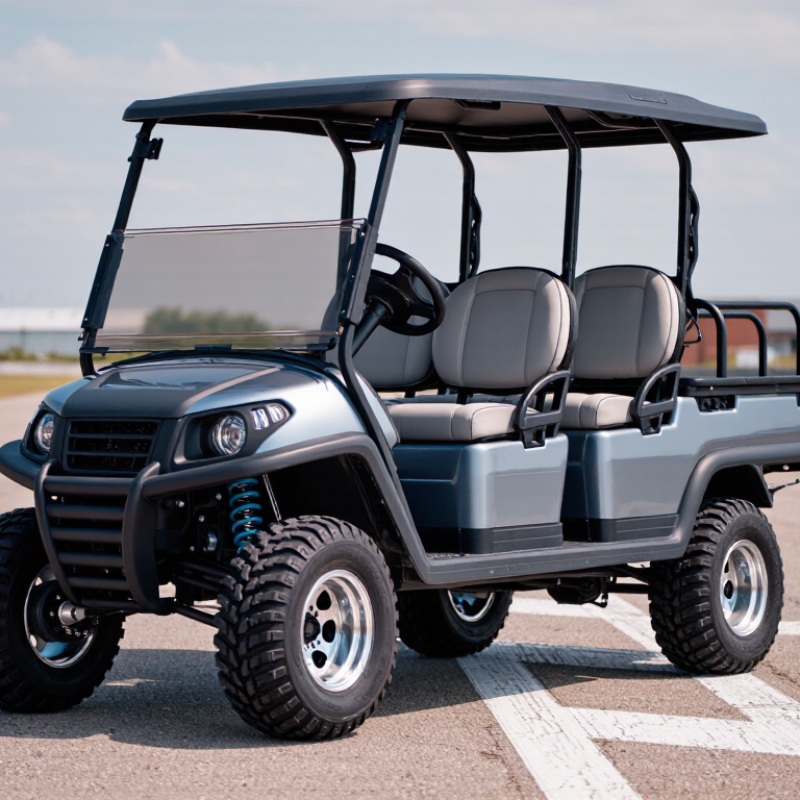
Start with the route, not the lift height. Smooth paths and short grass need less clearance than gravel tracks, ruts, or uneven farm lanes. Larger tires can help cross rough ground, but they may change handling and braking. A higher cart can also feel less stable on slopes. Check the manufacturer’s load and terrain guidance before choosing a lift kit.
Passenger needs matter just as much. The National Golf Foundation’s 2024 report counted 26.6 million on-course golfers in the United States in 2023. Golf-course use is one useful reference, not a universal buying template. Count regular passengers, add their approximate combined weight, and leave room for bags or tools. Confirm both seating capacity and payload; they are not the same thing. A tidy spec sheet can still hide a poor fit.
Tip: Walk the actual route before buying. Note steep sections, wet ground, tight turns, and where passengers climb aboard. Match the cart to its main job—course use, resort transport, or property work—rather than every imagined task. I would question extra lift height if the cart mostly carries people on paved paths. It looks capable, but may add cost without solving a real problem.
Two-, four-, and six-seat layouts are common golf cart configurations. Choose a capacity that fits your usual passenger count, then confirm the cart’s rated payload and suitability for your terrain and intended use.
Lift height changes more than a cart’s appearance. A taller lift can improve clearance on rutted paths, but it may also raise the center of gravity. Compare the listed lift height with the terrain you actually drive, not just the height shown in photos. Measure the garage opening and transport trailer too. Small detail, big hassle. Check whether the lift kit is designed for your cart’s model and year, since fitment can vary.
Suspension matters when the route includes potholes, gravel, or uneven ground. Independent front suspension can help the wheels follow bumps, while suitable shocks reduce harsh jolts. Ask for the suspension type, load rating, and replacement-part availability. A plush ride during a short test drive may feel different with passengers and cargo aboard. It is easy to focus on lift height and overlook that.
Tires affect grip, ride comfort, and steering effort. Larger tires may add ground clearance, but they can also change gearing and put more strain on components. Compare tread patterns with your usual surfaces: aggressive tread suits loose dirt, while smoother patterns roll more quietly on pavement. Confirm the actual tire diameter and width, not only the size printed in a listing. Specifications can be incomplete, so request clear measurements before ordering.
| Buying Tip | What to Compare | Potential Benefits | Trade-Offs and Checks | Questions for the Seller |
|---|---|---|---|---|
| 1. Choose lift height for the terrain | Common lift-kit choices include about 3, 4, or 6 inches. Confirm whether the quoted measurement is added chassis clearance or the kit’s nominal lift. | A higher lift can provide more clearance over ruts, uneven ground, and obstacles. | A taller setup raises the center of gravity and may make handling less stable, especially on slopes or during sharp turns. Actual clearance also depends on tire size and vehicle design. | What is the measured ground clearance after installation, and is the cart designed for the slopes and surfaces where it will be used? |
| 2. Match the lift system to the suspension | Check whether the cart has a solid front axle, independent front suspension, or another configuration. Lift designs can include spindle, A-arm, or block-style systems, depending on the vehicle. | A system designed for the cart’s suspension can preserve suitable wheel alignment and component movement. | Lift-kit compatibility is model- and year-specific. A kit intended for a different suspension layout may not fit or may require additional parts. | Can the seller confirm compatibility using the cart’s model, year, and suspension type, and provide a parts list? |
| 3. Compare tire diameter and width | Lifted configurations commonly use tires around 20–23 inches in diameter, but the correct size depends on wheel wells, lift height, wheel offset, and vehicle clearance. | Larger tires can improve obstacle clearance and may provide a broader selection of tread patterns. | Oversized or wide tires can rub, increase steering effort, and place extra load on drivetrain components. A lift alone does not guarantee that a tire will fit. | What is the largest tire size approved for this exact configuration, including the specified wheel width and offset? |
| 4. Select tread for the surface | Compare turf or low-profile tread for maintained grass, all-terrain tread for mixed surfaces, and more aggressive tread for loose or rough ground. | Choosing tread for the main operating surface can balance traction, ride comfort, and ground impact. | Aggressive tread may be noisier and can mark turf. Tire performance varies with inflation pressure, load, and surface conditions. | Is the tread suitable for the main terrain, and what pressure range does the tire maker specify for the cart’s load? |
| 5. Evaluate ride and suspension components | Compare spring type, shock absorbers, suspension travel, and the condition of bushings and mounting points. Rear designs commonly use leaf springs, while front layouts vary. | Appropriate springs and shocks can help control bouncing and improve comfort on uneven ground. | A lift does not automatically improve ride quality. Stiffer components can feel harsh, while worn parts can reduce control and increase noise. | Are the shocks and springs matched to the cart’s weight, passenger capacity, and intended terrain? |
| 6. Check drivetrain, braking, and steering capacity | Ask whether larger tires or added load require changes to gearing, motor or engine setup, brakes, steering components, or speed calibration. | Reviewing these systems together helps ensure the lifted cart is configured as a complete vehicle rather than just a taller one. | Larger tires can affect acceleration, effective gearing, braking demands, and indicated speed. The impact depends on the cart and its powertrain. | Has the complete configuration been tested with the specified tire size, passenger load, and braking system? |
| 7. Confirm local rules and total ownership cost | Compare the purchase price with installation, replacement tires, shipping, parts availability, maintenance, and any local inspection or registration requirements. | Planning for regional requirements and ongoing costs can help avoid unexpected delays or expenses. | Road-use rules, lighting and safety requirements, import duties, and registration standards vary by country and region. A lifted cart may not qualify for public-road use. | What documentation, warranty coverage, spare parts, and local compliance checks are available for the destination market? |
Fitment note: Lift height, tire clearance, load capacity, and road-use eligibility vary by cart model, year, configuration, and local regulations. Verify specifications with the vehicle documentation and a qualified installer before purchase.
Electric carts suit quiet campuses, resorts, and neighborhoods, but battery choice affects daily usefulness. Lead-acid batteries often cost less upfront; lithium-ion packs usually weigh less and can recharge faster, depending on the charger. The International Energy Agency’s Global EV Outlook 2024 reported a 14% fall in average battery-pack prices during 2023. That market figure is not a cart quote, though. Compare the full replacement cost, warranty terms, and expected service life.
Tip: Ask for the rated range and the conditions behind it. Then test a loaded cart on your real route, including hills, passengers, and cargo. A flat test track can flatter the numbers. Numbers need context.
Before buying, match battery voltage, chemistry, charger output, connector, and local outlet requirements. Confirm whether the charger is onboard or separate, and ask about charging time at your available supply. For cross-border purchases, request written specifications rather than relying on plug photos. Ask for proof. A small mismatch can mean a cart that cannot charge as planned. I would also leave a range buffer for cold mornings, aging batteries, and detours; estimates are not guarantees.
Before buying a lifted golf cart, ask where it may legally operate: private property, designated paths, or public roads. Rules differ by country, state, and municipality, and a lift does not make a cart road-ready. Confirm the vehicle’s classification with the local transport authority, then check speed limits, registration, insurance, and any required inspection. Get the rules in writing when possible.
Inspect safety equipment in person. Test the brakes on a gentle slope, check steering for excess play, and look for secure seat belts, working lights, mirrors, reflectors, and a clear windshield. A higher lift can raise the center of gravity, especially with larger tires or passengers aboard. Ask a qualified technician whether the suspension and braking system suit the cart’s modified height and intended load. Small details matter.
NHTSA’s Federal Motor Vehicle Safety Standard No. 500 lists required equipment for qualifying low-speed vehicles, including lamps, mirrors, parking brakes, and seat belts; a golf cart is not automatically a qualifying vehicle. That distinction matters. A study in the American Journal of Preventive Medicine counted 147,696 golf-cart injuries treated in U.S. emergency departments from 1990 to 2006. The data is older, but it shows why careful checks remain worthwhile. Don’t rely on a seller’s verbal assurance alone.
A lifted golf cart can look ready for work in a polished photo. That proves very little. Ask suppliers for verifiable business details, a physical facility address, recent export references, and a written specification sheet. Check lift height, tire size, seating capacity, rated load, battery type, and charger requirements. Request clear photos of the actual vehicle and key components. If the order is large, consider an independent pre-shipment inspection. It costs extra, but may reveal details a sales call misses. I would not rely on a broad warranty promise; get coverage, exclusions, and parts availability in writing.
Shipping needs its own careful review. Request a quote that separates vehicle cost, export packing, freight, insurance, port charges, and destination fees. Confirm the packed dimensions and weight, plus how the cart will be unloaded at your site. Check which battery documents the carrier requires and whether the route can accept them. Delays happen. Build a time buffer, and ask who handles damage claims if the crate arrives dented. Keep records.
Compare total ownership costs, not just purchase prices. Include charger compatibility, routine service, tires, replacement batteries, storage, and technician training. Exchange rates and local service access can change the calculation. A cheaper cart may still be the right choice, but I have learned that “included” can mean different things to different sellers. Have every cost and responsibility stated plainly before paying.
Taking Custom Design to New Levels

Brin Glass Company | Minneapolis, MN
St. Germain’s Glass | Duluth, MN
Heartland Glass | Waite Park, MN

Fabricator
Inside Sales and Client Support Manager
Glass Handler – 1st Shift