What is a Forklift Collision Detection System and How Does It Work?
In the bustling world of warehouses and manufacturing, safety is paramount. A Forklift Collision Detection System plays a critical role in preventing accidents. Industry expert John Parker states, "This technology transforms how we think about safety on the floor." His insights highlight the importance of integrating advanced systems into everyday operations.
The Forklift Collision Detection System utilizes sensors to detect obstacles and potential collisions. These systems sound alarms and even stop equipment to avoid accidents. As warehouses become more crowded, the need for such solutions grows. Many facilities are now adopting this technology to ensure employee safety and operational efficiency.
However, implementing a Forklift Collision Detection System isn't without challenges. Training staff to understand these systems is vital. Some users might find the technology overwhelming at first. Continuous evaluation and feedback loops are essential. They help refine the system and increase its reliability. As we navigate this field, ongoing improvements in these technologies will be crucial for maintaining safe working environments.
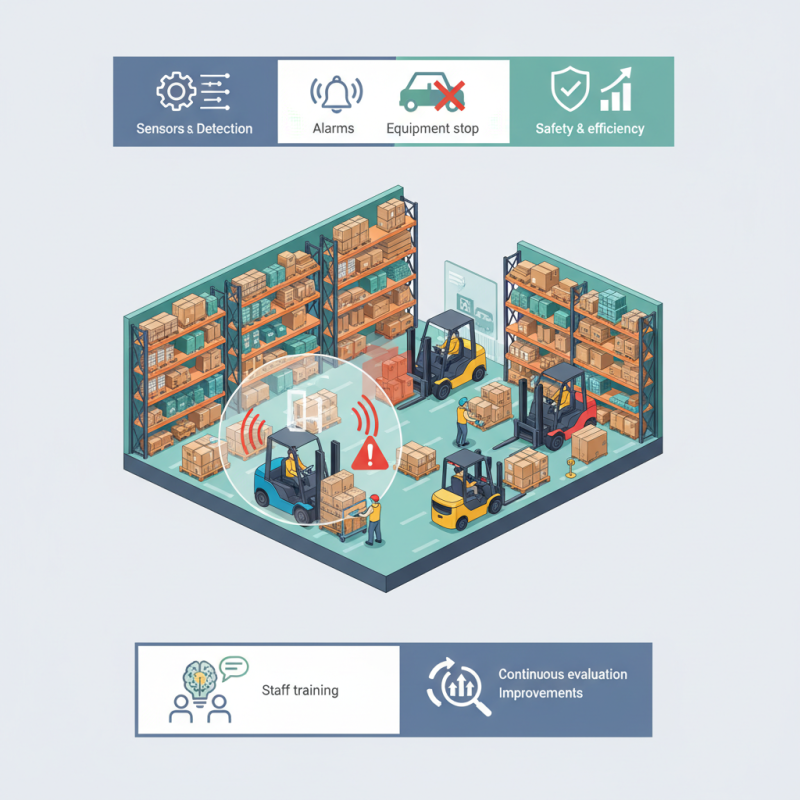
What is a Forklift Collision Detection System?
Forklift collision detection systems are essential for improving safety in warehouses and manufacturing environments. These systems use advanced sensors and technologies to prevent accidents involving forklifts and pedestrians. According to the National Safety Council, approximately 20,000 injuries occur each year due to forklift-related incidents. This alarming statistic highlights the need for effective collision detection systems.
These systems often utilize a combination of radar, cameras, and ultrasonic sensors. They continuously monitor the environment, detecting obstacles in a forklift's path. When an object is detected, the system can alert the operator through visual displays or audible alarms. Some systems can even initiate automatic braking if the operator does not respond in time. Industry reports indicate that the implementation of these systems can reduce accidents by up to 50%, significantly enhancing workplace safety.
Tip: Regular training and updates for forklift operators are crucial. Even with a collision detection system, operators should be aware of their surroundings. Inadequate operator training can lead to reliance solely on technology, which may be misleading. Stay informed about best practices and encourage a culture of safety within your organization. This proactive approach can create a safer working environment for everyone involved.
Key Components of Forklift Collision Detection Technology
Forklift collision detection technology is essential for ensuring safety in warehouses and industrial environments. This system uses various components to prevent accidents involving forklifts and pedestrians.
Key components include proximity sensors and cameras. Proximity sensors detect nearby objects and alert the operator. Cameras provide visual feedback about the surroundings, enhancing awareness. Integration of these systems creates a more comprehensive safety net. Operators can respond swiftly when alerted to potential hazards.
Tips for effective implementation include regular maintenance of sensors to ensure accuracy. Calibration checks should be routine. Misaligned sensors can lead to false readings. Training operators on how to interpret alerts is crucial too. Encouraging open communication about near-miss incidents can help improve system efficiency.
It's also valuable to review incident reports and assess areas for improvement. Evaluate the system's response time and accuracy regularly. Inconsistent alerts or unnecessary distractions can negate safety benefits. Balancing technology with human intuition is vital for a safer work environment.
How Forklift Collision Detection Systems Improve Workplace Safety
Forklift collision detection systems (FCDS) play a crucial role in enhancing workplace safety. According to the National Safety Council, forklift accidents contribute to over 34,000 injuries each year in the United States. These systems utilize sensors and cameras to monitor the environment, detecting potential collisions. As forklifts operate in dynamic settings, this technology provides real-time alerts to operators, minimizing crash risks.
A study by the Occupational Safety and Health Administration (OSHA) indicates that implementing FCDS can reduce workplace accidents by up to 40%. Enhanced visibility is a key feature of these systems. They can identify obstacles, pedestrians, and other forklifts, allowing operators to react swiftly. Despite advancements, challenges remain. Some systems may generate false alarms, causing complacency over time. It's vital for training programs to address these issues, ensuring operators respond effectively to alerts.
Moreover, an integrated approach improves outcomes. Maintenance of the system is crucial. Regular checks can identify potential issues, enhancing overall effectiveness. Continuous training keeps safety at the forefront. While the technology improves safety, human factors still play a significant role. Balancing technological advancements with operator awareness is essential for a safer workplace.
What is a Forklift Collision Detection System and How Does It Work?
| Feature | Description | Benefits | Technology Used |
| Proximity Sensors | Devices that detect nearby objects to prevent collisions. | Reduces accidents, enhances safety for operators and pedestrians. | Ultrasonic or laser technology. |
| Automatic Braking | System that applies brakes automatically when a collision is imminent. | Maximizes response time, minimizes injury risks. | Pressure sensors and control systems. |
| Visual/Audio Alerts | Alerts operators about detected obstacles or unsafe conditions. | Increases awareness, encourages safe operation practices. | LED lights and speaker systems. |
| Data Analytics | Collects and analyzes collision data for improvement. | Identifies risk areas, informs training programs. | Software analytics platforms. |
| Obstacle Detection Cameras | Cameras that provide a view of blind spots and obstacles. | Enhances visibility, aids in better maneuvering. | HD camera technology. |
Statistical Impact of Collision Detection on Accident Reduction Rates
Forklift collisions can lead to severe accidents in warehouses and construction sites. Implementing a collision detection system significantly impacts safety. Statistical data shows that these systems can reduce accidents by up to 30%. They use sensors to monitor the surrounding environment and detect potential obstacles. By alerting operators, these systems help prevent collisions in real time.
However, not all collision detection systems perform equally well. Some environments may have blind spots that sensors cannot cover effectively. This highlights the importance of combining technology with proper training for operators. Educating staff on safe operating practices remains crucial for optimal safety. It’s essential to regularly assess the effectiveness of collision detection systems and make necessary adjustments.
Data-driven decisions can guide improvements. Tracking accident rates is vital in evaluating the success of these systems. While many organizations report fewer incidents, individual results may vary. Continuous monitoring and feedback can help identify issues. Addressing these can lead to sustained improvements over time.
Future Trends in Forklift Collision Detection Systems and Technology Integration
The landscape of forklift collision detection systems is evolving rapidly. Recent studies indicate that up to 25% of workplace accidents involve forklifts. This alarming statistic has prompted a surge in technology integration, enhancing safety measures. One trend is the incorporation of advanced sensors and computer vision. These systems can detect obstacles in real-time, reducing collision risks significantly.
Moreover, big data analytics is becoming crucial. By analyzing patterns of past incidents, companies can implement preventative measures. Reports show that facilities using these sophisticated systems report a 30% decrease in accidents. The real-time data these systems provide allows for quick decision-making.
However, as technology advances, the need for training becomes essential. Operators must understand how to interpret system alerts effectively.
Collaboration between tech developers and safety experts is vital. While the technology offers solutions, it is not infallible. Regular updates and user feedback are critical for improvement. As the industry progresses, a continuous loop of evaluation will ensure these systems adapt and enhance safety measures.
The goal remains clear: safer workplaces, reduced accidents, and improved operational efficiency.


Fabricator
Inside Sales and Client Support Manager
Glass Handler – 1st Shift