10 Essential Tips for Harnessing Robotics and Artificial Intelligence
In today's rapidly evolving landscape, robotics and artificial intelligence play a crucial role. According to a recent report by McKinsey, automation could raise global productivity by 0.8 to 1.4 percent annually. Businesses are now recognizing the potential benefits of integrating robotics and artificial intelligence into their operations. This integration can improve efficiency, reduce costs, and enhance quality.
However, harnessing these technologies comes with challenges. Many industries struggle with workforce adaptation and implementation costs. A report from PwC indicates that up to 30% of jobs could be automated by the mid-2030s. This raises questions about workforce displacement and the need for re-skilling. Organizations must carefully consider these factors while adopting these technologies.
Ultimately, embracing robotics and artificial intelligence requires a thoughtful approach. Companies must balance innovation with human workforce needs. Leaving out this crucial balance can lead to unforeseen pitfalls. Success will depend on how well businesses navigate these complexities while leveraging technology.

Understanding the Fundamentals of Robotics and Artificial Intelligence
Understanding robotics and artificial intelligence requires a grasp of their fundamentals.
Robotics involves machines designed to perform tasks autonomously or semi-autonomously. These machines blend mechanics, electronics, and software.
They interact with their environment through sensors and actuators. For example, a robot arm can assemble parts on a factory line.
It can work faster than a human, but accuracy can vary.
Artificial intelligence, on the other hand, focuses on creating systems that can learn and adapt.
AI algorithms analyze data, recognizing patterns to make decisions. For instance, chatbots provide customer support.
They mimic human conversation but sometimes misunderstand context. The learning curve for both fields can be steep.
Missteps in programming often lead to errors, requiring constant refinement.
Additionally, ethical considerations must be part of the conversation.
As we harness these technologies, reflection on their societal impact is crucial. How we use them defines future outcomes.
Identifying Key Areas for AI and Robotics Integration in Business
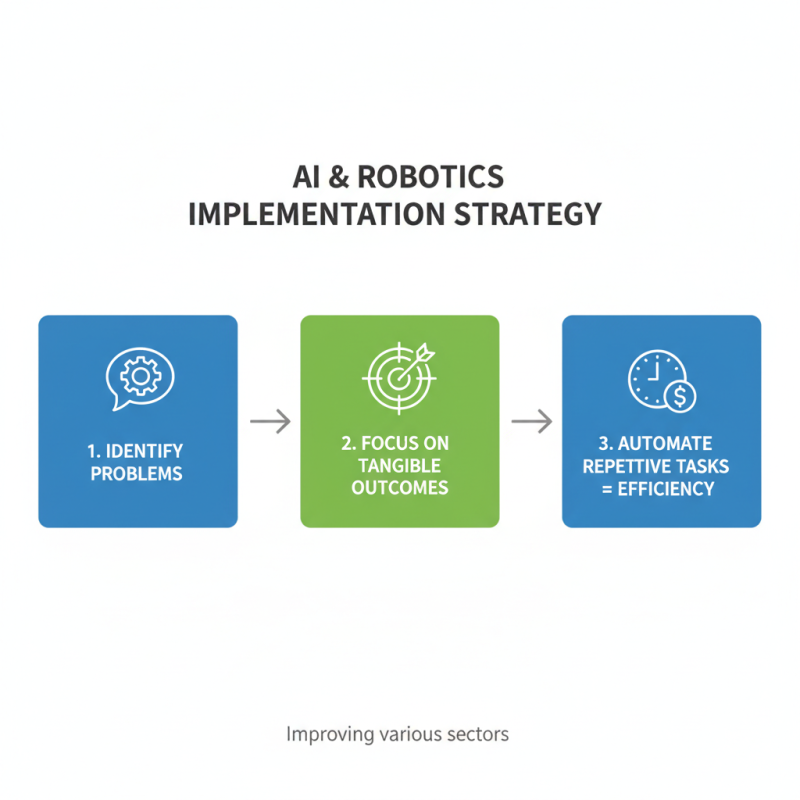
Integrating robotics and artificial intelligence (AI) in business can revolutionize operations and efficiency. Key sectors for this integration include manufacturing, healthcare, and logistics. According to a recent report from McKinsey, businesses that implement automation can improve productivity by up to 30%. This statistic highlights the urgency for companies to adapt.
In manufacturing, robotics can streamline processes. For example, robots can perform repetitive tasks, reducing human error and increasing consistency. A study by the World Economic Forum revealed that 85 million jobs could be displaced, but 97 million new roles might emerge because of AI's integration. Companies must recognize that adaptation involves challenges. Employee training is crucial but often overlooked.
Healthcare is another vital area for AI application. AI can analyze patient data quickly. It can improve diagnosis accuracy and patient care. Despite the potential benefits, privacy concerns loom large. Many firms hesitate due to ethical implications. Additionally, logistical operations can gain significant advantages from robotic process automation. However, reliance on technology poses risks. Developers must constantly evaluate system vulnerabilities.
Companies should consider these factors carefully as they navigate AI and robotics' complex landscape.
Measuring Success: Metrics for AI and Robotics Performance Evaluation
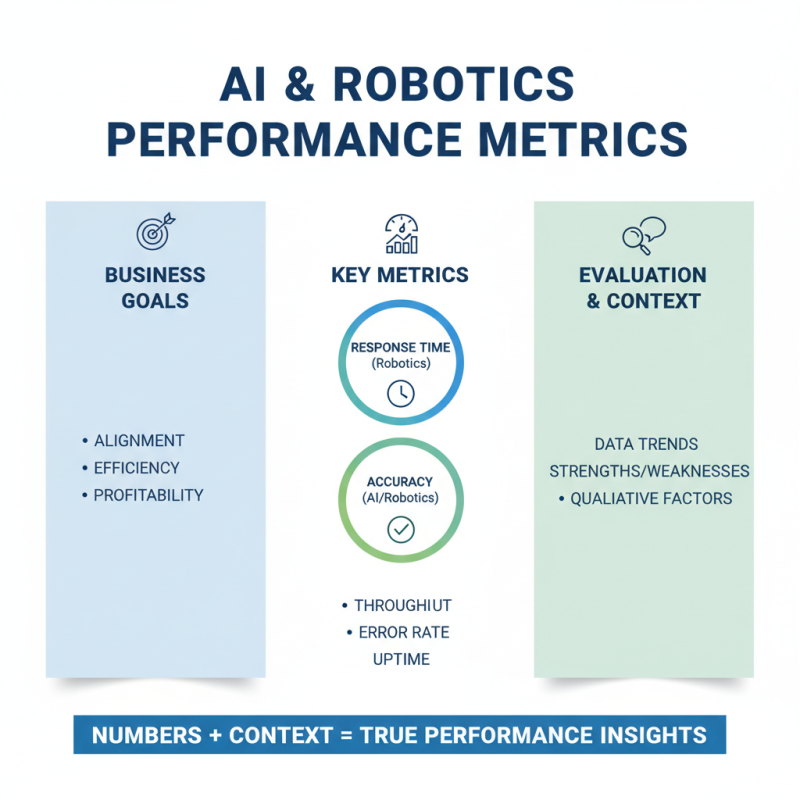
Evaluating the performance of AI and robotics involves establishing clear metrics. These metrics should align with business goals. For example, response time and accuracy are critical for robotic systems. Tracking these elements can reveal both strengths and weaknesses. Sometimes, the numbers don’t tell the whole story. Context matters in performance assessments.
Data collection is crucial. Regularly gather usage statistics and operational efficiency metrics. This data helps identify areas for improvement. An unexpected spike in errors might require further investigation. It can indicate a need for retraining algorithms or adjusting robotic processes. Also, consider user satisfaction. Feedback can provide insights not visible in standard metrics.
Teams should adapt dynamically. Regularly revisiting goals and metrics is essential. AI and robotics evolve rapidly, and what worked last year may not suffice now. Embracing change can be challenging. Yet, continuous improvement can lead to breakthroughs. Reflecting on performance and adapting fosters innovation in AI and robotics.
Ensuring Ethical Considerations in Robotics and AI Development
Developing robotics and artificial intelligence (AI) comes with significant ethical responsibilities. Engineers and developers must consider the impact of their creations on society. Every new technology has unintended consequences. For instance, AI systems often reflect human biases found in their training data. This can lead to discrimination in areas like hiring or law enforcement.
Transparency is crucial in AI development. Stakeholders should understand how decisions are made. When the algorithms are opaque, trust erodes. Developers must commit to explaining their systems clearly. They need to reflect on how their work affects people's lives. Are they enhancing quality of life or contributing to inequality?
Furthermore, collaboration is essential. Involving ethicists and various community representatives can provide diverse perspectives. This prevents a narrow focus on profit and efficiency. As technology rapidly evolves, ongoing dialogue is vital. Ethical frameworks must keep pace with innovation. Identifying and addressing ethical dilemmas early can shape a positive future for robotics and AI.








Fabricator
Inside Sales and Client Support Manager
Glass Handler – 1st Shift