Taking Custom Design to New Levels
PROUD TO BE PART OF THE BRIN FAMILY OF COMPANIES

OTHER BRIN LOCATIONS
Brin Glass Company | Minneapolis, MN
St. Germain’s Glass | Duluth, MN
Heartland Glass | Waite Park, MN

Choosing X-ray protection equipment is not just a price comparison. A supplier’s materials, sizing guidance, and after-sales support can shape how reliably a room is protected. A poorly fitted apron, a damaged viewing panel, or an unsealed seam can weaken an otherwise sound setup. Small details matter. The best suppliers explain product limits clearly and provide traceable documentation for their equipment.
Marie Curie, a pioneer in the study of radioactivity, wrote, “Nothing in life is to be feared, it is only to be understood.” That principle applies to supplier selection: informed questions are more useful than confident sales claims. Ask how products are tested, what protective ratings mean for your specific application, and how replacement or repair needs are handled. Compare answers, not just brochures.
When evaluating the Best X-Ray Protection Equipment Suppliers, look for relevant experience, consistent product information, responsive technical support, and clear guidance on fit and maintenance. Request sample specifications and check that they match your imaging environment. A supplier should welcome careful questions rather than rush you toward a purchase. Even experienced buyers can focus too heavily on quoted protection values and overlook comfort, seams, or sizing. That is worth reconsidering. The strongest choice is a supplier who helps your team assess those practical details, explains uncertainty honestly, and supports the equipment throughout its working life.
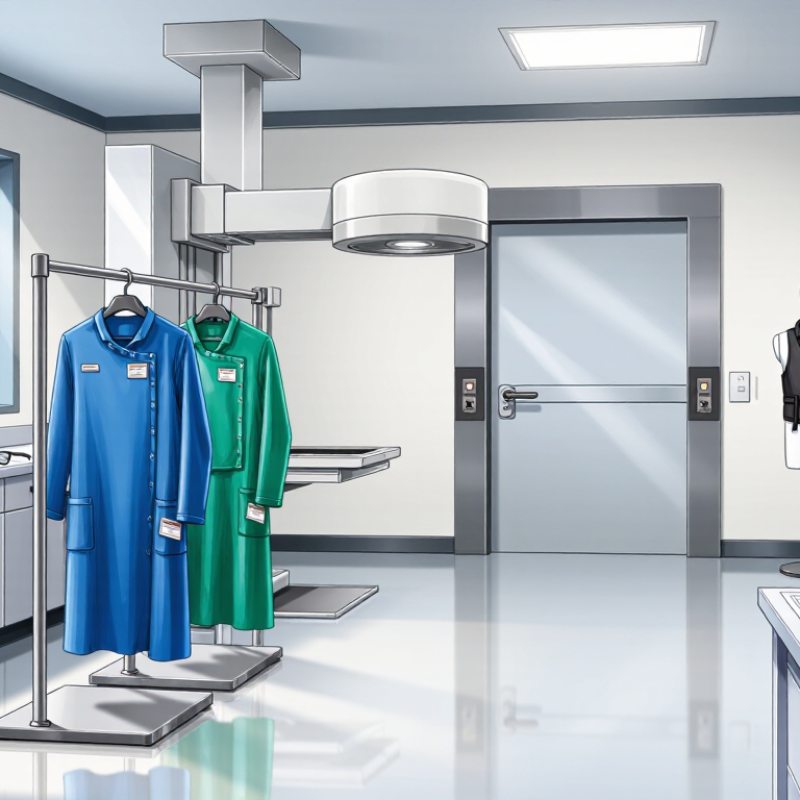
Before comparing suppliers, map the actual exposure conditions. Record the imaging equipment, typical procedures, beam direction, workload, and everyone who enters the room. Include mobile work, where staff may stand close to the patient or change position often. Small details matter. A garment suitable for brief, fixed procedures may feel restrictive during long shifts.
Define what each item must protect: lead-equivalent attenuation, coverage area, and fit. Specify apron length, thyroid collar, eyewear, gloves, or protective barriers according to the task. Ask suppliers for current test documentation, product specifications, and care instructions. Check how garments are inspected for cracks and how often they should be replaced. Numbers alone are not enough; coverage and comfortable movement affect whether protection is worn correctly.
Describe storage, cleaning, and staff sizing needs before requesting quotes. Ask how the supplier handles fitting, repairs, and repeat orders, and whether sample garments can be assessed during normal work. A first requirements list is rarely perfect. Staff may find that a collar rubs or an apron limits reaching; revise the specification after feedback. Keep the final criteria in writing, including any uncertainty about workload or room layout, so suppliers can recommend suitable options without guessing.
| Protection Need | Equipment to Consider | Requirements to Define | What to Verify with the Supplier | Selection Considerations |
|---|---|---|---|---|
| Torso protection | Protective apron or vest-and-skirt set | Work position, exposure conditions, coverage area, required lead equivalence, and whether front-only or wraparound coverage is needed | Lead-equivalence documentation stating the relevant test conditions, available sizing, garment weight, closures, and inspection or care instructions | Choose coverage and fit for the actual procedure. Lead-equivalence values should be compared only when the stated beam quality and test method are comparable. |
| Thyroid protection | Thyroid collar or an apron with an integrated collar | Whether the neck is exposed during the task, compatibility with other PPE, and required coverage and lead equivalence | Product specifications, fit range, fastening design, material details, and documentation of protective rating | Check that the collar closes comfortably and does not leave gaps when worn with the selected apron. |
| Eye protection | Radiation-protective glasses or goggles | Need for side coverage, prescription compatibility, fit with other PPE, and expected scatter exposure | Lens and side-shield specifications, protective rating, frame options, fit information, and cleaning guidance | Assess side coverage and a secure, comfortable fit. Protective eyewear does not replace appropriate positioning and other radiation-safety controls. |
| Hand protection | Radiation-protective gloves, where appropriate | Whether hands may be near the primary beam, task dexterity, glove size, and applicable local requirements | Intended-use limitations, protective-rating documentation, size range, and instructions for inspection and cleaning | Protective gloves should not be treated as permission to place hands in the primary beam. Confirm suitability with the radiation-safety lead or medical physicist. |
| Mobile operator protection | Mobile protective barrier or shield | Room layout, operator position, equipment movement, viewing needs, and the area requiring shielding | Shield dimensions, protective-rating details, stability, mobility, viewing panel specifications, and installation or maintenance guidance | Confirm that the barrier can be positioned between the operator and the scatter source without obstructing safe workflow. |
| Room or fixed-area shielding | Fixed barriers, shielded viewing windows, or door shielding | Equipment type and workload, room layout, adjacent occupancy, use of the space, and applicable regulations | Design calculations, material specifications, installation documentation, and coordination with qualified shielding professionals | Room shielding is facility-specific. Obtain a qualified radiation-shielding assessment rather than selecting materials from a generic product table. |
| Fit, care, and service life | All wearable protective equipment | Number of users, frequency of use, storage arrangements, cleaning needs, and inspection responsibilities | Sizing support, care instructions, warranty terms, repair options, and guidance for periodic integrity checks | Include fit testing and a documented inspection process in the purchasing plan; follow applicable workplace policy and local guidance. |
Supplier evaluation note: Define the procedure, users, exposure conditions, coverage, fit, and local regulatory requirements before requesting quotations. Ask suppliers for written specifications and supporting documentation; have protection choices reviewed by the responsible radiation-safety professional or qualified medical physicist.
Fabricator
Inside Sales and Client Support Manager
Glass Handler – 1st Shift