How to Choose Between AGV and AMR for Your Business Needs?
In today's fast-evolving industrial landscape, the choice between AGV (Automated Guided Vehicle) and AMR (Autonomous Mobile Robot) becomes critical. Businesses face unique operational challenges that require tailored solutions. Understanding the distinctions and capabilities of AGV and AMR can significantly impact efficiency and productivity.
AGVs operate on fixed paths, following predetermined routes. They excel in environments requiring consistent movement of materials. In contrast, AMRs leverage advanced sensors and artificial intelligence. They navigate dynamically and can adapt to changes in real-time. This adaptability makes AMRs suitable for more complex tasks.
However, choosing the right technology is not straightforward. Companies must consider factors like operational complexity, budget constraints, and integration capabilities. Evaluating these elements is essential to make the best decision. The evolving landscape of automation adds another layer of complexity. Businesses often find themselves reflecting on their unique needs. This decision may not be simple, but understanding AGV and AMR is a crucial step toward automation success.
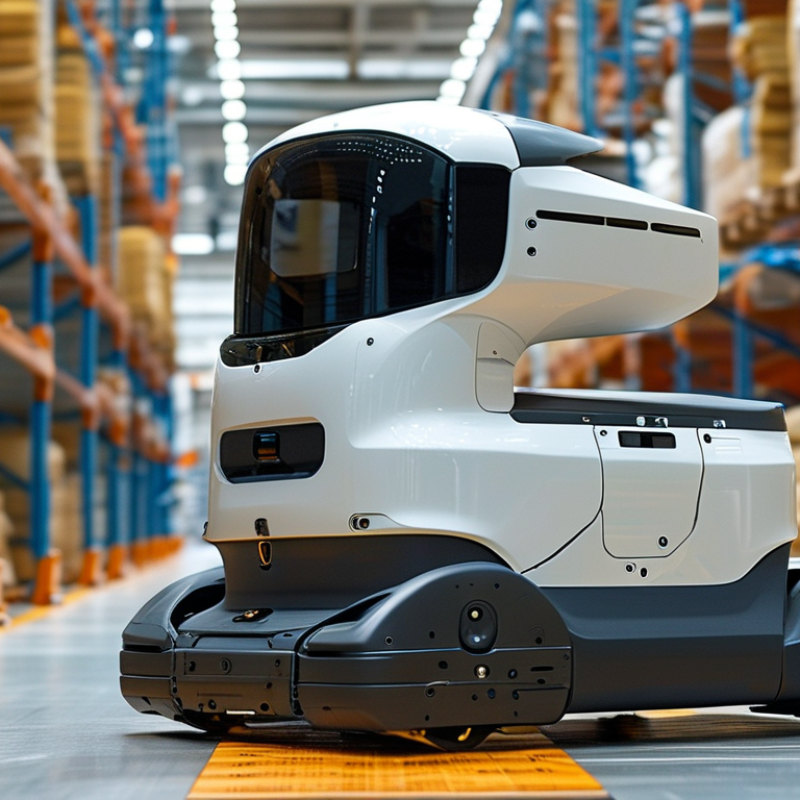
Understanding the Fundamental Differences Between AGVs and AMRs
When evaluating AGVs (Automated Guided Vehicles) and AMRs (Autonomous Mobile Robots), it is crucial to grasp their fundamental differences. AGVs are generally guided by pre-defined paths using magnets or wires. This makes them reliable and predictable in structured environments. In contrast, AMRs utilize advanced sensors and AI to navigate dynamically. They can adapt to changing surroundings, making them suitable for more complex operations.
Data shows that the global market for AMRs is expected to grow at a compound annual growth rate (CAGR) of 18.2% between 2021 and 2028. Meanwhile, AGV systems are projected to grow at a slower rate of around 15.5% during the same period. This indicates a shift towards more flexible and intelligent solutions in logistics. Many facilities are exploring AMRs for their ability to interact with workers and obstacles effectively. They can re-route in real-time, which is a significant advantage over traditional AGVs.
However, relying solely on AMRs may not always be ideal. Some operations require higher levels of consistency and lower operational risk. AGVs can provide that consistency, as their predictable routes minimize errors. The decision ultimately hinges on an organization’s specific needs, operational complexity, and investment in technology. Balancing these factors is critical to optimizing efficiency.
Identifying Your Business Needs and Goals for Automation Solutions
Identifying your business needs before choosing between
Automated Guided Vehicles (AGV) and
Autonomous Mobile Robots (AMR) is crucial.
According to a recent report by the International Federation of Robotics, the demand for automation in warehouses is projected to grow by over 25% annually through 2025.
Businesses must assess operational requirements and efficiency goals to select the right solution.
Understand the specific tasks you want to automate. AGV systems excel in transporting goods along preset paths, while AMRs are more versatile, navigating dynamic environments.
Data from McKinsey suggests that companies adopting AMRs can increase productivity by up to 30%. This agility often translates to quicker response times in fast-paced settings.
Evaluate metrics such as cost, scalability, and the potential for integration with existing systems. Start small, testing solutions in a limited area to gauge impact.
Look for feedback loops to refine your approach. Gathering data helps in making informed decisions. This trial-and-error process is essential for meaningful improvement
and uncovering unforeseen challenges. Balancing these factors ensures your automation strategy aligns with both current and future business goals.
Evaluating the Operational Environment for AGVs and AMRs
Evaluating the operational environment for Automated Guided Vehicles (AGVs) and Autonomous Mobile Robots (AMRs) requires careful attention to your business needs. The layout of your facility plays a significant role. AGVs often rely on fixed routes, guided by magnetic strips or tape, making them suitable for structured environments such as warehouses. A report from Gartner indicates that AGVs are likely to be more cost-effective in environments with high predictability in traffic patterns.
Conversely, AMRs employ advanced sensors and AI to navigate unpredictable spaces. This flexibility makes them ideal for dynamic environments, like retail and hospitals. According to a study by Deloitte, AMR adoption has increased by nearly 25% annually, highlighting their growing relevance in various sectors. AMRs can adapt to changes and reroute automatically, which provides significant operational advantages.
However, both systems have limitations. AGVs may require extensive changes to existing workflows, potentially disrupting operations during installation. On the other hand, while AMRs can adapt, their operational complexity may overwhelm smaller teams. Businesses must weigh these factors carefully against their specific operational requirements and long-term goals.
Assessing Cost Implications and Budget Considerations for Implementation
When assessing the cost implications of choosing between Automated Guided Vehicles (AGVs) and Autonomous Mobile Robots (AMRs), budget considerations can vary widely. A recent report by the Robotics Industry Association noted that initial AGV investments can range from $50,000 to $250,000 depending on the complexity. In contrast, AMRs often have a lower entry cost, starting around $20,000. However, AMRs tend to offer flexibility, which can lead to cost savings over time.
Factors such as maintenance and scalability also influence budget decisions. AGVs typically require more upkeep due to fixed paths and hardware dependencies. AMRs, however, adapt to changing environments, reducing the need for ongoing adjustments. Organizations must conduct a thorough cost-benefit analysis to evaluate long-term financial impacts. For instance, an AMR can automate 30% more tasks than an AGV, potentially improving labor efficiency.
Evaluate your current workflow. Understand where automation can save costs. Consider running a pilot program. Identifying specific processes for automation can clarify which option suits your needs best. Remember, the upfront price is just one piece of the puzzle. Consider the total cost of ownership to make a more informed decision.
Examining Scalability and Future Growth Potential of Automation Solutions
When considering automation solutions, scalability and future growth potential are crucial.
Automated Guided Vehicles (AGVs) and Autonomous Mobile Robots (AMRs) each present unique advantages.
AGVs are known for their reliability in structured environments. They excel in repetitive tasks with high productivity.
However, their adaptability is limited, which can be a significant concern for businesses anticipating rapid changes.
On the other hand, AMRs offer greater versatility.
According to a report by ABI Research, North America’s AMR market is expected to grow by 70% annually.
This growth underscores the appeal of AMRs for companies looking to scale operations.
Their ability to navigate dynamic environments makes them more suitable for diverse tasks.
Nevertheless, their implementation can be complex and costly.
Investing in automation is essential but requires careful consideration. Businesses must assess future needs against current capabilities.
Balancing between initial investment and potential returns is crucial. Without proper analysis, companies risk underutilizing resources or overcommitting to unsuitable technologies.
Ultimately, a tailored approach will ensure the chosen automation solution aligns with long-term growth objectives.





Fabricator
Inside Sales and Client Support Manager
Glass Handler – 1st Shift