Who Are China Top 10 Storage Rack Upright Suppliers?
A Storage Rack Upright may look like a simple steel column, but it carries loads, guides beams, and helps keep a warehouse stable. Small differences matter: steel thickness, connection-hole spacing, weld quality, coating, and fit with the installed rack system. A low quote can lose its appeal when replacement parts are hard to source or specifications are unclear.
This guide explores the question, “Who Are China Top 10 Storage Rack Upright Suppliers?” It compares suppliers through practical checks: manufacturing capability, quality documentation, customization, lead times, export experience, and after-sales support. Ask for drawings and load information, not just a polished product photo. Confirm that upright frames, beams, and accessories are designed to work together. Details count.
As warehouse consultant and author James A. Tompkins is often associated with the principle, “A warehouse should be designed around the flow of goods.” Treat that as a guiding idea, not a substitute for engineering review. Supplier rankings can also be imperfect; public information may not reveal every factory’s current capacity or inspection process. A careful shortlist therefore needs direct questions, sample records, and clear project requirements. This introduction sets up a grounded comparison of Chinese manufacturers, while reminding buyers that the best supplier is the one whose specifications, communication, and delivery performance match the real warehouse.
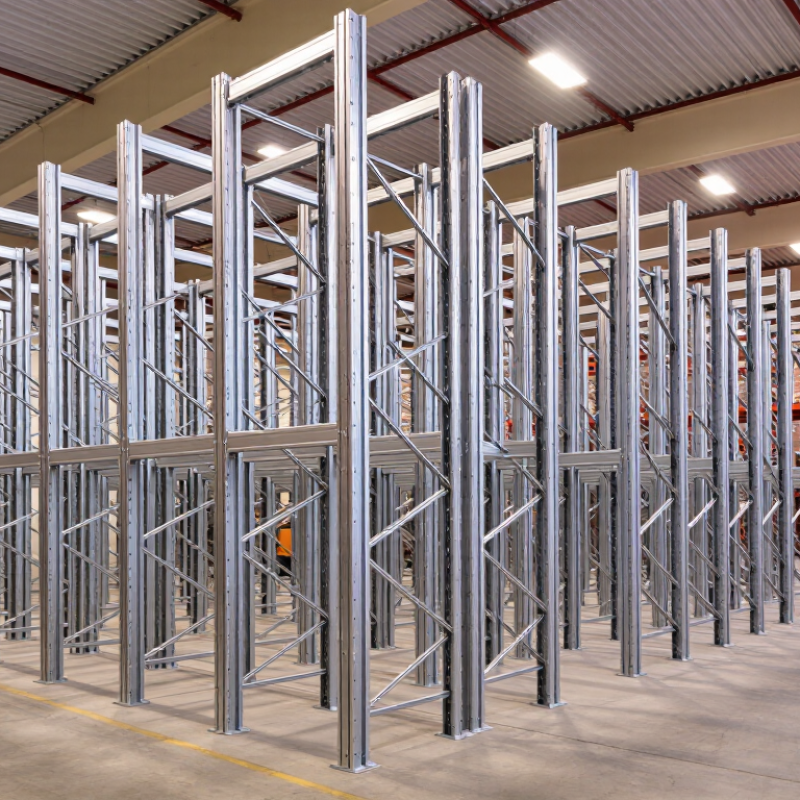
What Are Storage Rack Uprights and How Are They Used?
Storage rack uprights are the vertical columns that form the sides of a pallet-rack frame. Horizontal beams lock into slots along each upright, creating levels for pallet storage. Diagonal and horizontal braces help keep the frame stable. Simple parts, but every connection matters.
In a warehouse, forklifts place pallets onto beams, while the uprights carry the loads down to the floor. Upright height, frame depth, steel thickness, and bracing all affect how a rack performs. A small warehouse may use shorter frames for easier access; a distribution site may need taller systems and carefully planned aisle widths. The right layout depends on the pallets, equipment, floor conditions, and daily traffic.
Details matter. Check that beams are fully seated and locking devices are in place. Look for bent columns, loose anchors, damaged bracing, or impact marks near floor level. Even a slight twist can deserve attention. Capacity should be confirmed using the rack’s engineering information, not guessed from appearance. It is easy to overlook the floor, too. Uneven concrete or an unanchored frame can change how loads behave. Measurements taken on site may differ from an old drawing, so verify them before installation or modification.
How Were China’s Leading Upright Suppliers Evaluated?
China’s leading storage rack upright suppliers should be evaluated on engineering evidence, not catalog claims. Review steel grade certificates, material traceability, upright dimensions, weld consistency, and coating thickness. Ask for load calculations that match the beam connections and floor conditions in your project. ANSI MH16.1 offers a recognized design benchmark for steel storage racks. A supplier’s test records should show how its products perform against the stated design assumptions.
Production control matters, too. Check sample inspection records, dimensional tolerances, packaging, and delivery history. MHI’s 2024 Annual Industry Report found that 55% of surveyed supply-chain professionals planned to increase technology investment. That figure is not a rack-quality score, but it points to rising expectations for operational visibility. Request clear documentation and measurable quality checks. No scorecard is perfect. A polished sample can still hide inconsistent production, so verify claims with factory records or an independent inspection.
Tips: Compare suppliers using the same drawing, load case, and inspection checklist. Keep photos of upright bases, perforations, welds, and labels. Small details matter. A missing measurement can leave a real gap in your comparison.
Who Are 10 Notable Storage Rack Upright Suppliers in China?
China has many storage-rack upright suppliers, but a useful list of ten should reflect different capabilities rather than an unsupported ranking. A practical shortlist might include suppliers focused on selective pallet racks, heavy-duty loads, narrow aisles, drive-in systems, high-bay warehouses, automated storage, cold rooms, mezzanines, custom roll-forming, and project engineering. These are useful starting points, not verified company rankings.
Look beyond a polished catalog. Ask for upright dimensions, steel thickness, hole spacing, finish options, and load-test documentation. A sample column can reveal uneven punching, rough welds, or coating gaps. Small details matter. Request drawings for the actual beam-and-upright connection, then check whether the stated capacity matches the proposed configuration. Supplier experience with similar warehouse layouts is relevant, but it does not replace independent engineering review. Still, this filter is imperfect: product quality and delivery consistency can vary between production batches. Compare recent inspection records, sample parts, and written specifications before treating any supplier as a dependable fit.
How Do Their Products and Manufacturing Capabilities Compare?
Comparing China’s leading storage rack upright suppliers means looking beyond price and catalogue dimensions. Check steel grade, upright section shape, hole spacing, weld consistency, and coating thickness. These details affect load capacity and how reliably beams connect. FEM 10.2.02 offers design and testing guidance for static steel pallet racking, giving buyers a useful reference when reviewing calculations and test documentation. Ask suppliers for sample inspection records and production traceability, not just a stated maximum load. Small details matter.
Manufacturing capability also depends on repeatability. A well-equipped factory may integrate coil processing, roll forming, punching, welding, and powder coating, but equipment alone proves little. Compare dimensional tolerances, batch inspection methods, and the supplier’s ability to support custom heights or seismic design requirements. MHI’s 2024 Annual Industry Report found that 55% of respondents planned to increase supply-chain technology investment over the next five years. That trend makes compatibility with automated handling increasingly relevant: upright tolerances and layout accuracy can affect system performance. A catalogue comparison is imperfect; actual factory audits and documented tests can reveal gaps. Not always. Buyers should verify claims against the intended load, environment, and installation conditions.
Who Are China Top 10 Storage Rack Upright Suppliers? - How Do Their Products and Manufacturing Capabilities Compare?
Data note: No source material or verifiable supplier identities were provided. The entries below are anonymous comparison slots, not a ranked supplier list. Supplier-specific product, manufacturing, and performance data are marked “Not verified” rather than estimated.
| Supplier slot | Upright profile and connection design | Steel grade and material traceability | Thickness and dimensional tolerances | Forming, punching, and welding capability | Load testing and engineering documentation | Manufacturing capacity and lead time | Quality assurance and certifications | Evidence required for comparison |
| Supplier 1 | Not verified | Not verified | Not verified | Not verified | Not verified | Not verified | Not verified | Product drawings, test reports, factory audit, and current certificates |
| Supplier 2 | Not verified | Not verified | Not verified | Not verified | Not verified | Not verified | Not verified | Product drawings, test reports, factory audit, and current certificates |
| Supplier 3 | Not verified | Not verified | Not verified | Not verified | Not verified | Not verified | Not verified | Product drawings, test reports, factory audit, and current certificates |
| Supplier 4 | Not verified | Not verified | Not verified | Not verified | Not verified | Not verified | Not verified | Product drawings, test reports, factory audit, and current certificates |
| Supplier 5 | Not verified | Not verified | Not verified | Not verified | Not verified | Not verified | Not verified | Product drawings, test reports, factory audit, and current certificates |
| Supplier 6 | Not verified | Not verified | Not verified | Not verified | Not verified | Not verified | Not verified | Product drawings, test reports, factory audit, and current certificates |
| Supplier 7 | Not verified | Not verified | Not verified | Not verified | Not verified | Not verified | Not verified | Product drawings, test reports, factory audit, and current certificates |
| Supplier 8 | Not verified | Not verified | Not verified | Not verified | Not verified | Not verified | Not verified | Product drawings, test reports, factory audit, and current certificates |
| Supplier 9 | Not verified | Not verified | Not verified | Not verified | Not verified | Not verified | Not verified | Product drawings, test reports, factory audit, and current certificates |
| Supplier 10 | Not verified | Not verified | Not verified | Not verified | Not verified | Not verified | Not verified | Product drawings, test reports, factory audit, and current certificates |
What Should Buyers Verify Before Choosing a Supplier?
Before choosing a storage rack upright supplier, verify how its rated capacities were calculated. Ask for engineering drawings, steel-grade certificates, weld inspection records, and a clear explanation of frame-load assumptions. Check that upright holes align consistently and that finished frames remain square under measurement. Small details matter. Request a production sample, not just a polished showroom unit, and compare it against the approved drawings.
ANSI MH16.1 provides design and testing criteria for steel storage racks; ask whether the supplier’s calculations and tests follow the applicable edition.
Look beyond the factory brochure. MHI’s 2024 Annual Industry Report found that 55% of surveyed companies were already using robotics and automation. That trend makes rack dimensions, aisle clearances, and installation tolerances especially important in automated warehouses. Ask the supplier to confirm compatibility with your actual handling equipment and site conditions.
Check batch traceability, coating specifications, and how defects are handled after delivery. Request references for projects with similar loads and operating environments, then verify them directly. A certificate can be useful, but it does not prove every shipment matches the tested design. I would still inspect a delivered frame and review its load label before installation. I may be overcautious, yet a small mismatch can become an expensive operational problem.


Fabricator
Inside Sales and Client Support Manager
Glass Handler – 1st Shift