Taking Custom Design to New Levels
PROUD TO BE PART OF THE BRIN FAMILY OF COMPANIES

OTHER BRIN LOCATIONS
Brin Glass Company | Minneapolis, MN
St. Germain’s Glass | Duluth, MN
Heartland Glass | Waite Park, MN

Choosing a Processing Heater is not simply a matter of selecting the highest temperature or lowest purchase price. Industrial operations differ in throughput, fluid properties, available energy, and working conditions. A heater that performs well in a clean, steady process may struggle with changing loads or viscous materials. Fit matters.
This guide examines seven common heater options through practical selection factors. These include heat-transfer method, temperature control, energy use, installation needs, and maintenance access. For example, a compact electric unit may suit a precise, localized duty, while a circulating system may better support continuous heating across a production line. The right answer depends on the process, not the product label.
Real operating details deserve attention. Check the required temperature range, startup frequency, material compatibility, and space around the equipment. Ask how operators will monitor performance and reach components during service. Small details count. A sensor placed poorly, or an awkward cleaning routine, can undermine an otherwise capable system.
The choices presented here are intended to support informed comparison, not replace engineering review. Specifications vary by manufacturer, model, and installation. Confirm performance claims against technical documentation and actual process conditions. No heater is perfect. Even a well-matched unit can face trade-offs in efficiency, control, or upkeep. Careful evaluation helps identify which compromises are acceptable for your operation.
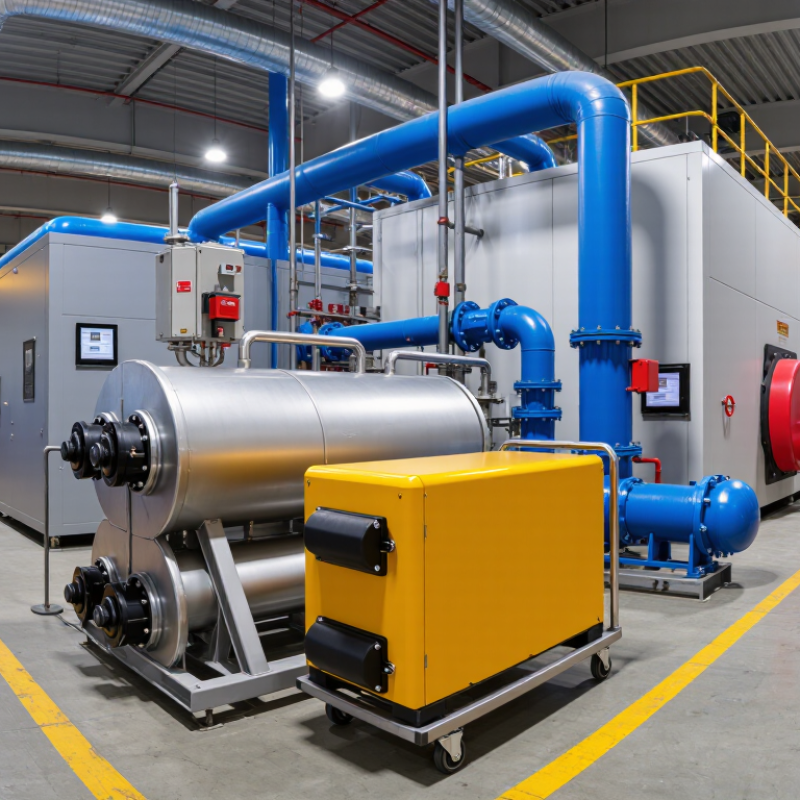
Process heaters supply controlled thermal energy to liquids, gases, and materials moving through industrial systems. They help maintain reaction temperatures, reduce fluid viscosity, support drying, and keep production steps consistent. In a pipe, a steady heat input can prevent a thick liquid from slowing flow. In a vessel, accurate temperature control can help protect a sensitive process.
Heat matters. The heater’s role depends on the material, flow rate, target temperature, and available energy source. Direct heating transfers heat through contact with combustion gases; indirect systems use a surface or circulating medium to separate the heat source from the process material. That distinction affects control, maintenance, and product quality. It is easy to focus on rated capacity, but that number alone can mislead. A system must also respond to changing demand without creating hot spots.
Good operation relies on suitable sensors, insulation, and controls, plus regular checks for deposits, leaks, or worn components. Operators may notice uneven temperatures before an alarm appears. That practical feedback is useful, though it should be checked against instrument readings. Real plants rarely behave exactly like a design calculation. Flow changes, buildup, and imperfect insulation can all shift heater performance over time.
| Process Heater Type | How It Works | Best-Fit Applications | Key Advantages | Important Considerations |
|---|---|---|---|---|
| Fired Process Heater | Burns fuel in a combustion chamber and transfers heat to process fluid through tubes. | Refineries, petrochemical plants, and other processes requiring high heat input to flowing liquids or gases. | Can deliver substantial heat duty and is suitable for large continuous processes. | Requires combustion controls, ventilation, emissions management, and routine inspection of tubes and burners. |
| Electric Immersion Heater | Electric heating elements are immersed directly in a liquid or installed in a vessel. | Heating water, oils, chemical solutions, and other compatible liquids in tanks or process vessels. | Direct heat transfer, straightforward temperature control, and no on-site combustion. | Element materials must suit the liquid’s chemistry; low liquid levels can cause overheating or element damage. |
| Electric Circulation Heater | A pumped liquid or gas passes through a pressure vessel containing electric heating elements. | Heating circulating process fluids, including oils, water, and selected gases. | Provides controlled, in-line heating and can be integrated into a closed-loop system. | Requires adequate flow and correct sizing for the fluid, pressure, temperature, and available electrical supply. |
| Industrial Air or Duct Heater | Electric elements or a fuel-fired assembly heat air moving through a duct or air-handling system. | Drying, curing, process-air supply, and temperature conditioning in manufacturing facilities. | Heats air directly and can be arranged for different duct layouts and airflow requirements. | Airflow interlocks and overtemperature protection are important; dust, moisture, and air velocity affect selection. |
| Thermal-Fluid Heater | A heater warms a circulating heat-transfer fluid, which then supplies heat to process equipment. | Indirect heating for reactors, dryers, presses, and other equipment requiring a circulating heat source. | Allows heat to be distributed around a plant in a closed loop without sending combustion gases through the process. | Fluid selection, expansion capacity, leak prevention, and fluid condition monitoring are essential to safe operation. |
| Steam Process Heater | Steam transfers heat to a process stream or vessel, commonly through a coil, jacket, or heat exchanger. | Plant processes with an available steam system, including tank heating and indirect fluid heating. | Can use an existing utility network and provides indirect heat transfer without a local burner at the process vessel. | Condensate drainage, steam pressure, heat-transfer area, and temperature-control requirements must be addressed. |
| Induction Heater | An alternating electromagnetic field generates heat in electrically conductive materials. | Heating metal workpieces for forging, heat treatment, joining, and other localized or rapid-heating operations. | Can heat conductive materials rapidly and locally, with no direct contact between the coil and workpiece. | Best suited to conductive materials; coil design, workpiece geometry, and power-system requirements influence performance. |
| Selection note: The appropriate heater depends on the process material, required heat duty, operating conditions, energy source, control needs, and applicable safety requirements. Actual performance and operating limits vary by system design. | ||||
Fabricator
Inside Sales and Client Support Manager
Glass Handler – 1st Shift