AGV vs AMR 7 Tips for Choosing the Right System
Choosing between an AGV and an AMR is not simply a choice between older and newer technology. Both move materials, reduce repetitive handling, and depend on careful planning. The right fit depends on your building, workflows, payloads, and tolerance for route changes. An AGV often follows defined paths, such as marked lanes or installed navigation references. An AMR can typically adjust its route using onboard sensors and mapping. Yet those categories do not explain every product. That distinction is useful, but not perfect. Vendors may use “agv amr” terminology differently, so compare documented capabilities rather than labels alone.
Before selecting a system, map the journey of a typical load, from pickup to delivery. Measure aisle widths, note busy crossings, and check whether floors, ramps, or doorways create obstacles. Confirm payload weight, charging needs, fleet controls, and connections to existing warehouse software. Ask suppliers how their systems behave when a route is blocked or a workstation changes. These details reveal practical limits that a product brochure may not show. A short, controlled site assessment can expose problems early. It may also challenge your original plan.
This guide presents seven tips for choosing the right system, including how to assess flexibility, safety features, integration, scalability, and total operating costs. No single vehicle suits every facility. A stable production line may favor predictable routes, while a changing warehouse may benefit from adaptable navigation. The best decision is the one supported by measured site conditions, realistic workload data, and clear supplier evidence.
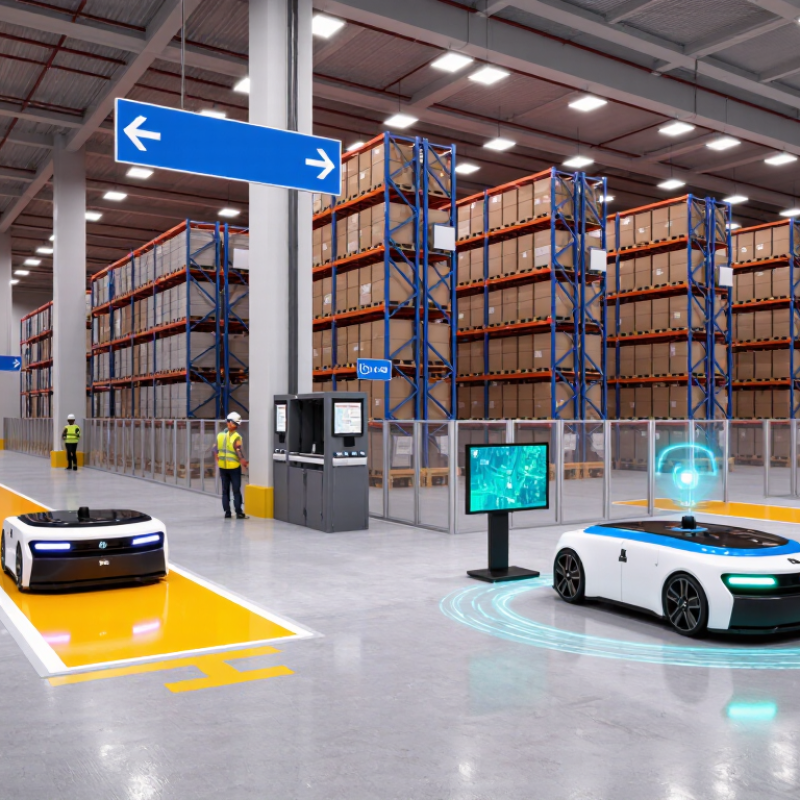
Understanding AGVs and AMRs: Definitions and Operating Principles
An automated guided vehicle, or AGV, moves along a planned path using markers such as floor tape, embedded wires, reflectors, or QR codes. Its controller reads these references and directs steering, speed, and stopping. Sensors detect obstacles, so an AGV can pause when a person or cart blocks its route. The path is predictable. In a warehouse, that may mean following the same aisle between a pallet station and a packing line throughout each shift. Changes to the route can require adjustments to the guidance system or facility layout.
An autonomous mobile robot, or AMR, uses onboard sensors and software to map its surroundings and estimate its position. Laser scanners or cameras help it recognize walls, racks, and other objects. It can choose a different route when an aisle is blocked, while still observing defined safety zones. That distinction is useful, but a little too neat. Some systems combine fixed guidance with more flexible navigation, and neither label guarantees easy deployment. Floor condition, traffic patterns, load size, and docking accuracy all matter. A small mapping error near a charging point can disrupt a routine that looked reliable in a simulation. Teams should test movement in the actual workspace, with real loads and changing obstacles, before judging how well either operating principle fits.
Comparing Navigation, Flexibility, and Infrastructure Requirements
Choosing between an AGV and an AMR starts with the route, not the label. Traditional AGVs commonly follow fixed paths using floor markers, wires, or reflectors. Their predictable movement can suit repetitive trips between fixed stations. AMRs generally use onboard sensors and mapped surroundings to navigate around obstacles. They can adapt more readily, but still need accurate maps and safe operating zones. No system works well in a cluttered aisle without planning.
Infrastructure affects the real cost of each option. An AGV route may require installed guidance, floor preparation, and access rules that keep its path clear. An AMR may need fewer physical guides, yet reliable wireless coverage, smooth floors, and space for turning still matter. Walk the proposed routes during a busy shift. Note blind corners, pallet staging, narrow doors, and places where people cross. A map can look simple on screen. The floor may disagree. Also check how traffic will change as more vehicles share the same space.
Tips: Test a small, representative route before expanding. Record delays and blocked paths. Compare maintenance needs, not just purchase costs. If routes change often, an AMR may fit better; if tasks stay fixed, an AGV may be simpler. That trade-off deserves a closer look.
Assessing Material Flow, Payload, and Operational Needs
Choosing between an automated guided vehicle (AGV) and an autonomous mobile robot (AMR) starts with material flow, not the label. Map each trip from pickup to drop-off, including crossings, queues, and empty returns. AGVs often suit repeatable routes with predictable traffic; AMRs can adapt around changing obstacles, but still need clear operating rules. Small details matter.
Measure peak moves per hour, not just daily totals. Record the heaviest load, including its pallet, tote, or handling fixture, then check dimensions and load stability. A 500-kilogram payload rating means little if the load blocks sensors or shifts on a ramp. Check aisle width, floor joints, charging windows, and handoff heights. MHI’s 2024 Annual Industry Report found that 55% of surveyed organizations planned to increase supply-chain technology investment. That signals strong interest, not guaranteed project savings. Test the pinch points. A pilot should include a busy shift change and a blocked route; a clean simulation can miss a queue beside a doorway. Some assumptions will be wrong. Track delivery time, interventions, and completed moves before scaling.
AGV vs. AMR: Choosing the Right System
Relative fit by operational need · 1 = lower fit, 5 = higher fit
Scores are an illustrative planning aid, not universal performance benchmarks. AGVs often suit stable, repeatable routes; AMRs can better accommodate changing routes and workflows. Payload capacity and performance vary by model, so confirm specifications against your loads, facility, and operating conditions.
Evaluating Safety, Integration, Scalability, and Total Cost
Safety should be judged against the actual work area, not a brochure diagram. An AGV usually follows a defined route, while an AMR can adjust its path around obstacles. Both still need clear crossing rules, suitable speed limits, and reliable emergency stops. Walk the route during a busy shift. Watch how people move pallets and cut corners. Test it. A controlled demonstration may miss a blocked aisle or a reflective floor.
Integration can be harder than vehicle selection. Check how dispatch software will exchange job, status, and fault data with existing systems. Confirm who handles failed messages and recovery; a small gap can leave a vehicle waiting while staff assume it is working. Scalability also depends on traffic management, charging space, and support capacity. Add two vehicles on paper, then model their routes at peak demand. The model may be wrong. That is useful to learn early.
Compare total cost over the expected service life, not just purchase prices. Include installation, facility changes, software, batteries, training, maintenance, and downtime. Ask for realistic service intervals and response times, then compare them with your shift schedule. A low-cost unit can become expensive if it needs frequent manual recovery. Estimates are imperfect, especially before a site survey, so record assumptions and revisit them after a small pilot. Track stops, operator interventions, and completed moves for several weeks.
Choosing the Right System: A Practical Decision Framework
Choosing between an AGV and an AMR starts with the route, not the label. Map each trip from pickup to drop-off, including tight turns, shared aisles, doorways, and charging points. AGVs often suit repeatable routes with controlled traffic. AMRs can adapt more readily when people, carts, or pallets shift their paths. But “flexible” does not mean effortless. Floor conditions, Wi-Fi dead zones, and changing loads can still disrupt performance.
IFR’s World Robotics 2023 reported 86,000 professional service robots sold for transportation and logistics in 2022, 44% more than in 2021. That growth signals rising adoption, not a guarantee of payback. MHI’s 2024 Annual Industry Report found that 55% of surveyed supply-chain leaders planned to increase technology investment. Use that context, then calculate your own case: trips per shift, labor hours saved, charging downtime, integration costs, and recovery time after a blockage. Test it live. Run a pilot during a busy shift, with real loads and operators. Record missed handoffs and manual interventions, not just average travel time. A spreadsheet can hide awkward exceptions. Recheck the decision when product mix or aisle traffic changes; the “right” system may change too.




Fabricator
Inside Sales and Client Support Manager
Glass Handler – 1st Shift