7 Tips for Buying Mild Steel Pipe Globally?
Buying Mild Steel Pipe across borders looks straightforward until specifications, freight, and documentation collide. A pipe may appear inexpensive on a supplier’s quotation, yet coating thickness, wall tolerance, testing, and port charges can change the landed cost. World Steel Association data reported global crude steel production of about 1.89 billion tonnes in 2023. This scale shows steel’s importance, but it does not guarantee consistent pipe quality. Mild steel pipe remains a practical choice for water systems, construction frames, irrigation, and general industrial use. The application must guide the purchase.
Edwin Basson, Director General of the World Steel Association, has described steel as “essential to modern life.” His view explains why buyers should examine both material performance and supply-chain reliability. Trade data under HS Code 7306 can help compare international flows, while technical standards such as ASTM, API, EN, and ISO clarify testing expectations. Still, statistics can mislead when product grades and dimensions differ. That part is easy to overlook.
This guide presents seven practical tips for global purchasing. They cover grade selection, dimensional checks, supplier verification, inspection, Incoterms, logistics, and after-sales communication. Ask for mill certificates, hydrostatic test results, and traceability records. Check whether the certificate matches the actual bundle, not merely the sample file. A factory audit is useful, but it cannot replace independent inspection. Price matters. It is not everything. Even experienced buyers sometimes compare quotations too quickly, especially when currency movements and port delays are involved. A careful decision leaves room for uncertainty, documentation gaps, and one more question before payment.
Define Mild Steel: Low-Carbon Grades Typically Contain Up to 0.25% Carbon
Mild steel usually means low-carbon steel, with carbon typically up to 0.25% by weight. This chemistry keeps the pipe relatively easy to cut, form, and weld. Manganese, silicon, sulfur, and phosphorus also affect performance. A lower carbon level often improves weldability, but it may reduce hardness and strength. The label alone is not enough.
When buying globally, request a mill test certificate showing the actual chemical analysis. Check the stated carbon percentage, yield strength, tensile strength, and elongation. Match these values with the required standard and service conditions. Pipe dimensions matter too. Confirm outside diameter, wall thickness, length, ovality, and permitted tolerances. Small differences can create serious fitting problems.
Ask whether the pipe is seamless or welded. Inspect the weld area, surface condition, and end protection when practical. For outdoor use, mild steel needs a suitable coating or maintenance plan because it rusts readily. Packaging should protect against seawater, rain, and condensation during transport. Certificates should identify the heat number and connect it to the delivered bundles. That traceability is easy to overlook.
A carbon value near 0.25% may still meet a specification, but welding procedures deserve review. Actual results can vary between heats. I have seen purchasing decisions rely on catalog descriptions, then require costly corrections. Independent inspection can expose dimensional or documentation gaps before shipment. It adds expense, but not checking can cost more.
Match Pipe Standards to Use: ASTM A53, A106, API 5L, and EN 10255
Buying mild steel pipe globally starts with matching the standard to its actual service. ASTM A53 suits common pressure, mechanical, and structural applications. It is available in welded and seamless forms, but the selected grade and manufacturing method still matter.
For elevated-temperature service, ASTM A106 is often more appropriate. It specifies seamless carbon steel pipe and supports demanding process conditions. API 5L is designed for pipeline transportation. Check the specified grade, product specification level, chemical limits, toughness, and inspection requirements. A line pipe should not be substituted casually with a general-purpose pipe.
EN 10255 covers non-alloy steel tubes commonly used for welding, threading, and conveying fluids. Its light, medium, and heavy series affect wall thickness and installation compatibility. Thread dimensions, outside diameter, and pressure assumptions must match the project drawings. Small differences can cause large fitting problems.
Ask for heat numbers, test certificates, dimensional records, and traceable inspection documents. Verify the current standard edition with the engineer or authority having jurisdiction. I have seen buyers focus on price, then discover that a pipe passes chemistry checks but fails the required impact or pressure test. That oversight is avoidable, though specifications are not always perfectly clear. Clarify unclear clauses before placing an order. Consistent marking and protected ends also reduce receiving errors after long-distance transport.
Confirm Dimensions and Tolerances Under ASME B36.10M and ISO 4200
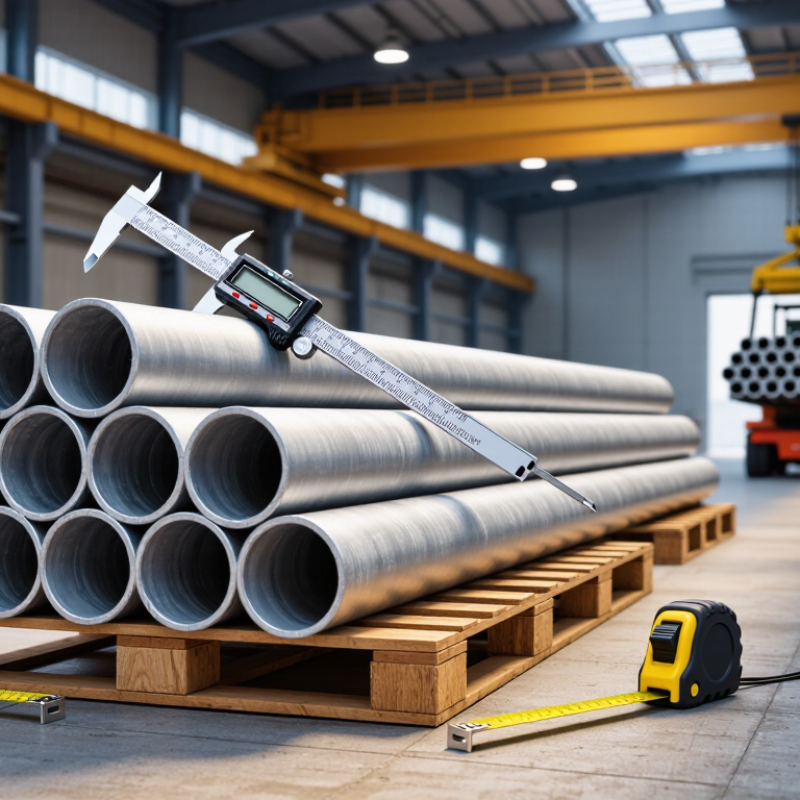
When buying mild steel pipe globally, dimensional language must be precise. “Mild steel” alone is not enough. Confirm nominal pipe size, outside diameter, wall thickness, schedule, and length against ASME B36.10M. This standard helps align welded and seamless pipe dimensions, but it does not replace the purchase specification. Ask for the exact edition. A small mismatch can disrupt welding, supports, and pressure calculations. Small errors multiply.
ISO 4200 should be checked when the supplier quotes steel tubes using metric dimensions. Compare outside diameter, wall thickness, mass, and permitted deviations. Do not guess. Request a dimensional inspection report showing measured OD and wall thickness at several points. Check straightness, ovality, end squareness, and cut length when fit-up matters. Tolerances may depend on product type, manufacturing route, and agreed delivery condition. The standard reference must match the actual pipe category.
Before payment, place every critical value in the contract table. Write units clearly, especially millimeters versus inches. State whether length is fixed, random, or cut-to-length. Include test documentation, heat numbers, and traceable inspection records. A coating or bevel can change the measured condition, so define where measurements are taken. This detail is often missed. I would also compare the mill certificate with an independent inspection when quantities are large. That extra check costs time, but a late dimensional dispute costs more. Relying on memory is a weak habit.
7 Tips for Buying Mild Steel Pipe Globally: Confirm Dimensions and Tolerances
Selected nominal outside diameters for common pipe sizes are shown in millimetres. The tolerance band is calculated from ASME B36.10M: ±0.4 mm for NPS 1/2–1 1/2 and ±1% for NPS 2 and larger. ISO 4200 uses DN-based outside-diameter series, so confirm the applicable DN series, product specification, and permitted tolerance before placing an international order.
Practical check: match NPS/DN, outside diameter, wall thickness, length, and tolerance requirements on the purchase order and inspection documents.
Audit Suppliers Using ISO 9001, EN 10204 3.1 Certificates, and Hydrotests
When buying mild steel pipe globally, supplier auditing should begin with evidence, not attractive pricing.
Review the supplier’s ISO 9001 certificate, but check its scope, issuing body, and expiry date. ISO 9001 confirms a quality management system. It does not automatically guarantee every pipe meets your specification. Ask for recent audit findings and corrective-action records. Small gaps often reveal larger process weaknesses.
Request an EN 10204 3.1 inspection certificate for each production batch. Match the heat number on the certificate with the pipe marking, packing list, and material tags. Check chemical composition, tensile strength, yield strength, elongation, dimensions, and applicable standards. The certificate should identify the manufacturer’s authorized inspection representative. Generic templates are not enough. I have seen documents with correct-looking numbers but missing traceability.
Hydrostatic testing deserves equal attention. Confirm the test pressure, holding time, test medium, acceptance criteria, and gauge calibration date. Ask for test records linked to specific heat or batch numbers. If possible, arrange an independent witness or remote video check during testing. Look for leakage around welds, ends, and fittings. A clean report can still hide weak sampling practices. That is why supplier audits should include production-floor observations, not paperwork alone. Review how nonconforming pipes are isolated, relabeled, and released. Reliable purchasing requires patience, technical questions, and a willingness to reject incomplete evidence.


Fabricator
Inside Sales and Client Support Manager
Glass Handler – 1st Shift