2026 Top Biosafety Isolator Manufacturers for Global Buyers
Choosing the right Biosafety Isolator manufacturer in 2026 requires more than comparing product brochures or advertised prices. Global buyers need evidence of containment performance, manufacturing consistency, validation support, and responsive after-sales service. A reliable supplier should explain airflow design, pressure control, HEPA filtration, transfer systems, glove integrity testing, and alarm management in practical terms.
Details matter.
This guide examines leading Biosafety Isolator manufacturers serving pharmaceutical, biotechnology, healthcare, and research facilities worldwide. It considers technical experience, quality systems, documented testing, installation capability, and long-term maintenance support. Manufacturers with recognized certifications and traceable production records generally offer stronger purchasing confidence, but certification alone is not proof of suitability. Each facility has different risks, workflows, room conditions, and operator requirements.
Real-world usability also deserves attention. A smooth glove port, clear viewing panel, and accessible filter housing can affect daily performance. Poor ergonomics may create avoidable operating errors, even when the equipment meets specifications. Buyers should request factory acceptance testing, site acceptance testing, training records, and service response commitments before signing contracts. These steps help connect laboratory expectations with actual equipment behavior.
No manufacturer fits every application.
The market changes quickly, and published information may become outdated. Some suppliers provide limited performance data, while others rely heavily on broad claims. Therefore, this overview should support due diligence, not replace independent technical review. Procurement teams should compare verified documents, reference installations, lifecycle costs, and local regulatory expectations before making a final decision.
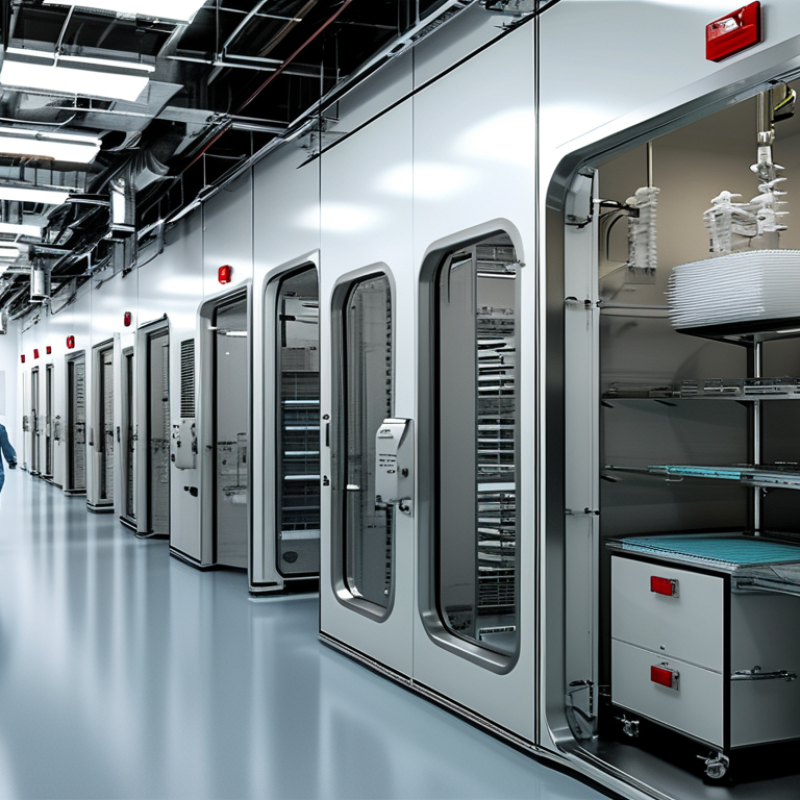
Biosafety Isolators: Definition, Applications, and Core Features
A biosafety isolator is a sealed or partially sealed enclosure that separates personnel, products, and surrounding air. Operators work through glove ports, transfer chambers, and controlled access doors. High-efficiency filters manage incoming and exhaust air. Pressure alarms provide another safeguard. They are not decorative features.
Common applications include infectious-disease diagnostics, sterile compounding, cell processing, and high-risk sample handling. A 2024 industry analysis reported continued demand for containment equipment in pharmaceutical manufacturing and advanced therapy production. However, market forecasts can vary widely by region and methodology. Buyers should treat them as indicators, not guarantees.
ISO 14644-1 identifies ISO Class 5 environments as allowing up to 3,520 particles per cubic meter at 0.5 micrometers. Particle cleanliness alone does not prove biological containment. The WHO Laboratory Biosafety Manual, fourth edition, emphasizes documented risk assessment before selecting engineering controls. The CDC/NIH BMBL, sixth edition, recommends biosafety cabinet certification at least annually and after relocation. Similar discipline is sensible for isolators.
During evaluation, inspect glove integrity testing, transfer-cycle design, filter replacement access, alarm response, and cleaning visibility. Ask for factory acceptance records and site performance data. A lower pressure reading is not automatically safer. In real facilities, cramped layouts and rushed transfers can undermine excellent equipment. That part is often underestimated.
Key Standards for Evaluating Global Isolator Manufacturers in 2026
Global buyers should evaluate biosafety isolator manufacturers through verified standards, not attractive specifications alone. A reliable supplier should explain how its systems align with ISO 14644 cleanroom principles, relevant containment requirements, and applicable GMP expectations. The correct framework depends on the application, risk level, and local authority. One standard rarely answers everything.
Ask for documented airflow studies, HEPA filter integrity tests, pressure monitoring records, and glove leak test methods. Review factory acceptance testing and site acceptance testing procedures. Experienced manufacturers can show how they control airflow around transfer chambers, waste ports, and operator interfaces. Their validation documents should be clear, traceable, and practical. Vague promises are a warning sign.
Tips: Compare the same test conditions across suppliers. Check alarm response times, recovery performance, cleaning access, and maintenance intervals. Request service coverage, spare-part planning, training records, and references from comparable facilities. A factory visit can reveal details that brochures hide. Still, do not treat certification as proof of perfect performance. Installation quality, operator habits, and routine maintenance can change results. Even strong designs may need adjustment after real use. That part is often underestimated.
2026 Key Standards for Evaluating Biosafety Isolator Manufacturers
Relative procurement relevance of internationally recognized standards and regulatory references
The score reflects how directly each reference addresses isolator design, containment, clean-air performance, aseptic processing, or pharmaceutical production controls. Buyers should verify the current edition and applicable national requirements before procurement.
References: ISO 14644-1, ISO 14644-7, ISO 13408-6, EN 12469, EU GMP Annex 1, and WHO TRS 1019 Annex 2.
Leading Biosafety Isolator Manufacturers and Their Product Strengths
In 2026, global buyers are examining biosafety isolator manufacturers through performance evidence, not polished brochures. Leading suppliers provide clear technical files, validation records, and responsive service plans. Their experience often appears in small details, such as glove-port alignment and easy filter access.
Strong product lines offer stable negative pressure, efficient HEPA or ULPA filtration, and continuous alarm monitoring. Well-designed chambers reduce turbulence around the work zone. Touchscreen controls can simplify daily checks, while pass-through chambers help limit unnecessary door opening. Some manufacturers also provide integrated decontamination systems, ergonomic viewing panels, and configurable transfer ports. Details matter.
Reliable manufacturers support factory testing, installation guidance, operator training, and scheduled maintenance. They should explain airflow testing methods and replacement intervals in practical language. Buyers should compare noise levels, power requirements, cleanability, and service response times. No unit is perfect. A highly automated model may increase training demands or repair costs. I would also question vague claims about “maintenance-free” operation. Real facilities need inspections, documented records, and qualified technicians. Product strength is not only filtration performance; it is how consistently the isolator protects the process during long shifts, routine glove changes, and unexpected alarms. Teams that visit operating laboratories can often identify weaknesses that product videos hide. That hands-on review is easy to overlook.
How to Compare Isolator Technologies, Certifications, and Services
When comparing biosafety isolator manufacturers in 2026, start with the work, not the brochure. Define the containment level, materials, operator contact, transfer frequency, and cleaning agents. A rigid isolator may provide stable pressure control, while a flexible design can reduce installation time. Neither option is automatically better.
Examine the engineering evidence closely. Ask for airflow maps, pressure recovery data, filter integrity results, and glove-port leak tests. Check whether monitoring systems record pressure, temperature, alarms, and filter status continuously. Certification should match the application and destination market. Review ISO 14644 data, applicable biosafety performance standards, electrical compliance, and documented factory testing. Certificates alone are not enough. Their scope matters.
Service quality often separates a reliable supplier from an attractive quotation. Request factory acceptance testing, site acceptance testing, operator training, validation support, and preventive maintenance schedules. Confirm spare-part availability and response times before signing. Speak with users who operate similar systems under daily production pressure. Their experience may reveal noise, awkward glove movement, or difficult decontamination steps. Small problems become expensive quickly. I have found that comparison tables can hide practical weaknesses. Recheck every critical claim against test records and user evidence. A technically impressive isolator still fails if technicians cannot maintain it safely and consistently.
Global Purchasing Considerations for Biosafety Isolator Buyers
Global Purchasing Considerations for Biosafety Isolator Buyers
Global buyers entering the 2026 market should assess containment performance before comparing prices. Fortune Business Insights valued the global biosafety cabinet market at about USD 4.86 billion in 2023. It projects growth to roughly USD 8.10 billion by 2032. This expansion suggests stronger demand, but market size alone cannot confirm equipment quality.
Request documented airflow data, filter efficiency, alarm logic, and recovery-time results. Ask whether testing follows recognized laboratory safety guidance, including the WHO Laboratory Biosafety Manual, fourth edition. ISO 14644 classification records can also clarify cleanroom compatibility. A practical factory audit should examine glove ports, transfer chambers, viewing panels, and decontamination access. Small design details matter.
Think beyond purchase price. Energy consumption, filter replacement, calibration, training, and service response can change the five-year cost considerably. Frost & Sullivan and other industrial research providers repeatedly identify after-sales capability as a major laboratory equipment purchasing factor. That evidence is useful, though not perfect. Reports often group isolators with related containment systems, reducing product-level precision. Buyers should therefore demand model-specific test records, not broad market claims.
Test the workflow.
Confirm local electrical requirements, spare-part availability, installation conditions, and operator ergonomics. A unit that meets specifications may still slow daily work if glove manipulation feels awkward. Independent validation is worth the extra time. Reliability begins before shipment.


Fabricator
Inside Sales and Client Support Manager
Glass Handler – 1st Shift